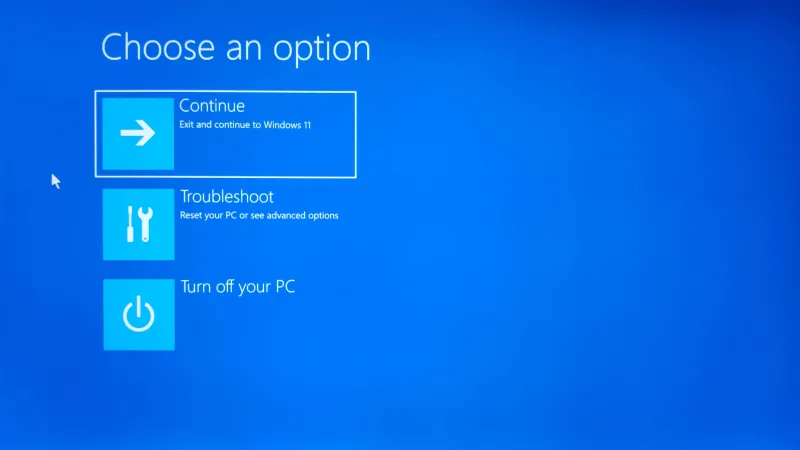
When a Windows machine erupts into that iconic cobalt tide, most users panic, but for me—Shawn DesRochers, a lifelong power‑user—the blue screen is a call to action. In 2026, even the most polished rigs can stumble into a Stop‑Error, and the reasons are anything but random. I still remember the first BSOD I saw on a custom build back in 2015; the panic was real, but the thrill of hunting down the culprit sparked a career in troubleshooting. Today, the landscape has shifted: AI‑driven drivers, ultra‑fast DDR5 memory, and aggressive power management schemes all add layers of complexity. Yet the core principle remains unchanged—understand what the system is screaming. In this post, I’ll walk you through the diagnostic workflow I rely on, share the subtle hardware‑level cues that often go unnoticed, and sprinkle in a few power‑user tactics that keep my rigs humming without a single fatal error. By the end, you’ll not only know how to tame that dreaded blue screen, you’ll also have a roadmap for building a more resilient machine that can survive the next wave of software innovation.
The Anatomy of a Modern BSOD
First, let’s demystify what actually happens when Windows throws a blue screen. The operating system encounters a critical error—often a violation of kernel memory, a driver deadlock, or a hardware fault—and halts to protect data integrity. In 2026, the error codes have become more granular, thanks to the integration of AI telemetry that tries to predict failure patterns before they fully manifest. You’ll see a mix of the classic STOP codes (like 0x0000007E) alongside newer, AI‑generated identifiers that point to specific firmware modules. One mistake many make is ignoring the “Dump File Path” line; that tiny breadcrumb tells you where Windows stored a memory dump for post‑mortem analysis. When I first started parsing those dumps with WinDbg, I realized that a single line of code could explain hours of frustration. So, before you reach for the “Restart” button, take a screenshot, note the STOP code, and glance at the driver list—these are the clues that will guide you through the maze of potential causes.
Common Triggers in 2026: Drivers, Firmware, and Power
In my experience, the three biggest culprits behind today’s blue screens are outdated drivers, firmware mismatches, and aggressive power‑management settings. GPU drivers, for instance, have become increasingly complex as they now incorporate real‑time AI inference for ray tracing and upscaling. A single misaligned shader can cascade into a kernel panic. Similarly, BIOS/UEFI firmware that lags behind the latest CPU microcode updates can cause subtle timing issues that only surface under heavy load. Finally, the new “Dynamic Power Boost” features in many motherboards aim to squeeze every watt out of the silicon, but they can inadvertently push voltage rails beyond safe tolerances. I’ve seen my own RTX 4090 crash repeatedly until I rolled back to a stable driver version and disabled the motherboard’s auto‑overclock profile. If you suspect a driver, the fastest remedy is to use Windows’ built‑in “Device Manager” to roll back, or better yet, head straight to the manufacturer’s website for a clean install. Remember, the latest driver isn’t always the safest—sometimes the “stable” branch is your best friend.
Diagnosing the Problem: From Event Viewer to Kernel Dumps
The real power‑user approach starts with data, not guesswork. Open the Event Viewer and filter for “Critical” events under the System log; you’ll often find a “BugCheck” entry that mirrors the BSOD code you captured. Next, navigate to the %SystemRoot%\\MemoryDumps folder—if you’ve enabled “Automatic Memory Dump,” you’ll have a .dmp file ready for analysis. Tools like WinDbg (now bundled with the Windows 2026 SDK) can decode the dump and pinpoint the offending driver or module. A quick tip: use the command !analyze -v to get a verbose output that includes a “Probably caused by” line. If the analysis points to a third‑party driver, cross‑reference it with the GPU crash guide I authored last year. For firmware‑related issues, the dump will often highlight “acpi.sys” or “nvlddmkm.sys” as the offending files—signs you should check your BIOS version and consider a firmware flash. The key is to treat each BSOD as a data point, not an isolated incident.
When the GPU Becomes the Weak Link
Graphics cards have turned into miniature AI supercomputers, and that power comes with a price. In 2026, drivers now bundle neural‑network models that dynamically adjust clock speeds based on game scenes, which is fantastic until the model misinterprets a workload and pushes the GPU into an unstable state. That’s why I always keep a “clean” driver version—one that predates the AI integration—installed as a fallback. If you’re seeing frequent “VIDEO_MEMORY_MANAGEMENT_INTERNAL” or “THREAD_STUCK_IN_DEVICE_DRIVER” errors, start by uninstalling the current driver with DDU (Display Driver Uninstaller) in Safe Mode, then install the version recommended in my GPU crash guide. Also, double‑check your power delivery: a 750 W PSU might look beefy, but under a full‑blast RTX 4090 with AI upscaling, you can still be starved for clean rails. Adding a dedicated 12 V rail or upgrading to a Platinum‑rated unit can make the difference between a stable frame rate and a sudden blue screen.
Hardware Strategy: Rethinking Your Build for Reliability
Even the most polished software stack can’t rescue a flawed hardware foundation. In 2026, the “one‑size‑fits‑all” motherboard mentality has died; power users now select boards based on specific voltage regulation designs and VRM cooling solutions. If you’ve been using a budget B660 board for a high‑end Ryzen 9 7950X, you’re courting disaster. My recent deep‑dive into hardware strategy highlighted how modern VRM heat sinks, integrated water blocks, and even firmware‑level power curves can dramatically affect stability. A good rule of thumb: if your CPU consistently hits 95 °C under stress testing, you’re courting a BSOD in disguise. Invest in a motherboard with robust power phases, quality capacitors, and a BIOS that lets you fine‑tune the “Load‑Line Calibration.” Pair that with high‑quality DDR5 modules that have low latency and stable timings. The upfront cost pays off in fewer crashes and longer component life—a win‑win for any power user who values uptime.
Windows 2026: AI, Security, and the New BSOD Landscape
Microsoft’s latest OS iteration embraces AI not just for user assistance but also for system stability. The new “Predictive Crash Guard” monitors driver behavior in real time and can pre‑emptively throttle a misbehaving module before it brings the whole system down. However, this feature is a double‑edged sword: if your security suite interferes with the guard’s telemetry, you might see cryptic STOP codes that reference “wdmaud.sys” or “sppsvc.exe.” My go‑to resource for navigating these nuances is Unlocking Windows 2026, where I outline how to whitelist trusted drivers while keeping the OS’s AI safety net active. Additionally, always keep your Windows Insider builds in check—early access to patches can solve obscure bugs before they hit the mainstream. The takeaway? Treat Windows 2026 as a collaborative partner; feed it clean driver stacks, updated firmware, and it will return the favor with fewer, smarter blue screens.
Security Layers: Beyond Antivirus to Prevent BSODs
Many power users think “antivirus” is enough, but modern malware can corrupt kernel drivers, leading directly to BSODs. Ransomware that targets the boot loader or rootkits that hijack system services will often manifest as a blue screen before any other symptom appears. That’s why I rely on a layered security approach detailed in Beyond Antivirus. Enable Secure Boot, use Windows Defender Application Guard for browsers, and regularly audit your driver signing certificates. A quick tip: run “sfc /scannow” and “DISM /Online /Cleanup‑Image /RestoreHealth” after any suspected breach; they can repair corrupted system files that might otherwise trigger a STOP error. Combining these defensive measures with the diagnostic habits outlined earlier creates a resilient environment where a malicious actor is far less likely to cause a system‑wide crash.
Future‑Proofing: The Playbook for a Crash‑Resistant Rig
Finally, think long term. A crash‑resistant rig isn’t built overnight; it’s a series of iterative upgrades and disciplined maintenance. Start by establishing a regular schedule: monthly driver checks, quarterly BIOS updates, and bi‑annual stress tests using tools like Prime95 and FurMark. When you plan a component upgrade, reference the Hardware Playbook to ensure every new piece meshes with your existing power delivery and cooling scheme. Keep a spare SSD on hand for quick OS reinstalls—sometimes a clean slate is the fastest path back to productivity after a stubborn blue screen. And don’t forget to back up your critical data to both a local NAS and a secure cloud service; a BSOD is a reminder that hardware can fail at any moment. By treating each crash as a learning opportunity and investing in quality components, you’ll build a machine that not only survives the challenges of 2026 but thrives amidst them.