Why Upgrading Your PC in 2026 Is Non‑Negotiable
When I first built my rig back in the early 2020s, I thought a decent CPU and a 16 GB stick of RAM would see me through for years. Fast forward to 2026, and the reality is starkly different: AI‑enhanced workflows, real‑time ray tracing, and 8K content creation are no longer luxuries—they’re everyday expectations. A modest 2023 processor now struggles to keep up with the AI‑driven features baked into the latest Windows AI‑First OS, and the same goes for older graphics cards that can’t leverage DLSS‑3 or the newer FSR‑3 pipelines. Staying on the cutting edge isn’t just about bragging rights; it’s about maintaining productivity, reducing latency in cloud‑gaming sessions, and protecting yourself from security vulnerabilities that older hardware can’t patch efficiently. In this article, I’ll walk you through the most impactful upgrades for the modern PC, why they matter now, and how to prioritize spending so you get the biggest bang for your buck in 2026.
CPU Choices: From 13‑Core to 24‑Core Powerhouses
The CPU market in 2026 is a battlefield of silicon that can crunch through massive AI models in real time. AMD’s latest 24‑core Zen 4+ and Intel’s 13‑core Meteor Lake processors dominate the enthusiast scene, but you don’t always need the top‑tier chip to feel the performance lift. For most creators and gamers, a balanced 12‑core/24‑thread CPU like the Ryzen 7 7800X3D or the Intel i7‑14700K delivers fluid multitasking while staying under a reasonable TDP. The key is matching your processor to your workflow: if you spend a lot of time in AI‑enhanced video editing suites, the extra cores will shave minutes off render times; if you’re primarily gaming, the boost in single‑thread performance matters more. Pair your CPU with a robust cooling solution—liquid AIOs with 240 mm radiators are now the sweet spot for quiet, efficient heat dissipation. Remember, a well‑tuned CPU not only speeds up tasks but also reduces the strain on your power supply, giving you headroom for future upgrades.
Memory Matters: DDR5 vs DDR6 and What to Expect
Memory has become the silent hero of modern PCs. DDR5, once a premium offering, is now the baseline for most mid‑range builds, while DDR6 is creeping into high‑end workstations with bandwidths topping 84 GB/s per module. In 2026, the real game‑changer is latency optimization—tight timings on 5600 MT/s DDR5 kits can outperform higher‑speed DDR6 with looser timings in many real‑world scenarios. For creators who juggle large datasets, 32 GB is the new sweet spot, but power users should aim for 64 GB to avoid bottlenecks in AI‑assisted applications. When selecting RAM, look for modules that support the motherboard’s XMP 3 profile; this ensures you can push the memory to its advertised speeds without fiddling with BIOS settings. ECC memory is also gaining traction in consumer‑grade motherboards, offering error‑correction that can be vital for long rendering jobs or scientific simulations where data integrity is non‑negotiable.
Storage Evolution: PCIe 5.0, NVMe, and the Rise of Optane‑Class SSDs
If you’ve been using a SATA SSD for the past few years, it’s time to say goodbye. PCIe 5.0 NVMe drives now deliver sequential read speeds beyond 14 GB/s, slashing load times for massive game worlds and 8K video projects. The real sweet spot for most gamers and creators lies in the 2 TB to 4 TB range, where you get ample space without paying the premium price of the top‑tier 8 TB models. For those who need ultra‑low latency, Intel’s Optane‑class SSDs have been re‑engineered for consumer platforms, offering microsecond access times that feel almost like RAM. A practical hybrid setup—an Optane cache paired with a high‑capacity PCIe 5.0 drive—provides the best of both worlds: lightning‑fast boot and application launch times, plus massive storage for media libraries. Don’t forget to enable the motherboard’s NVMe RAID mode if you’re stacking multiple drives; the performance gain in sequential writes can be significant for video editing pipelines.
Graphics Card Upgrades: Balancing Ray Tracing, AI Upscaling, and Power
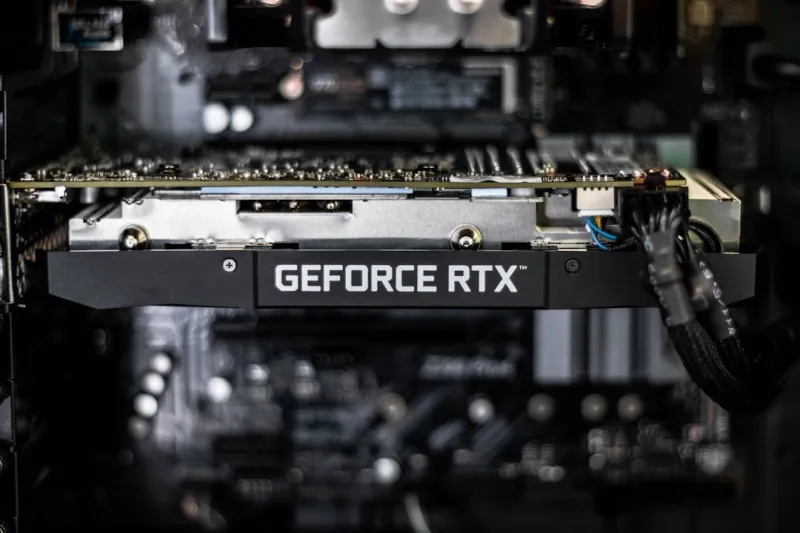
The GPU landscape in 2026 is dominated by cards that blend raw rasterization power with sophisticated AI upscaling engines. NVIDIA’s RTX 6000 Ada Lovelace series and AMD’s Radeon RX 8900 XT offer up to 40 TFLOPs of compute, but the real differentiator is how well they integrate DLSS 3 or FSR 3. If you game at 1440p or 4K, a card with strong ray‑tracing cores coupled with AI‑driven frame interpolation can double your perceived frame rate without sacrificing visual fidelity. However, these beasts demand robust power—often 450 W or more—so you’ll need a quality PSU and efficient cooling. For builders on a budget, the RTX 4060 Ti still packs enough AI acceleration to run DLSS 3 smoothly at 1080p, while the Radeon 7800 XT offers excellent raster performance for indie titles. If you’re troubleshooting GPU issues, my hands‑on guide walks through common symptoms and fixes, from BIOS updates to power‑limit tweaks.
Power Supplies and Cooling: Keeping the Beast Stable
Power delivery has never been more critical. Modern high‑end CPUs and GPUs can spike well beyond their rated TDP, and an undersized PSU will throttle performance or, worse, cause instability. In 2026, the gold standard is an 80 PLUS Platinum unit with a minimum of 850 W for a single‑GPU build, scaling up to 1200 W for dual‑GPU rigs or extensive storage arrays. Look for models with a fully modular design—this reduces cable clutter and improves airflow. On the cooling front, the shift towards larger, high‑static‑pressure fans has made a 360 mm AIO cooler the go‑to for most enthusiasts, delivering sub‑30 °C temperatures under load while staying quiet. For those who prefer air cooling, premium tower coolers with dual‑fan configurations now rival liquid solutions in thermal performance. Keep an eye on the PSU’s transient response rating; a strong ripple suppression ensures clean power for sensitive components like DDR6 RAM and high‑speed NVMe drives.
Motherboard Feature Set: PCIe 6.0, USB4, and Integrated AI
The motherboard you choose can either unlock or bottleneck the potential of your upgrades. In 2026, PCIe 6.0 slots are becoming mainstream on X670E and Z790‑class boards, offering 64 GT/s per lane—perfect for future GPUs and next‑gen storage devices. USB4 ports, delivering up to 40 Gbps, simplify connections for external SSDs, docking stations, and even high‑resolution VR headsets. Many manufacturers now embed AI‑accelerators directly on the board, providing off‑load for background tasks like video transcoding and real‑time security scanning. When evaluating a board, prioritize robust VRM designs (12+ phases for high‑end CPUs), ample M.2 slots with heatsinks, and a strong BIOS that supports rapid XMP 3 and memory overclocking. For a deeper dive into the hardware trends shaping 2026, see my Critical Tech Updates article.
Future‑Proofing with Modular Designs and Upgrade Paths
One mistake I see newcomers make is buying a case or PSU that locks them into a specific form factor. In 2026, modularity is king. Choose a mid‑tower case with removable drive cages and ample clearance for 360 mm radiators, as well as space for the upcoming 3‑slot GPUs that many manufacturers are rolling out. Opt for a power supply that supports modular cables with high‑current connectors, making it easier to add extra storage or a second graphics card down the line. Additionally, consider a motherboard that supports both PCIe 5.0 and PCIe 6.0; this ensures you won’t need a full platform swap when the next generation of GPUs hits the market. Investing a little more now in a flexible chassis and a robust PSU can save you $300–$500 in future upgrades, and it keeps your system looking clean and efficient for years.
Final Checklist and Resources for the 2026 Upgrade Journey
Before you hit “Buy Now,” run through this quick checklist: 1) Confirm your case supports the GPU length and cooler height you plan to use; 2) Verify the PSU wattage exceeds the combined TDP of CPU, GPU, and peripherals by at least 20 %; 3) Match your RAM speed and latency to the motherboard’s XMP profile; 4) Ensure your storage configuration leverages PCIe 5.0/NVMe for primary drives and consider an Optane cache for burst performance; 5) Double‑check BIOS version for the latest CPU microcode and PCIe support. For a broader view on how networking advances are influencing PC builds, read Why 2026 Is the Year Networking Finally Catches Up to AI. Armed with these insights, you’re ready to build a system that not only dominates today’s workloads but also stays relevant as the tech landscape evolves throughout the rest of the decade.