If you’ve been scrolling through the forums, watching unboxing videos, or just listening to the hum of a freshly built rig, you know that 2026 feels like the year the “PC upgrade” buzzword finally earned its stripes. The market is awash with new silicon, faster memory, and storage that practically teleports data from one corner of your build to the next. As someone who’s spent more nights tweaking BIOS settings than sleeping, I’ve learned that the smartest upgrades aren’t just about raw specs—they’re about synergy. You want every component to speak the same language, from the GPU’s AI cores down to the PSU’s efficiency curve. In this post, I’ll walk you through the upgrades that are actually moving the needle for power users, why they matter right now, and how you can future‑proof your rig without breaking the bank.
GPU: Harnessing AI‑Accelerated Rendering
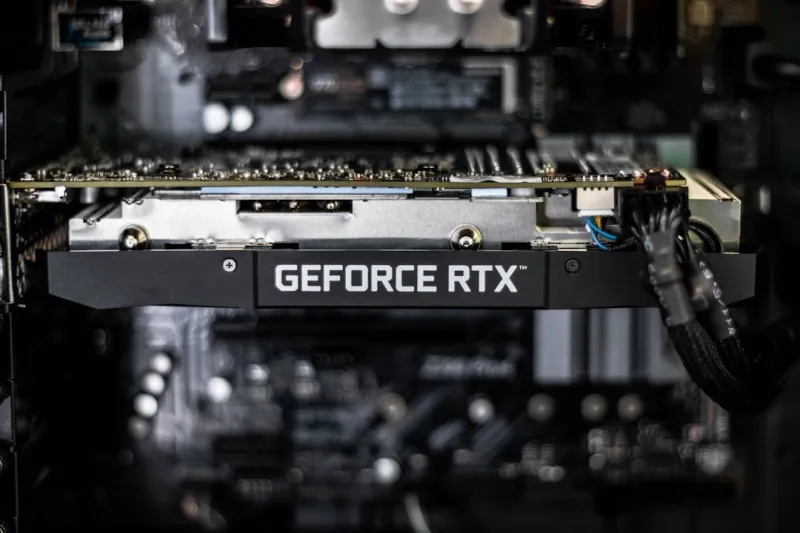
The graphics card market has finally settled into a rhythm that makes sense for power users. Nvidia’s RTX 6000 series and AMD’s Radeon RX 9 9000 line both ship with dedicated tensor cores that accelerate AI‑driven workloads—think real‑time ray tracing, deep‑learning upscaling, and even AI‑assisted video editing. In 2026, you’ll notice a clear shift: GPUs are no longer just “for gaming.” They’re becoming the central compute engine for everything from 3D rendering pipelines to machine‑learning inference on the desktop. If you’re running workloads that benefit from AI, pairing a high‑end RTX 6000 with the right drivers can shave hours off render times. For those who are still on the fence, check out AI Computing Unleashed: Power‑User Strategies for 2026 to see concrete benchmarks and real‑world use cases that justify the investment.
CPU: Choosing the Right Beast for Your Workload
The CPU landscape this year is a tale of two titans. Intel’s 14‑core “Raptor Lake‑Pro” series pushes clock speeds past 5 GHz while retaining a massive cache, making it a darling for single‑threaded gaming and low‑latency trading apps. Meanwhile, AMD’s Threadripper 8000 series brings a staggering 64 cores and 128 threads, perfect for rendering farms, virtualization, and heavy multitasking. What’s critical to understand is that raw core count isn’t the only metric; the architecture’s efficiency, PCIe lane count, and compatibility with DDR5‑5600 memory are equally vital. If you’re building a workstation that needs to juggle AI inference, 3D simulation, and high‑speed data crunching, the Threadripper’s massive lane count paired with a motherboard that supports PCIe 5.0 will keep you ahead of the curve. Don’t forget to review the Ultimate Guide to Building a Future‑Ready PC in 2026 for a side‑by‑side comparison that helps you match CPU power to your exact use case.
Memory and Storage: Speed Isn’t Optional Anymore
DDR5 has finally become the standard, and the 5600‑MHz kits are now the sweet spot for most power users. The latency improvements and higher bandwidth mean smoother performance in memory‑intensive applications like large‑scale simulations or high‑resolution video editing. However, speed alone won’t save you from bottlenecks if you’re not pairing it with the right storage. PCIe 5.0 NVMe SSDs are now hitting read speeds of 14 GB/s, cutting load times for massive game worlds and 3D assets dramatically. For those who still rely on older DDR4 or SATA drives, consider a hybrid approach: a PCIe 5.0 boot drive for OS and applications, paired with high‑capacity SATA for archival data. If you ever run into instability after a RAM upgrade, my Troubleshooting RAM: A Power‑User’s Step‑by‑Step Playbook can guide you through voltage tweaks, BIOS settings, and stress‑testing techniques that keep your system rock‑solid.
Motherboard Selection: The Backbone of Future‑Proofing
Choosing the right motherboard is akin to picking a solid foundation for a skyscraper. You need enough PCIe lanes to support multiple GPUs, a robust VRM design for sustained high‑load CPU performance, and native support for the latest I/O standards—think USB 4.0, Thunderbolt 4, and 10 GbE networking. The newest X670E and Z790 chipsets are both contenders, but the real differentiator is the power delivery architecture. A board with a 16+2 power phase design can handle the thermal spikes of a Threadripper under full load without throttling. Additionally, look for boards that offer BIOS flashback, which lets you update firmware without a CPU—a lifesaver if you ever need to support a newer CPU after purchase. For an in‑depth look at what to prioritize, see Mastering Motherboard Selection: The Power‑User’s Blueprint for 2026 where I break down the most important specs and give you a checklist to avoid buyer’s remorse.
Power Supply and Cooling: Keeping the Beast Hungry and Cool
Power delivery and thermal management have become more nuanced as component power draws increase. A 1000‑Watt Platinum‑rated PSU is now the baseline for high‑end builds, ensuring clean, efficient power to both CPU and GPU under peak load. Look for units with a fully modular design; it simplifies cable routing and improves airflow—crucial when you’re pushing multiple GPUs and a high‑end CPU. On the cooling front, hybrid liquid‑air solutions are gaining traction. A 360 mm AIO coupled with strategically placed intake fans can keep CPU temperatures in the mid‑30s°C even under sustained workloads, while keeping noise levels manageable. If you’re ambitious, a custom loop that cools both CPU and GPU can unlock extra performance headroom, but it demands meticulous planning—especially regarding coolant flow rates and reservoir placement. Remember, efficient cooling isn’t just about temperatures; it directly impacts component longevity, which is the ultimate ROI for any upgrade.
Case Design and Cable Management: The Unsung Heroes
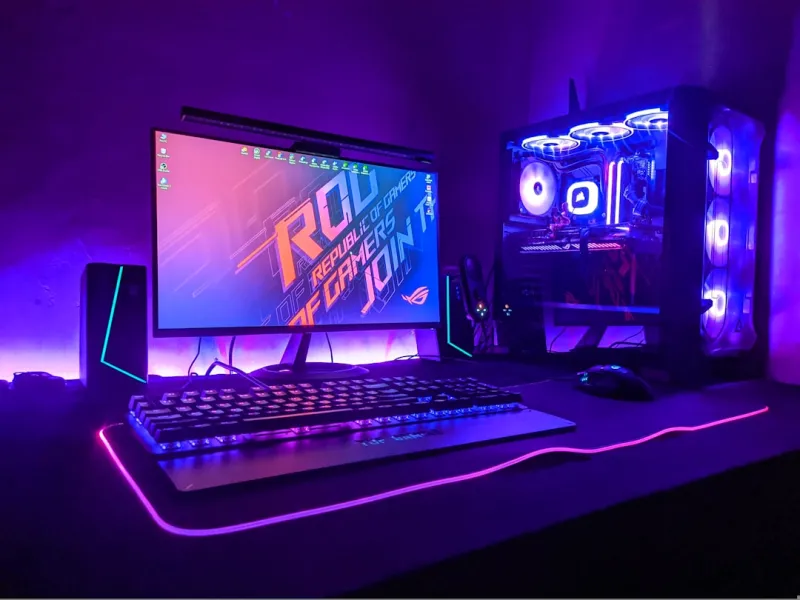
Even the most powerful internals can be undermined by a cramped, poorly ventilated case. In 2026, the market is leaning toward modular chassis that allow you to reconfigure drive bays, fan mounts, and even side panels without tools. Look for cases with mesh front panels and dust filters that can be cleaned without disassembly. Cable management isn’t just aesthetic; tidy routing improves airflow and reduces electromagnetic interference, both of which can subtly affect performance. Many premium cases now include built‑in cable channels, Velcro straps, and modular power distribution panels that simplify the build process. If you’re upgrading a legacy case, consider adding a dedicated cable management tray and upgrading to high‑flow fans that match the case’s acoustic profile. A clean build not only looks great for your streaming audience but also makes future upgrades less painful.
Software Integration: Leveraging Windows for Power Users
All the hardware upgrades in the world won’t matter if your operating system can’t tap into them efficiently. Windows remains the dominant platform for power users because of its deep driver support, robust virtualization capabilities, and extensive automation tools like PowerShell and the new AI‑driven Copilot. The latest Windows 11 updates include performance optimizations for high‑core‑count CPUs and better scheduling for GPU‑accelerated tasks. If you’re a developer or content creator, taking advantage of Windows’ native WSL 2 integration can streamline workflows that blend Linux tooling with Windows productivity apps. For a deeper dive into why Windows continues to be the ultimate playground for power users, read Why Windows Remains the Ultimate Playground for Power Users. Pairing the OS with your upgraded hardware ensures you extract every ounce of performance the silicon can deliver.
Future‑Proofing Your Rig: The Final Checklist
By now, you should have a solid sense of which upgrades will deliver the biggest performance gains for your specific workload. To summarize, aim for a GPU with dedicated AI cores, a CPU that matches your core‑count needs, DDR5‑5600 RAM paired with PCIe 5.0 storage, a motherboard with ample PCIe lanes and robust VRMs, a Platinum‑rated 1000 W PSU, and a well‑ventilated, modular case. Don’t overlook software optimization—keep your OS, drivers, and firmware up to date, and leverage Windows automation tools to squeeze out extra efficiency. For a comprehensive roadmap that ties all these pieces together, refer back to The Ultimate Guide to Building a Future‑Ready PC in 2026. With this strategy, your rig will stay ahead of the curve, ready to tackle AI workloads, next‑gen gaming, and any power‑user challenge that 2026 throws your way.