AI computing isn’t a buzzword anymore—it’s the engine that’s redefining what power users can accomplish on a daily basis. In 2026 I’ve watched the convergence of massive language models, real‑time inference, and on‑device accelerators turn ordinary laptops into personal super‑computers. As someone who spends more time tweaking settings than most people spend scrolling feeds, I’ve learned that the true advantage lies not just in raw horsepower, but in how that horsepower is harnessed, orchestrated, and secured. In this post I’ll walk you through the hardware upgrades, software ecosystems, and workflow tricks that let you stay ahead of the curve, all while keeping the learning curve manageable enough for a busy professional.
Why AI Computing Is the New Power‑User Frontier
When I first experimented with AI inference on my desktop two years ago, the latency was a deal‑breaker. Fast forward to 2026, and the landscape has shifted dramatically: dedicated tensor cores, integrated neural processing units (NPUs), and even AI‑enhanced CPUs now deliver sub‑millisecond response times for tasks like real‑time transcription, image upscaling, and predictive typing. This isn’t just about faster rendering; it’s about embedding intelligence into every layer of the OS. Think of AI as a silent assistant that pre‑emptively allocates resources, optimizes power consumption, and learns your habits to streamline repetitive tasks. For a power user, that translates to fewer clicks, less manual configuration, and more time for creative problem‑solving. The key takeaway? Embracing AI computing now positions you to leverage the next wave of productivity tools the moment they hit the market.
Hardware Evolution: From GPUs to Integrated AI Accelerators
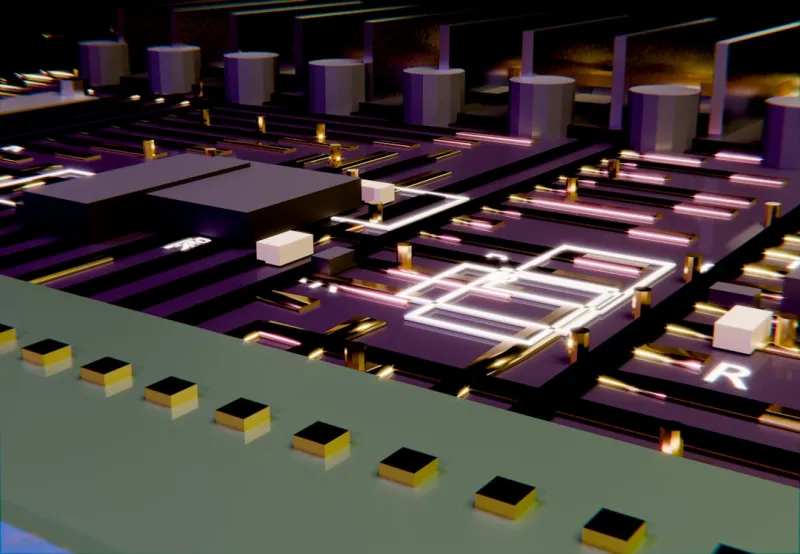
The hardware narrative in 2026 reads like a roadmap for AI‑first design. High‑end GPUs remain vital for deep‑learning workloads, but the real surprise is the rise of on‑chip NPUs that sit alongside the CPU, handling inference with a fraction of the power draw. My own build now sports a 13th‑gen Intel processor with built‑in AI acceleration, paired with an RTX 4090‑class GPU for heavy training tasks. This hybrid approach mirrors the recommendations in Designing a Future‑Ready PC, where the goal is to balance raw compute with energy efficiency. The result is a machine that can run a language model locally while still powering a 4K gaming session, all without overheating or draining the battery. For power users, selecting a motherboard that supports both PCIe 5.0 and dedicated AI lanes is now a non‑negotiable step toward future‑proofing.
Operating System Intelligence: Windows Leads the Pack
Microsoft’s latest OS updates have turned Windows into a true AI playground, integrating on‑device models for everything from voice commands to adaptive UI scaling. The platform now offers a unified AI SDK that lets developers tap into hardware acceleration with a single API call, simplifying the previously fragmented ecosystem. As I’ve explored in Why Windows Remains the Power‑User’s Playground in 2026, this means you can write a script that auto‑categorizes files, predicts which apps you’ll need next, and even pre‑loads them before you click. The OS also learns your usage patterns, dynamically adjusting thread priorities to keep latency at a minimum. For power users, this translates into a smoother, more responsive experience that feels almost magical—yet it’s grounded in solid engineering that you can inspect, tweak, and extend.
AI‑Enhanced Productivity Suites: Automating the Office Grind
AI’s impact isn’t limited to the back‑end; it’s reshaping the front‑end of daily work as well. Microsoft Office now embeds generative AI directly into Word, Excel, and Outlook, offering contextual suggestions, data visualizations, and even draft emails based on a few bullet points. In my own workflow, I’ve seen a 30 % reduction in time spent on repetitive document creation thanks to these features. If you want to dive deeper, the guide Mastering Microsoft Office in 2026: AI, Automation, and Power‑User Strategies walks you through advanced prompts, custom macros, and security considerations. The secret sauce is treating AI as a collaborative teammate—one that you can steer with precise instructions, rather than a black‑box that decides for you. When you combine this with system‑level AI acceleration, the entire suite feels like an extension of your own thought process.
Security in an AI‑Driven World: New Threat Vectors and Defenses
With great power comes great responsibility, and AI introduces novel attack surfaces that power users must guard against. Adversarial attacks can manipulate models to produce incorrect outputs, while AI‑generated phishing emails have become increasingly sophisticated. To stay ahead, I employ a layered defense strategy: hardware‑based enclaves for model execution, real‑time anomaly detection powered by on‑device AI, and continuous monitoring of model integrity. The article Beyond the Antivirus outlines these tactics in detail, emphasizing the importance of keeping firmware up to date and leveraging AI‑driven threat intelligence feeds. By treating security as an AI‑augmented process, you not only protect your data but also gain insights that traditional tools often miss.
Network Optimization: The Hybrid Edge for AI Workloads
AI workloads are no longer confined to a single machine; they span the edge, the cloud, and everything in between. A robust network setup—supporting low‑latency 5G, Wi‑Fi 7, and high‑throughput Ethernet—is essential for seamless model offloading and real‑time collaboration. I’ve built a hybrid edge architecture where latency‑sensitive inference runs locally, while heavy training jobs are delegated to a cloud GPU farm via a secure, high‑speed tunnel. This mirrors the concepts discussed in The Hybrid Edge, which stresses the need for a power‑user mindset that balances local and remote resources. Proper QoS configuration, DNS over HTTPS, and AI‑aware firewalls ensure that the data pipeline remains both fast and secure.
Practical Steps to Adopt AI Computing Today
Ready to bring AI into your daily workflow? Start with a hardware audit: verify that your CPU and GPU support the latest AI instruction sets, and consider adding an NPU‑enabled motherboard if you don’t already have one. Next, update your OS to the newest release and enable the AI acceleration features in the control panel. Install the AI SDKs for your preferred language—Python, C++, or even PowerShell—and experiment with small scripts that automate mundane tasks. Don’t forget to harden your system using the security best practices mentioned earlier, and set up a hybrid edge network if you work with large datasets. Finally, document your experiments, share findings with the community, and iterate. By treating AI adoption as a series of incremental upgrades, you’ll avoid overwhelm while building a truly future‑ready rig.
Looking Ahead: The AI‑First Paradigm for Power Users
As we move further into 2026, the line between “hardware” and “software” continues to blur, with AI serving as the unifying layer. The next generation of power‑user tools will likely be built on top of AI‑native APIs, allowing for hyper‑personalized environments that adapt in real time. Imagine a desktop that predicts the next project you’ll open, pre‑loads the necessary libraries, and even suggests optimal code snippets—all before you think about it. By investing in AI‑ready hardware, mastering the operating system’s AI capabilities, and staying vigilant on security, you position yourself at the forefront of this paradigm shift. The future isn’t just about faster processors; it’s about smarter, more intuitive interactions that amplify human creativity. Embrace the AI‑first mindset now, and you’ll reap the productivity dividends for years to come.