When I first opened the case of my 2021 rig, I never imagined the hardware landscape would evolve this dramatically by 2026. Today, the line between consumer‑grade and workstation‑grade components is blurring, and power users like us are forced to think like architects, not just assemblers. In this deep dive, I’ll walk you through the trends reshaping CPUs, GPUs, motherboards, memory, storage, and cooling—plus how to stitch them together into a system that won’t feel obsolete before the next upgrade cycle. The key isn’t just buying the flashiest parts; it’s about understanding the ecosystem, the bottlenecks that emerge under real‑world workloads, and the strategic compromises that keep performance sustainable. Whether you’re a creator crunching 8K video, a data scientist training models on‑device, or a gamer chasing the highest frame rates, the hardware decisions you make now will dictate your productivity and enjoyment for years to come.
CPU Evolution: From Clock Speed to Core Efficiency
2026 marks the year where raw clock speeds finally gave way to intelligent core scaling. Modern processors now feature heterogeneous cores—high‑performance “P‑cores” for bursty, single‑threaded tasks, and efficient “E‑cores” that handle background services and AI inference without draining the battery. This design mirrors the way operating systems schedule tasks, giving power users unprecedented multitasking fluidity. For example, a 16‑core CPU with 8 P‑cores and 8 E‑cores can keep a demanding video render engine humming while simultaneously running a virtual machine, a web server, and a low‑latency audio workstation. When choosing a CPU, prioritize architectures that support advanced power‑gating and dynamic boost algorithms, and verify that the platform’s BIOS offers granular control over core allocation. Pairing such a CPU with a motherboard that exposes fine‑tuned voltage rails and robust VRM cooling will let you push performance safely, especially when overclocking or running extended stress tests.
GPU Breakthroughs: Harnessing Real‑Time Ray Tracing and AI Upscaling
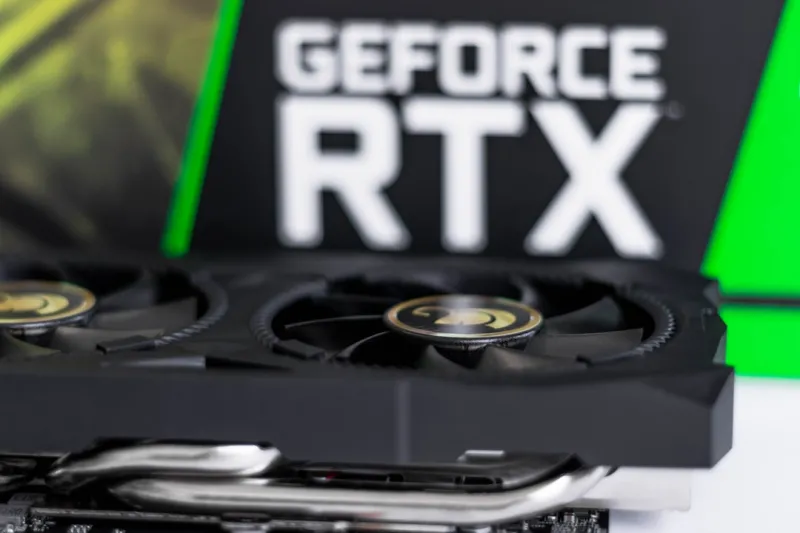
The graphics card market has finally stabilized after a tumultuous few years of supply constraints, and 2026’s flagship GPUs bring more than just raw rasterization power. Real‑time ray tracing has become a baseline feature, while AI‑driven upscaling engines—like NVIDIA’s DLSS 4 and AMD’s FSR 3—deliver 4K performance on mid‑range silicon. What’s truly exciting for power users is the convergence of compute and graphics cores: modern GPUs now expose dedicated tensor and ray‑tracing units via standardized APIs, letting developers offload machine‑learning inference directly to the GPU. This means your photo‑editing suite can apply AI filters at native resolution without a CPU bottleneck, and your gaming rigs can run ray‑traced titles at high frame rates with minimal power draw. When building a system, consider the GPU’s power envelope, the number of HDMI 2.1/DisplayPort 2.0 outputs for future‑proof displays, and the availability of PCIe 5.0 x16 lanes on your motherboard to avoid bandwidth throttling.
Why Motherboard Choices Matter More Than Ever for Power Users
The motherboard is the silent workhorse that determines how well every other component can shine. In 2026, the distinction between “budget” and “high‑end” boards has narrowed, but the features that truly set a platform apart remain critical. Look for boards that offer a robust VRM design with at least 12+ power phases, ample heatsink coverage, and dual‑BIOS for safety. Why Motherboard Choices Matter More Than Ever for Power Users explores how the right chipset can unlock PCIe 5.0 lanes for next‑gen SSDs and GPUs, support for DDR5‑6000+ memory, and integrated networking like 10 GbE and Wi‑Fi 7. Additionally, check for flexible I/O options: multiple M.2 slots with heatsinks, USB‑4/Thunderbolt 4 ports, and a rich suite of SATA ports for legacy drives. A well‑chosen board also offers BIOS features such as memory training, fine‑grained fan curves, and power‑limit adjustments—essential tools for squeezing every ounce of performance from your CPU and GPU while keeping thermals in check.
Memory Mastery: DDR5, Latency, and the RAM Playbook
DDR5 has finally matured, delivering per‑module capacities of 64 GB and speeds exceeding 7200 MT/s, but the true performance gains come from balancing frequency with latency. In demanding workloads like large‑scale simulation or AI model training, lower CAS latency can outweigh raw speed, especially when paired with a CPU that benefits from tighter memory timings. Diagnosing and Fixing RAM Problems: A Power‑User’s Playbook outlines how to benchmark memory with tools such as MemTest86 and AIDA64, and how to spot common issues like ECC errors or mismatched DIMM configurations. For a future‑proof build, I recommend installing a matched kit of at least 32 GB (2 × 16 GB) of DDR5‑6000 with CL30 or better, and enabling XMP profiles in the BIOS while manually fine‑tuning timings if you’re comfortable with the process. Remember that a well‑tuned memory subsystem not only boosts frame rates but also accelerates data‑intensive tasks like video encoding and large database queries.
Storage Strategies: PCIe 5.0 NVMe and the Rise of Persistent Memory
When it comes to storage, the mantra “capacity over speed” no longer holds true for power users. PCIe 5.0 NVMe SSDs now deliver sequential reads above 14 GB/s and sub‑100 µs random read latency, turning the drive into an extension of system memory for certain workloads. Pair this with a modest secondary SATA SSD for bulk storage, and you’ll enjoy both lightning‑fast application launches and ample space for media libraries. An emerging technology worth watching is persistent memory (PMEM), which sits on the memory bus and offers near‑RAM speeds with non‑volatile data retention. While still niche, some high‑end motherboards now provide M.2 slots that support both NVMe and PMEM modules, allowing you to allocate a “fast‑track” tier for databases or virtual machines. In practice, a tiered storage approach—primary PCIe 5.0 for OS and active projects, secondary SATA or QLC for archives—delivers the best balance of performance, cost, and longevity.
Power Delivery and Cooling: Keeping the Beast Tame
High‑performance components demand equally robust power supplies and cooling solutions. A quality 80 Plus Platinum PSU rated for 850 W–1000 W provides headroom for overclocked CPUs, multi‑GPU setups, and future upgrades, while also delivering clean, stable voltage to protect sensitive electronics. On the cooling front, hybrid AIO liquid coolers with a 360 mm radiator and integrated pump control have become the norm for CPUs exceeding 200 W TDP. For GPUs, consider aftermarket water blocks if you’re chasing the lowest temperatures, but ensure your case can accommodate the extra radiators and that your pump can handle the added load. Additionally, case airflow remains crucial: strategically placed intake fans with high static pressure filters can keep dust out, while exhaust fans with high airflow move heat out efficiently. Monitoring tools like HWInfo64 let you set custom fan curves based on temperature thresholds, ensuring that performance peaks never come at the expense of component lifespan.
AI Acceleration: Dedicated Tensor Cores and Edge Computing
The rise of on‑device AI has transformed how power users approach both creative and analytical tasks. Modern CPUs and GPUs now embed dedicated tensor cores that accelerate matrix operations, which are the backbone of deep‑learning inference. For instance, a GPU with 200 TFLOPs of AI performance can run real‑time style transfer on 4K video, dramatically reducing render times. Moreover, specialized AI accelerators—such as the Intel Ponte Vecchio or AMD’s Instinct series—can be installed via PCIe 5.0 slots to offload heavy inference workloads, freeing up the main GPU for graphics. When building a rig aimed at AI workloads, prioritize motherboards with ample PCIe lanes, ensure your PSU can handle the extra draw, and install sufficient cooling for both the GPU and any add‑in accelerator cards. This architecture lets you experiment with local model training, edge inference, and even generative AI applications without relying on cloud resources, keeping data private and latency minimal.
Building a Future‑Ready Rig: Hardware Strategies Power Users Can’t Ignore
Putting all these pieces together isn’t just about slapping the latest parts onto a case; it’s about designing a platform that can evolve. Start with a chassis that offers modular drive bays, removable motherboard trays, and space for up to three radiators. Choose a motherboard that supports PCIe 5.0 x16, dual‑M.2 slots with heatsinks, and a comprehensive I/O suite, as highlighted in Building a Future‑Ready Rig. Opt for a high‑capacity, high‑efficiency PSU, and allocate budget for a robust cooling loop that can be expanded if you add more GPUs or AI accelerators later. Finally, document your BIOS settings and component configurations; this habit simplifies future upgrades and troubleshooting. By treating your build as an evolving ecosystem rather than a one‑time purchase, you’ll stay ahead of the performance curve and avoid costly overhauls when the next generational leap arrives.
Security and Firmware: Keeping Your Hardware Trustworthy
In an age where firmware attacks are on the rise, power users must treat the hardware supply chain as a critical security layer. Ensure your motherboard supports secure boot, TPM 2.0, and firmware signing, and keep BIOS updates current—missing a patch can expose you to vulnerabilities that bypass the OS. Likewise, SSDs now often include built‑in encryption, which you should enable to protect data at rest. Network interfaces with hardware‑based firewalls, such as those found in newer Intel and Realtek chips, add another defense line. Regularly audit your system’s firmware versions using tools like Chipsec, and consider adopting a “golden image” approach where you maintain a clean, verified baseline configuration for rapid redeployment. These practices safeguard your investment and maintain the integrity of the high‑performance environment you’ve meticulously built.
Conclusion: The Power‑User’s Roadmap to Sustainable Performance
By 2026, the hardware landscape offers a palette of choices that, when combined thoughtfully, can deliver a system capable of handling today’s demanding workloads and tomorrow’s surprises. The key takeaway is to focus on balance: a CPU with intelligent core distribution, a GPU that unifies graphics and AI, a motherboard that offers future‑proof connectivity, high‑speed DDR5 memory tuned for low latency, ultra‑fast storage tiers, and a power and cooling foundation that can adapt as you add more capabilities. Embrace a proactive security mindset, keep firmware up‑to‑date, and view your rig as a living platform rather than a static purchase. With this roadmap, you’ll not only maximize performance but also extend the lifespan of your investment, keeping you ahead of the curve in the ever‑accelerating world of computer hardware.