
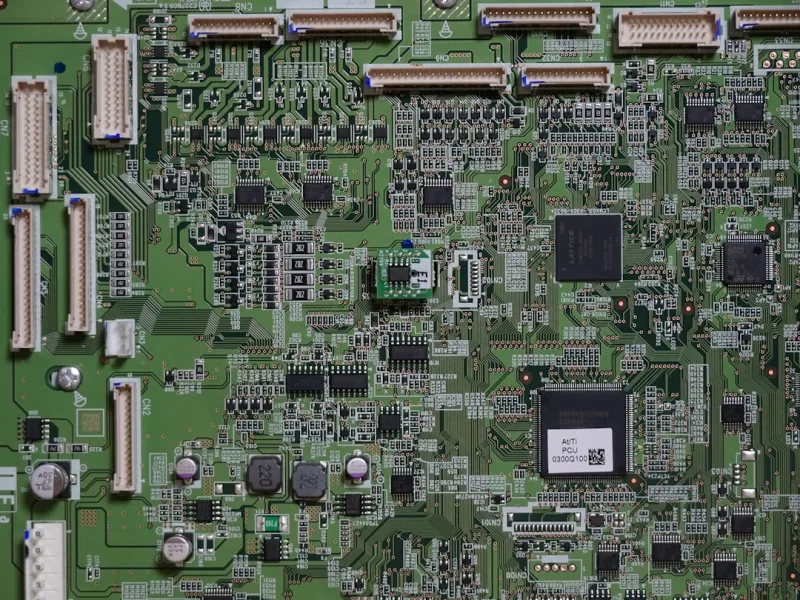
When you’re building a rig that’s supposed to last a decade, the motherboard is the unsung hero that dictates everything from raw performance to future upgrades. In 2026, the landscape has shifted dramatically—thanks to tighter integration with AI‑driven firmware, a resurgence of high‑density VRMs, and an unrelenting push for bandwidth. As a power‑user who has spent countless nights tweaking BIOS settings and swapping out components, I’ve learned that the board you choose can either be the catalyst for breakthroughs or the bottleneck that drags you back to the drawing board. This article dives deep into the trends that matter most right now, translating tech jargon into actionable insight so you can pick a board that not only meets today’s demands but also anticipates tomorrow’s.
The Chipset Revolution of 2026
Chipsets have become the true brains behind modern platforms, moving beyond simple lane allocation to offering on‑board AI acceleration, advanced memory management, and dynamic power scaling. AMD’s latest X‑Series and Intel’s Raptor Lake Refresh chips both rely on chipsets that can intelligently route traffic between PCIe 6.0 lanes, DDR5 channels, and integrated graphics cores, reducing latency by up to 15 percent in real‑world workloads. What’s more, the new “Smart Lane” technology can reconfigure lanes on the fly, allowing a single slot to serve as both a high‑speed storage conduit and a GPU interface depending on the task at hand. For power users, this means you can prioritize data‑intensive AI training sessions one day and high‑frame‑rate gaming the next, all without swapping cards. If you need a deeper dive into why chipset selection matters, check out Why Motherboard Choices Matter More Than Ever for Power Users for a comprehensive guide.
Power Delivery and the Rise of Ultra‑Robust VRMs
Power delivery has always been a make‑or‑break factor, but in 2026 we’ve entered an era where VRM designs rival small data‑center power supplies. Manufacturers are packing up to 18 phases of 80‑plus efficiency, complete with digital control loops that adapt voltage on a per‑core basis in real time. This granular approach not only stabilizes overclocked CPUs but also extends the lifespan of the board by reducing thermal stress. The shift to gallium nitride (GaN) MOSFETs has slashed heat output, enabling denser cooling solutions—think integrated heat pipes that run directly under the VRM array. As someone who routinely pushes CPUs beyond stock frequencies, I’ve seen how a well‑engineered VRM can shave off several degrees Celsius, translating into higher boost clocks and longer sustained performance in both gaming and compute workloads.
Connectivity: PCIe 6.0, USB4, and the Return of Thunderbolt
The bandwidth arms race shows no sign of slowing. PCIe 6.0, with its 64 GT/s per lane, is now standard on high‑end motherboards, delivering up to 256 GB/s in a 16‑lane configuration—enough to saturate the newest NVMe 4.0 SSDs and next‑gen graphics cards simultaneously. Coupled with USB4 3.2 and the resurgence of Thunderbolt 5, external device performance has leapt forward, making external GPUs and high‑speed storage docks viable for mobile workstations. For creators who rely on 8‑K video streams or massive scientific datasets, this connectivity means you can feed data to the GPU without hitting the dreaded “PCIe bottleneck.” It also future‑proofs your system against upcoming peripherals that will demand these speeds, so you won’t be stuck upgrading the entire platform in a few years.
Form Factors: Balancing Real Estate with Power
While ATX remains the workhorse for most power users, the rise of high‑density components has made mini‑ITX and micro‑ATX more compelling than ever. Modern mini‑ITX boards now pack full‑size VRM arrays, multiple M.2 slots, and even Wi‑Fi 7 modules without sacrificing thermal performance. However, the trade‑off is reduced expansion—only a single PCIe x16 slot and limited RAM slots. If you’re building a compact workstation that still needs to house dual GPUs for deep learning, an ATX board with reinforced PCIe slots and reinforced PCB layers is still the safest bet. The decision ultimately hinges on your spatial constraints versus expansion needs, and the right choice can mean the difference between a cramped, heat‑starved box and a clean, efficient machine that runs cool under load.
BIOS/UEFI Evolution: AI‑Assisted Overclocking and Diagnostics
Gone are the days of manually tweaking voltage curves line by line. The latest UEFI firmware incorporates AI algorithms that analyze your hardware’s behavior in real time, offering one‑click overclock profiles that are both safe and aggressive. These intelligent systems can predict thermal runaway before it happens and automatically dial back power delivery, protecting both the CPU and the motherboard. Additionally, built‑in diagnostics now log micro‑fluctuations in voltage and temperature to a cloud‑based dashboard, allowing you to review performance trends across multiple builds. As someone who loves to push hardware to its limits, these tools have been a game‑changer—providing the confidence to explore higher clocks without the fear of catastrophic failure.
Security at the Silicon Level
Security is no longer an afterthought; it starts at the silicon. Modern motherboards integrate hardware‑rooted trust modules, including TPM 2.2 and dedicated crypto‑accelerators that offload encryption tasks from the CPU. Some high‑end boards even feature built‑in intrusion detection sensors that can flag tampering attempts at the BIOS level. For power users who handle sensitive data or develop software that must meet stringent compliance standards, these features are indispensable. They protect against firmware attacks—a growing vector in the threat landscape—by ensuring that only signed firmware can execute during boot. Pair this with secure boot and you have a fortress that stands up to even the most sophisticated malware, reinforcing the points made in Beyond the Antivirus.
Networking Integration: The Backbone of a Future‑Ready Build
High‑speed networking is now a native feature on most premium motherboards, with 10 GbE and even 25 GbE Ethernet ports becoming commonplace. Coupled with Wi‑Fi 7, which promises sub‑millisecond latency and multi‑gigabit speeds, the board itself becomes the hub of a hyper‑responsive ecosystem. This is especially critical for users who run virtual machines, containers, or distributed compute clusters, where network latency can become the silent performance killer. For a deeper look at how to align your network strategy with your hardware, see Future‑Proofing Your Network for Power Users. By selecting a motherboard that offers both wired and wireless excellence, you set the stage for seamless data flow across all your devices.
Designing a Future‑Ready Motherboard Strategy
Choosing a board isn’t just about ticking off specs; it’s about crafting a roadmap that aligns with your evolving needs. A solid strategy begins with identifying which features will become non‑negotiable in the next five years—think PCIe 6.0, DDR5‑5600, and integrated AI accelerators. Next, evaluate the upgrade path: does the manufacturer provide BIOS updates for upcoming CPUs? Are the power phases modular enough to support higher‑TDP processors? This holistic approach is detailed in Designing a Future‑Ready Motherboard Strategy for Power Users, where I outline a checklist that helped me avoid costly rebuilds. By treating the motherboard as a long‑term investment rather than a disposable component, you can future‑proof your rig while keeping total cost of ownership in check.
Putting It All Together: Your Path Forward
In the end, the perfect motherboard for a 2026 power‑user is one that balances cutting‑edge performance, robust power delivery, expansive connectivity, and iron‑clad security—all while fitting within your physical constraints. Whether you gravitate toward an ATX behemoth packed with VRM phases or a compact mini‑ITX marvel with AI‑driven BIOS, the key is to align the board’s capabilities with your workflow’s demands. Remember to factor in future upgrades, firmware support, and the ecosystem of accessories you’ll rely on. With the insights shared here, you’re equipped to make an informed decision that will keep your system humming smoothly for years to come. Happy building, and may your next motherboard be the launchpad for your biggest breakthroughs.