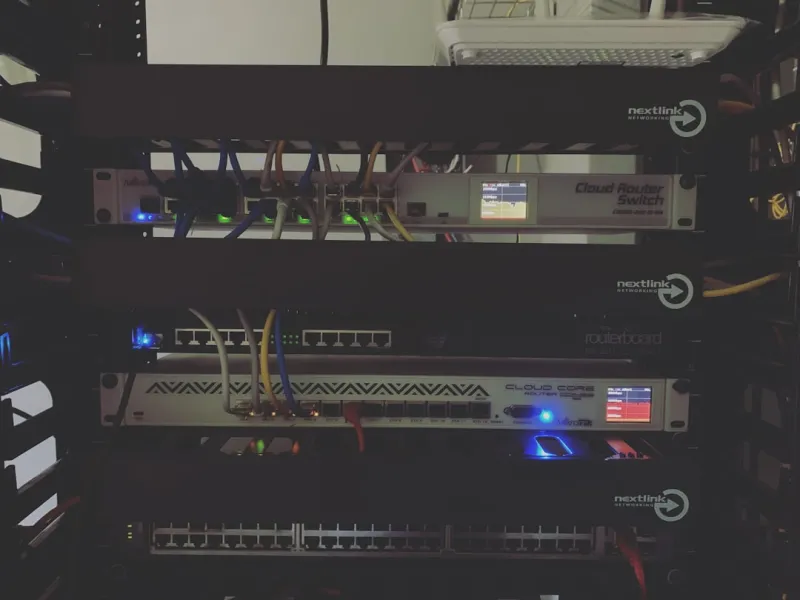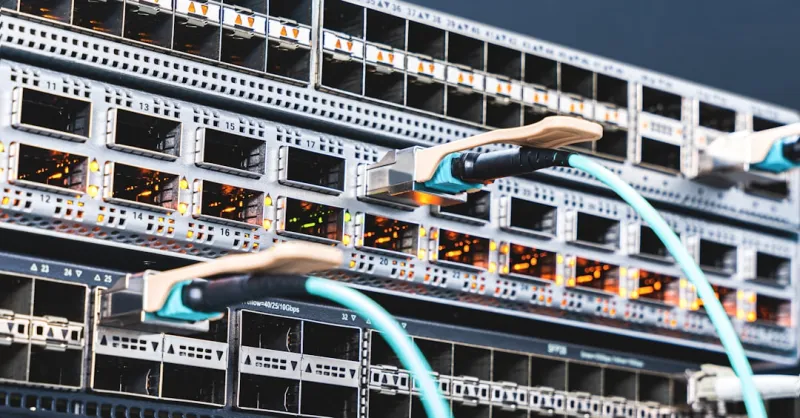
When you’re a power user, your network isn’t just a utility—it’s the bloodstream that fuels every creative burst, data‑intensive workflow, and multiplayer marathon. In 2026, the expectations for latency, bandwidth, and security have leapt far beyond the “good enough” of a few years ago. I’ve spent countless nights tweaking routers, testing mesh solutions, and wrestling with firmware quirks, and I’ve learned that a truly future‑proof network starts with a clear philosophy: anticipate the next wave before it hits, and build on standards that can evolve gracefully. This means embracing the latest Ethernet speeds, mastering Wi‑Fi 7’s multi‑link operation, and layering intelligent segmentation that can isolate a home lab from a streaming TV set without sacrificing performance. In the sections that follow, I’ll break down the hardware, software, and strategic mind‑set that will keep your connections blister‑fast, ultra‑secure, and ready for whatever new protocol the tech giants unleash next.
Embracing the New Speed Standards
First, let’s talk raw throughput. The era of 1 GbE is officially behind us for power users, and 10 GbE Ethernet has become the baseline for home and small‑office setups. Thanks to affordable RJ‑45 SFP+ modules and PoE++ switches, you can now run a 10 GbE backbone without breaking the bank. Pair that with Wi‑Fi 7, which introduces Multi‑Link Operation (MLO) allowing a single device to simultaneously use 2.4 GHz, 5 GHz, and the new 6 GHz band. The result is a seamless handoff that keeps latency in the single‑digit millisecond range—even when you’re sprinting across a crowded apartment complex. I upgraded my primary NAS to a 10 GbE NIC, and the difference in file‑transfer speeds was night‑and‑day; large 4 K video projects now zip across the network in seconds, freeing up CPU cycles for rendering. To truly leverage these speeds, make sure your cabling is at least Cat 6a or better, and consider fiber‑optic runs for distances beyond 100 meters to eliminate signal degradation.
Intelligent Segmentation and Security
Speed alone won’t protect you from the growing tide of cyber threats that target home networks. This is where intelligent segmentation shines. By using VLANs to separate your workstations, IoT devices, and guest traffic, you create distinct security zones that prevent a compromised smart bulb from reaching your development environment. Modern routers now include built-in AI‑driven threat detection that can automatically quarantine rogue devices, but you still need to define clear policies. I recommend a three‑tier approach: a “Core” VLAN for high‑performance work devices, a “Smart” VLAN for IoT and home automation, and a “Guest” VLAN that’s completely isolated from internal resources. When combined with a firewall that supports deep packet inspection, you can enforce bandwidth caps for non‑critical traffic, ensuring your video calls never suffer while a game console is downloading updates. For those who love open‑source, pfSense or OPNsense provide granular control without a subscription, and they integrate smoothly with most consumer‑grade routers through the “bridge mode” setup.
Software‑Defined Networking (SD‑WAN) for the Home Lab
SD‑WAN isn’t just for enterprises—it’s a powerful tool for any power user who needs to juggle multiple internet service providers (ISPs) or wants a resilient fallback connection. By deploying a lightweight SD‑WAN appliance or using a router with built‑in load‑balancing, you can automatically route critical traffic over the fastest link while sending bulk downloads through a secondary, cheaper ISP. The magic lies in policy‑based routing: you can tell the system to always send VPN traffic through a dedicated line, preserving both speed and privacy. In my own lab, I’ve set up a dual‑WAN configuration where my primary fiber connection handles everything under 10 Mbps, while my secondary 5G hotspot kicks in for anything larger, thanks to a simple policy script. This not only provides redundancy during outages but also gives you the flexibility to test how different services behave under varying latency and jitter conditions—a priceless advantage when troubleshooting cloud‑based workloads.
Choosing the Right Network Hardware
Hardware selection is where theory meets reality, and the choices you make today will dictate how often you need to upgrade tomorrow. When shopping for a router, look for a unit that supports Wi‑Fi 7, has at least four gigabit LAN ports (preferably 2.5 GbE or 10 GbE), and offers a robust firmware ecosystem—think OpenWrt or the vendor’s own open‑source‑compatible OS. For switches, prioritize modular designs with SFP+ ports, because they give you the flexibility to upgrade to higher‑speed optics without swapping the entire unit. I’ve found that a modest 8‑port managed switch from a reputable brand can serve both my office desk and my home studio, while still leaving room for future expansion. Don’t forget the humble network adapter: a quality NIC with support for SR‑IOV and off‑loading features can dramatically reduce CPU overhead during high‑throughput transfers, keeping your system responsive even under heavy network load.
Automation, Orchestration, and AI‑Driven Insights
One of the biggest game‑changers for power users in 2026 is the rise of AI‑driven network analytics. Modern routers now ship with built‑in machine learning engines that can predict congestion before it happens, automatically adjusting channel selection, power levels, and even QoS settings on the fly. Pair this with automation tools like Ansible or Terraform, and you can version‑control your entire network configuration—treating it like any other piece of code. I keep a Git repository for my network templates; whenever I add a new device, a simple pull‑request updates the VLAN assignments, firewall rules, and DHCP reservations across the board. This approach not only reduces human error but also makes it trivial to roll back changes if something goes awry. For those who crave deeper insights, consider integrating a network telemetry platform that visualizes latency heatmaps and bandwidth usage in real time, allowing you to spot bottlenecks before they affect productivity.
Monitoring, Logging, and Proactive Maintenance
Even the most meticulously built network can falter without proper monitoring. Implement a centralized logging solution—whether it’s a self‑hosted ELK stack or a lightweight Loki/Grafana combo—to capture syslog messages from every router, switch, and access point. Set up alerts for abnormal spikes in traffic, repeated authentication failures, or firmware update reminders. In my setup, a simple Grafana dashboard displays per‑device throughput, signal strength for each Wi‑Fi band, and CPU utilization of my router, all refreshed every ten seconds. When an alert fires, I can quickly SSH into the offending device and address the issue before it escalates. Remember, proactive maintenance isn’t just about fixing problems; it’s about gathering data that informs future upgrades. By analyzing trends over months, you can predict when a switch will need a port upgrade or when a Wi‑Fi channel will become too congested, allowing you to plan purchases well in advance.
Strategic Roadmap for Future‑Proofing Your Network
Putting it all together, the path to a future‑proof network for power users is a blend of forward‑thinking hardware, intelligent segmentation, and automated management. Start by establishing a high‑speed wired backbone with 10 GbE and fiber where feasible, then layer Wi‑Fi 7 for wireless flexibility. Segment your traffic with VLANs and enforce strict security policies, leveraging AI‑enabled firewalls for real‑time threat mitigation. Adopt SD‑WAN principles to ensure redundancy and performance across multiple ISPs, and lock down your configuration with version‑controlled automation. For ongoing vigilance, deploy AI‑driven analytics and a robust logging pipeline that alerts you to the slightest deviation from the norm. If you’re looking for a concise checklist, check out Future‑Proof Your Network Playbook, which distills these concepts into actionable steps. Additionally, the guide Power‑User Network Strategies for 2026 offers deeper dives into hardware selection and firmware tuning, ensuring you stay ahead of the curve as standards evolve.
Conclusion: Keep Evolving, Keep Winning
In the ever‑accelerating world of 2026 networking, standing still is the same as falling behind. By treating your network as a living system—one that you continuously monitor, update, and expand—you’ll maintain the ultra‑low latency and rock‑solid security that power users demand. The tools and standards are available today; it’s up to you to stitch them together into a cohesive, future‑ready architecture. Whether you’re a developer pushing massive datasets to the cloud, a creator streaming 8 K video, or a gamer chasing the next competitive edge, a well‑engineered network will be the silent partner that makes every task feel effortless. Embrace the strategies outlined here, stay curious about emerging protocols, and let your network be the foundation that propels your digital ambitions forward.