When I first started tinkering with routers back in the early 2010s, the biggest headache was simply getting a stable Wi‑Fi signal in the living room. Fast‑forward to 2026, and the landscape has transformed into a high‑velocity, AI‑driven ecosystem where every millisecond counts. As a power‑user who runs multiple virtual machines, streams 8K video, and trains small‑scale neural nets on a home lab, I’ve learned that a network is no longer a peripheral—it’s the backbone of every digital experience. In this post I’ll break down the most critical networking trends of the year, explain why they matter to heavy‑duty users, and hand you a playbook of practical steps you can take right now to keep your LAN ahead of the curve. From fiber‑to‑the‑home rollouts to the rise of Wi‑7, the stakes are higher, and the tools at our disposal are more powerful than ever. Let’s dive into what makes a network truly future‑proof in 2026.
Why Future‑Proofing Your Network Is a Power‑User Imperative
The first thing every serious builder must grasp is that bandwidth is only part of the story; latency, reliability, and security together dictate whether a network can handle today’s workloads and tomorrow’s surprises. In 2026, the average household is consuming upwards of 100 Gbps of raw data per month thanks to 8K streaming, cloud‑gaming subscriptions, and the proliferation of IoT devices. Meanwhile, enterprises are shifting more compute to the edge, demanding sub‑millisecond response times for AI inference. If your router is still stuck at 1 Gbps or your Wi‑Fi is limited to Wi‑6, you’ll quickly feel the choke‑point as applications demand more throughput and lower jitter. For power‑users, this translates to delayed model training, choppy video calls, and a frustrating bottleneck when moving large datasets across devices. Future‑proofing isn’t a luxury—it’s a necessity that protects your investment and ensures you can adopt emerging technologies without a costly overhaul.
Key Technologies Shaping 2026 Networks
One of the most visible shifts this year is the mainstream adoption of Wi‑7 (802.11be), promising up to 30 Gbps theoretical speeds and dramatically improved multi‑user MIMO handling. Early‑adopter routers now support 320 MHz channel widths and 16 spatial streams, meaning you can finally stream multiple 8K feeds while gaming on the same band without noticeable degradation. On the wired side, 10 GbE is becoming the new baseline for desktop workstations, and 25 GbE is creeping into high‑end NAS devices. The rise of 2.5 GbE and 5 GbE Ethernet adapters in laptops makes a hybrid approach viable: critical low‑latency traffic over copper, while bulk transfers ride the faster fiber backbone. Additionally, Software‑Defined Wide Area Networking (SD‑WAN) is democratizing enterprise‑grade traffic shaping for home labs, letting you prioritize AI training data over casual browsing with a few clicks. Understanding how these technologies interplay gives you the confidence to choose components that won’t be obsolete by the next firmware update.
Security, however, remains the elephant in the room. Modern malware is evolving faster than ever, leveraging AI to mutate and evade detection. Power‑users can no longer rely on perimeter firewalls alone; a zero‑trust architecture that authenticates every device and encrypts traffic end‑to‑end is essential. I recently read a deep dive on this very topic—Why Modern Malware Is Evolving Faster Than Ever—and What Power Users Must Do—which highlighted how compromised IoT gadgets can become footholds for sophisticated ransomware. Implementing network‑level segmentation with VLANs, enabling WPA3‑Enterprise on Wi‑Fi, and deploying AI‑driven intrusion detection systems (IDS) are now baseline practices for anyone who treats their network as a critical asset rather than an afterthought.
Hardware Choices That Keep You Ahead
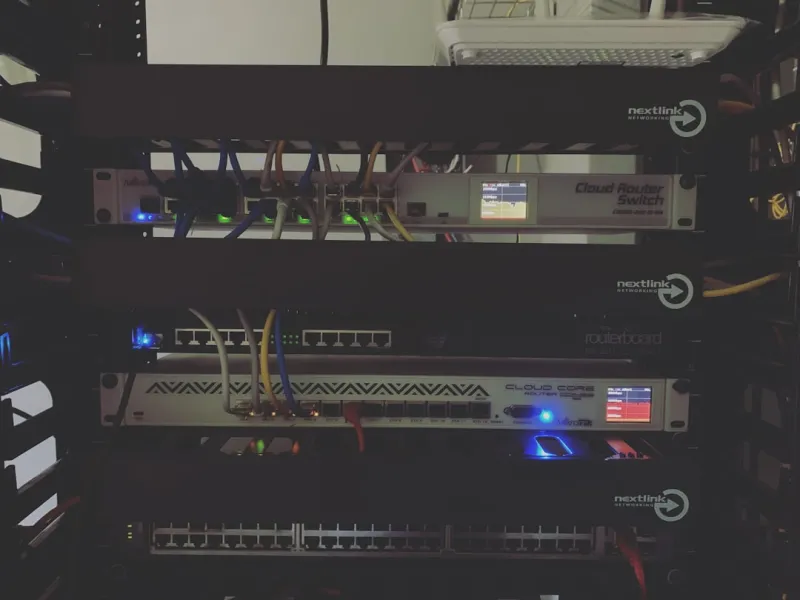
When it comes to selecting the right hardware, I always start with modularity. A high‑quality, 2‑U rack‑mountable switch with SFP+ and 10GBase‑T ports gives you the flexibility to upgrade transceivers as speeds evolve. Look for switches that support both Layer 2 and Layer 3 features out of the box, so you can implement routing, ACLs, and QoS without adding an extra device. For the wireless side, a tri‑band Wi‑7 router with detachable antennas lets you fine‑tune coverage and replace antennas as newer designs emerge. If you’re building a dedicated AI lab, consider a PCIe 5.0 network card that can handle 40 Gbps—this future‑proofs your compute nodes for the next generation of distributed training frameworks. I’ve detailed my own approach in a recent guide—Future‑Proof Your Network: Power‑User Strategies for 2026—which walks through specific models, pricing, and why certain chipsets (like Broadcom vs. Intel) matter for low‑latency packet processing.
Cabling is another often‑overlooked factor. While Cat 6a can comfortably carry 10 GbE up to 100 meters, Cat 8 is already affordable and supports 40 GbE, giving you headroom for future upgrades. When you run fiber, opt for multimode OM4; its 850 nm wavelength supports 40 GbE and 100 GbE over short distances, ideal for home or small office setups. Don’t forget PoE+ (IEEE 802.3bt) when planning for wireless access points, security cameras, or even edge AI accelerators—this reduces cable clutter and allows you to power devices directly from the switch, simplifying future expansions.
Software, Automation, and the Role of AI
Hardware alone won’t deliver a resilient network; you need intelligent software to orchestrate it. Modern network operating systems (NOS) like ArubaOS‑CX and Cisco IOS‑XR now embed machine‑learning models that automatically adjust QoS policies based on traffic patterns. On the Windows side, Windows 12 introduces “Network Fabric” APIs that let developers programmatically reroute traffic when congestion is detected, a boon for power‑users running containerized workloads. I’ve been experimenting with open‑source tools like NetBox for inventory management and Ansible playbooks to push configuration changes across my entire LAN with a single command. These automation pipelines reduce human error—a common cause of outages—and free up time to focus on the creative side of computing. Pair this with a dashboard that visualizes latency, packet loss, and bandwidth per device, and you have a living, breathing network that adapts in real time.
For those who are serious about AI, integrating a dedicated inference accelerator into your network topology can slash processing times dramatically. Devices such as the NVIDIA Jetson Orin can be placed at the network edge, receiving video streams via 10 GbE and returning classification results in milliseconds. To make this work seamlessly, ensure your switch supports VLAN‑aware routing and that you’ve allocated a dedicated QoS class for AI traffic. The result is a network that not only moves data fast but also processes it intelligently, turning your LAN into a distributed compute fabric.
Practical Steps to Future‑Proof Your Network Today
Start by auditing your current bandwidth usage. Tools like Wireshark, PRTG, and the built‑in Windows Resource Monitor can give you a clear picture of where bottlenecks exist. Identify devices that still operate on legacy standards—those are your quick wins for upgrade. Next, prioritize a modular switch with at least 24 ports, half of which support 10 GbE or higher. If you’re on a tighter budget, a hybrid approach using a 10 GbE uplink from a 2.5 GbE core can provide a solid foundation. For Wi‑Fi, replace any 802.11ac routers with a Wi‑7 model that offers both 6 GHz and 5 GHz bands; this not only boosts raw speed but also reduces interference from neighboring networks.
Implement a zero‑trust network model by segmenting devices into separate VLANs: one for IoT, one for workstations, one for servers, and one for guest access. Apply strict ACLs to limit cross‑VLAN traffic, and enable WPA3‑Enterprise with a RADIUS server for Wi‑Fi authentication. On the software side, deploy an IDS/IPS solution—Snort or Zeek, for example—and configure it to alert you of anomalous traffic patterns. Finally, set a schedule for firmware updates; vendors are now pushing AI‑based security patches quarterly, and missing these can expose you to newly discovered exploits.
Budgeting for a future‑proof network doesn’t have to break the bank. Allocate roughly 15 % of your total build cost to networking; this may seem high, but it pays dividends in reduced downtime and extended hardware lifespan. Look for bundled deals that include both a high‑performance router and a switch with PoE+ capability—many manufacturers offer these packages at a discount. Remember that the cost of replacing a dead‑end router three years from now far exceeds the incremental expense of buying a scalable solution today. By treating networking as a core component rather than an afterthought, you align your entire digital environment with the rapid pace of technological advancement.
Wrapping Up: Stay Ahead, Stay Secure
In 2026, the line between consumer and enterprise networking is blurring, and power‑users sit right at the intersection. By embracing Wi‑7, 10 GbE, AI‑driven security, and modular hardware, you create a network that can absorb the shock of tomorrow’s data‑intensive applications while keeping latency low and security high. The journey to a future‑proof network is iterative—regularly revisit your architecture, monitor performance, and stay informed about emerging standards. For deeper dives into related topics, check out my posts on AI‑ready rigs and motherboard selection; they share the same philosophy of building for the long term. With the right strategy, your network will not only keep up—it will lead the charge in a world where connectivity is king.