When I first unplugged my router in 2023 and stared at the tangled mess of Ethernet cables, I realized that the home network of a power user is no longer a simple “plug‑and‑play” affair. In 2026, our devices demand gigabit reliability, low‑latency gaming, AI‑driven workloads, and airtight security—all at once. That’s why I treat my network like a living organism: I regularly audit, upgrade, and segment it, just as I would a high‑performance PC. The goal isn’t just speed; it’s predictability, scalability, and the peace of mind that comes from knowing every packet is traveling the optimal path. In this post, I’ll walk you through the architecture, hardware choices, and configuration tricks that let a power‑user network thrive in today’s data‑rich environment, from Wi‑Fi 7 mesh nodes to VLAN‑based traffic isolation.
Assessing Your Baseline: What a Modern Power User Actually Needs
Before you buy the flashiest router on the shelf, take inventory of the traffic patterns that dominate your household. A typical power user in 2026 might be juggling 4K streaming on multiple displays, a dedicated home‑lab server running containers, a VR rig demanding sub‑5 ms latency, and a handful of IoT devices that constantly ping the cloud. Use tools like Wireshark or the built‑in Windows Resource Monitor to capture baseline bandwidth and latency metrics over a week. Identify peak usage windows, and note any choke points—often a single‑band Wi‑Fi router or an outdated switch. This data‑driven approach informs whether you need a full‑mesh Wi‑Fi 7 system, a 2.5 GbE backbone, or perhaps both. By establishing a clear performance baseline, you avoid over‑engineering while still leaving room for future upgrades, ensuring that each component you add truly addresses a measured need.
Choosing the Right Backbone: Wired Isn’t Optional, It’s Essential
While Wi‑Fi 7 promises multi‑gigabit speeds, the most reliable way to guarantee consistent performance is a wired backbone. I recommend deploying a 2.5 GbE or even 5 GbE switch as the spine of your home network. These switches are now affordable enough to fit into a modest budget and provide the headroom needed for high‑throughput tasks like real‑time video editing over the network or rapid data replication to a NAS. Opt for a managed switch that supports VLANs, QoS, and port‑based security, allowing you to segment traffic cleanly. For example, create separate VLANs for work‑related traffic, gaming, and IoT devices, then apply QoS policies that prioritize latency‑sensitive packets. This level of granularity not only boosts performance but also creates a natural barrier against lateral movement by malicious actors—an essential strategy highlighted in Power‑User Playbook: Securing Your Tech in the Age of Sophisticated Threats.
Wi‑Fi 7 Mesh: The Wireless Crown Jewel
Once your wired core is solid, extend the network with a Wi‑Fi 7 mesh system that supports 320 MHz channels and 4K QAM. Unlike older Wi‑Fi 6 routers, these nodes can handle multiple simultaneous high‑bandwidth streams without sacrificing latency. Position the primary node near your main switch, and strategically place satellite nodes in high‑traffic rooms—think the home office, the entertainment center, and the gaming den. Use the mesh’s built‑in analytics to monitor signal strength and client distribution; most modern solutions will automatically steer devices to the optimal node, a feature known as “dynamic band steering.” Remember to disable legacy 2.4 GHz bands if all your devices support 5 GHz or 6 GHz; this reduces interference and frees up spectrum for the newer, faster frequencies.
Segmentation and Security: VLANs, Firewalls, and Zero‑Trust
Segmentation is the cornerstone of a resilient network. By assigning work devices, personal devices, and IoT gadgets to distinct VLANs, you create micro‑perimeters that limit the blast radius of any breach. Pair your managed switch with a dedicated firewall appliance that supports deep packet inspection and intrusion prevention. In 2026, many power users opt for an open‑source solution like pfSense or OPNSense, which offers granular rule sets and the ability to integrate with a Zero‑Trust Identity Provider. Configure firewall rules to block any inbound traffic to the IoT VLAN, while allowing outbound DNS and NTP. For the work VLAN, enforce MFA on all VPN connections and use network‑level device certificates for authentication. These practices echo the principles in the Designing a Future‑Ready Home Network for Power Users guide, ensuring that your network remains both fast and fortified.
Optimizing QoS and Traffic Shaping for Real‑Time Demands
Quality of Service (QoS) isn’t just a checkbox; it’s the engine that guarantees your gaming rig gets the low‑latency pathways it craves while your background backup jobs stay in the background. On your managed switch, create priority queues that assign higher weight to traffic from the gaming VLAN and the work VLAN’s video‑conference ports. Use DSCP (Differentiated Services Code Point) marking on the router to signal downstream devices about packet importance. For Wi‑Fi, enable MU‑MIMO and OFDMA settings to allow the access point to serve multiple devices simultaneously without contention. Additionally, consider traffic shaping policies that throttle large, non‑critical downloads during peak hours, preserving bandwidth for mission‑critical tasks. The result is a network that feels snappy, regardless of how many devices are connected.
Monitoring, Automation, and AI‑Assisted Management
In the era of AI, network monitoring has become smarter and more proactive. Deploy a network monitoring platform—such as Grafana combined with Prometheus—that scrapes metrics from your router, switches, and access points. Set alerts for abnormal spikes in traffic, device offline events, or rising error rates. Many modern solutions now incorporate machine‑learning models that predict potential failures before they happen, allowing you to replace a failing port or adjust a QoS rule preemptively. Automation scripts using PowerShell or Python can apply configuration changes across the entire network in seconds, a boon when you need to roll out a new security patch or re‑segment a VLAN. The synergy of monitoring and automation transforms a static network into a self‑optimizing ecosystem.
Future‑Proofing: Embracing Emerging Standards Without Breaking the Bank
Looking ahead, standards like Wi‑Fi 8, 10 GbE Ethernet, and even fiber‑to‑the‑home (FTTH) are on the horizon. While it’s tempting to chase every new hype, a pragmatic approach is to adopt modular hardware that can be upgraded incrementally. Choose a switch with SFP+ ports for future fiber upgrades, and a mesh system that supports firmware updates to newer Wi‑Fi standards. Keep an eye on emerging protocols like Thread for low‑power IoT communication, and consider a dedicated Thread border router if you have many smart home devices. By planning for modular expansion, you avoid costly overhauls and keep your network aligned with the evolving demands of power‑user workloads.
Putting It All Together: A Sample Configuration Blueprint
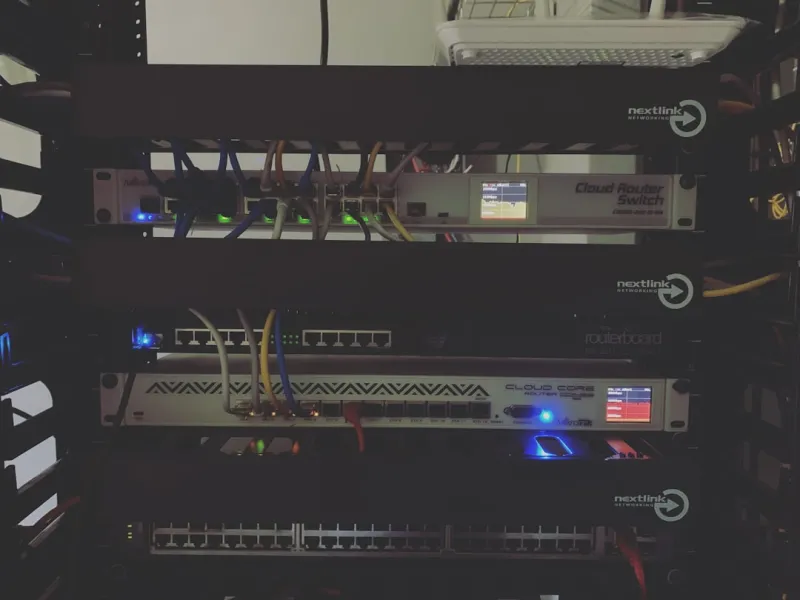
To illustrate how these concepts converge, here’s a concise blueprint you can adapt. Start with a 2.5 GbE managed switch placed in a central rack, connected to your ISP modem via a fiber‑to‑the‑home (FTTH) line. Configure three VLANs: VLAN 10 for work devices (with 802.1X authentication), VLAN 20 for gaming and media (with high‑priority QoS), and VLAN 30 for IoT (restricted to outbound DNS and NTP). Attach a Wi‑Fi 7 mesh node to the switch’s uplink port, enabling automatic band steering and disabling the 2.4 GHz band. Deploy a pfSense firewall in front of the switch, setting up Zero‑Trust policies and enabling intrusion detection. Finally, integrate Grafana dashboards to visualize bandwidth per VLAN, set alerts for packet loss, and schedule nightly backups of your configuration. This cohesive setup delivers blazing speed, airtight security, and the flexibility to grow as your tech ecosystem evolves.