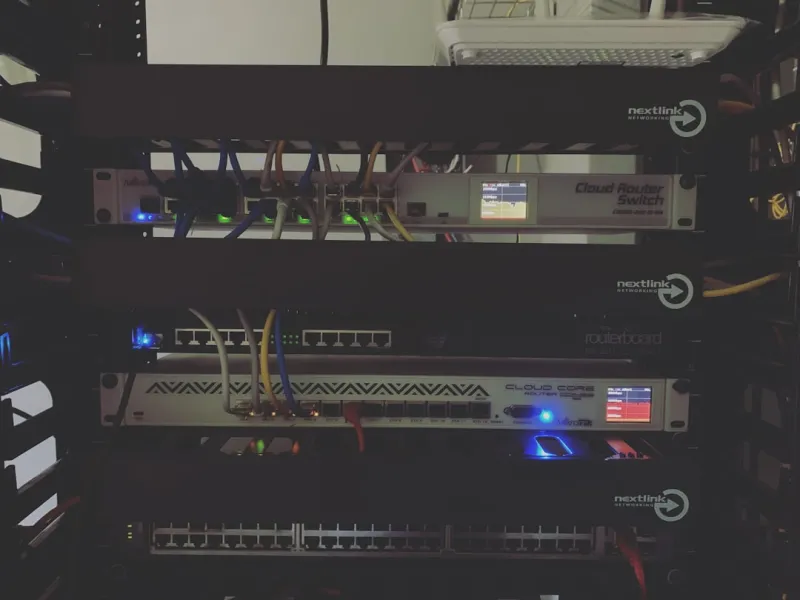
When I first plugged into my home lab back in 2022, the idea of a “smart” network was more fantasy than fact. Fast‑forward to 2026, and the average power‑user is expected to run multiple 4K streams, latency‑critical gaming rigs, AI‑assisted workflows, and even a personal Kubernetes cluster—all on the same LAN. My perspective has shifted from “just getting online” to “engineering a resilient, high‑throughput fabric that can adapt on the fly.” In this deep‑dive, I’ll unpack the networking trends that are shaping our daily grind, show you how to marry cutting‑edge hardware with software‑defined tactics, and give you a playbook that keeps your connection blazing while staying secure. Whether you’re a seasoned sysadmin turning your garage into a mini‑datacenter or a remote worker craving a rock‑solid home office, the principles here will help you build a network that feels as fast as the ideas it supports.
Hardware Evolution: Wi‑Fi 6E, Wi‑Fi 7, and Mesh Mastery
2026 is the year Wi‑Fi 6E finally sheds its “early‑adopter” label, and Wi‑Fi 7 is no longer a prototype humming in the background of tech expos. Modern tri‑band routers now push up to 12 Gbps on the 6 GHz band, delivering the kind of headroom that previously required a dedicated 10 Gbps Ethernet link. For a power‑user like me, the real breakthrough is the seamless handoff between Wi‑Fi 7 and a robust mesh network that blankets the entire property. Mesh nodes equipped with intelligent back‑haul automatically select the optimal frequency, minimizing interference from neighboring apartments and the inevitable barrage of IoT devices. Pair this with a gigabit‑class ISP and you’ve got a foundation that supports everything from high‑resolution video editing to real‑time AI inference without a hiccup. Remember, the best wireless experience still starts with proper placement—elevate your primary node, keep it clear of metal, and let the mesh handle the rest.
Wired Backbone: 2.5 GbE, 5 GbE, and Power‑over‑Ethernet
While Wi‑Fi dazzles, the unsung hero of any serious network remains the wired backbone. In 2026, 2.5 GbE has become the de‑facto standard for desktop rigs, offering a sweet spot between cost and performance. For those running multiple NAS devices, high‑end workstations, or a small server farm, 5 GbE switches are now affordable enough to be considered a baseline upgrade. Power‑over‑Ethernet (PoE ++), delivering up to 90 W per port, lets you power everything from security cameras to PoE‑enabled Wi‑Fi access points without hunting for extra outlets. When I re‑wired my studio, I ran Cat 8 cabling to future‑proof the setup for 40 Gbps links that will become mainstream in the next few years. The key takeaway? Design your switch topology with redundancy in mind—use link aggregation (LACP) to bundle ports, and keep a spare uplink to a secondary ISP for that extra layer of reliability.
Software‑Defined Networking (SDN) for the Home Lab
Software‑Defined Networking isn’t just for enterprise data centers; it’s a game‑changer for any power‑user who wants granular control over traffic flows. By deploying a virtual switch like OVS (Open vSwitch) on a modest Intel NUC, you can carve out VLANs for work, gaming, IoT, and guest devices—all while applying custom firewall rules and QoS policies at the software layer. This approach mirrors what you’ll find in the guide Mastering Modern Computer Networking, but applied to a home environment. The beauty of SDN is its agility: spin up a new isolated network for a temporary project, push a configuration change across all nodes with a single Ansible playbook, and roll it back instantly if something goes sideways. Pairing SDN with Docker or Kubernetes lets you simulate production‑grade networking, giving you a sandbox where you can test firewall rules, load balancers, or even a small‑scale service mesh without risking your primary connection.
Security Hardening: Zero‑Trust, WPA3, and DNS‑over‑HTTPS
Security can no longer be an afterthought; it’s the backbone of a trustworthy network. In 2026, the zero‑trust model has filtered down from corporate VPNs to home routers. That means every device, even those on the same LAN, must authenticate before accessing resources. Implementing WPA3‑Enterprise with a RADIUS server ensures that each Wi‑Fi client gets a unique encryption key, dramatically reducing the risk of rogue devices sniffing traffic. Additionally, enable DNS‑over‑HTTPS (DoH) on both your router and individual endpoints to encrypt DNS queries, preventing ISP‑level snooping. For an extra layer, consider a network‑wide intrusion detection system (IDS) like Suricata, which can flag anomalous traffic patterns in real time. When I first turned on DoH, my internet latency actually improved because malicious DNS hijacks were eliminated. The combination of strong encryption, device authentication, and continuous monitoring creates a fortress that lets you focus on productivity rather than constantly patching holes.
AI‑Driven Monitoring: Turning Data Into Actionable Insight
One of the most exciting developments in 2026 is the integration of AI into network monitoring tools. Platforms now leverage machine learning to baseline normal traffic patterns, automatically flagging deviations that could indicate congestion, a misconfigured VLAN, or a potential security breach. The article AI Computing Trends Shaping Power Users dives deeper into this, but the core idea is simple: let the AI do the heavy lifting of data analysis while you focus on remediation. Tools like NetScout’s AI‑Assisted Analytics or open‑source projects such as Grafana Loki with AI plugins can predict bandwidth spikes before they impact streaming or code deployments. I set up a small AI model on my home server that correlates Wi‑Fi signal strength, device count, and CPU load on my NAS, automatically adjusting QoS settings to keep latency low for my gaming rig during peak hours. This proactive approach turns what used to be a reactive troubleshooting nightmare into a smooth, self‑optimizing experience.
Troubleshooting Workflow: From the Command Line to the Dashboard
When things go sideways, a disciplined troubleshooting workflow saves hours. Start with the basics: ping and traceroute from the affected device to your router, then to an external host. If latency spikes appear, jump into netsh trace on Windows or tcpdump on Linux to capture packet flows. For Windows power‑users, the guide Turbocharge Your Windows 11 Experience offers shortcuts to launch PowerShell network diagnostics with a single keystroke. On the software side, check your SDN controller logs for dropped packets or misapplied policies. Don’t overlook the router’s built‑in diagnostic tools—many modern devices provide a real‑time heat map of client signal strength and channel interference. Finally, correlate the data with your AI monitoring dashboard; if an anomaly aligns with a recent firmware update, roll back or apply the vendor’s hotfix. This systematic approach ensures you catch both hardware glitches and software misconfigurations before they snowball into larger outages.
Future‑Proofing: IPv6, SD‑WAN, and Edge Computing
Looking ahead, three pillars will define the next wave of home networking: IPv6 adoption, software‑defined WAN (SD‑WAN), and edge computing. IPv6 isn’t just a buzzword; it eliminates NAT headaches, allowing each device a globally routable address—critical for IoT sensors that need to be reachable from the cloud. SD‑WAN appliances let you blend multiple ISP links into a single, intelligent path, automatically steering traffic based on latency, cost, or security policies. Pair this with a small edge node—think a ruggedized Intel NUC running containerized services—so you can process data locally before sending it upstream, reducing bandwidth usage and latency. I’ve begun experimenting with a hybrid SD‑WAN setup that uses my fiber connection for high‑bandwidth tasks while falling back to a 5G LTE link for redundancy. By embracing these technologies now, you’ll avoid costly overhauls later, ensuring your network remains fast, secure, and adaptable for the AI‑driven workloads of tomorrow.
Conclusion: Building a Network That Grows With You
In the end, a power‑user’s network is less about buying the flashiest router and more about orchestrating a cohesive ecosystem that balances speed, security, and scalability. By marrying the latest Wi‑Fi standards with a robust wired backbone, leveraging SDN for granular control, and harnessing AI‑driven insights, you can create a resilient infrastructure that supports everything from 4K streaming to AI model training. Remember to embed security at every layer, adopt a disciplined troubleshooting routine, and future‑proof your design with IPv6, SD‑WAN, and edge computing. The landscape will continue to evolve, but with the principles laid out here, you’ll be ready to adapt, optimize, and keep your digital world humming smoothly—no matter what new challenges 2026 throws your way.