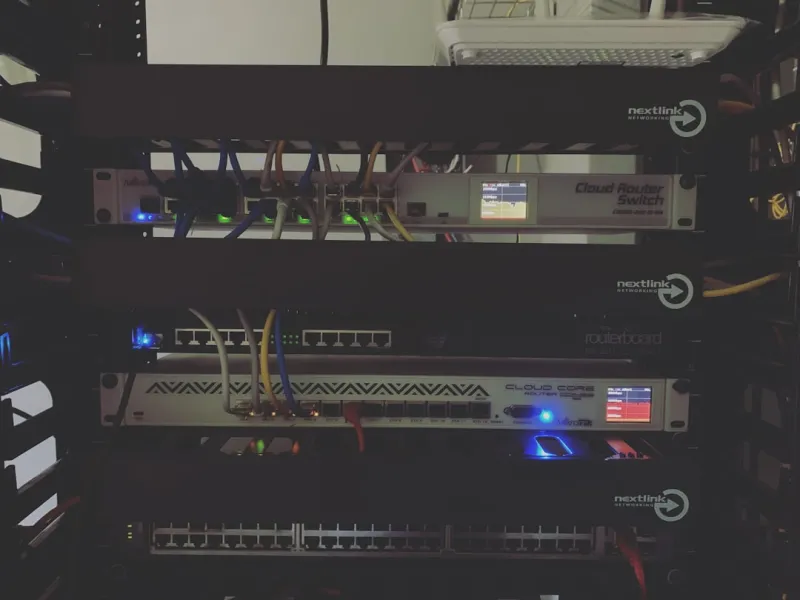
When I first cut my teeth on networking back when dial‑up was still a thing, the idea of “speed” was a luxury reserved for data centers. Fast forward to 2026, and the average home office is expected to juggle 8K streaming, cloud‑based IDEs, AI‑assisted assistants, and zero‑latency gaming—all on a single Wi‑Fi mesh. This seismic shift forces us to rethink the fundamentals: latency isn’t just a number, it’s the invisible barrier between intention and execution. As a power user who lives at the intersection of hardware tinkering and software optimization, I’ve learned that the real magic happens when you align your network topology with your workflow habits. Whether you’re a developer pulling massive Docker images or a content creator livestreaming from multiple angles, a well‑designed LAN can shave seconds off every task, and those seconds compound into hours saved over a year. In this article I’ll walk you through the most relevant trends, practical tweaks, and security mindsets you need to dominate the modern networking landscape.
The Rise of Hybrid Mesh Networks
Traditional routers have long been the cornerstone of home networking, but they’re increasingly being outclassed by hybrid mesh solutions that blend wired back‑haul with intelligent wireless hops. Modern mesh nodes now come equipped with tri‑band radios, integrated Wi‑Fi 7 chips, and built‑in QoS engines that auto‑prioritize traffic based on device type and application. The real kicker? Many of these systems now support seamless Ethernet‑over‑Powerline fallback, meaning a dropped Wi‑Fi link can be rescued by the humble electrical wiring in your walls. For a power user, this translates to a “set‑it‑and‑forget‑it” network that still respects the granularity you crave—think dedicating a dedicated 5 GHz channel for your NAS while your smart TV enjoys a separate 2.4 GHz lane. If you’ve ever felt the frustration of a laggy Zoom call while a torrent chews bandwidth, a hybrid mesh is the answer that lets you tune performance without constant manual reconfiguration.
Zero‑Trust Architecture for the Home Office
Security used to be a checkbox: a firewall here, a password there. In today’s hyper‑connected environment, that approach is obsolete. Zero‑trust networking, once the domain of enterprises, is now practical for home setups thanks to affordable software‑defined perimeters and device‑level certificates. By enforcing strict identity verification for every device—whether it’s your laptop, your IoT thermostat, or even a guest phone—you eliminate the “trusted network” myth that attackers love to exploit. Implementing a zero‑trust model means you’ll often route traffic through a local gateway that validates each request before it reaches the broader internet. Pair this with a robust encryption strategy, and you’ve got a fortress that’s both invisible and resilient. For deeper insights on why encryption matters to every power user, check out Why Encryption Matters to Every Power User. This layered defense not only protects sensitive data but also reduces the attack surface that modern malware—like the threats detailed in The Hidden War: How Modern Malware Is Evolving—continually probes.
Leveraging VLANs for Segmented Workflows
Virtual LANs (VLANs) have historically been a tool for corporate IT, but the power user community is beginning to harness them for personal productivity. By segmenting traffic into distinct broadcast domains—say, one VLAN for development servers, another for media streaming, and a third for guest devices—you create logical firewalls that prevent cross‑contamination. This segregation is especially valuable when you’re running containers or virtual machines that expose services on non‑standard ports. A misconfigured service in a dev VLAN can’t accidentally leak into your IoT ecosystem, protecting both privacy and network stability. Most modern managed switches and even high‑end consumer routers now provide intuitive web interfaces for VLAN configuration, making the setup process less intimidating. When combined with the QoS features of a hybrid mesh, VLANs become a powerful way to guarantee that latency‑sensitive tasks—like live audio production—receive top priority, while background file syncs stay in the background.
Optimizing the Physical Layer: Cabling and Placement
While wireless tech steals the spotlight, the physical layer remains the unsung hero of network performance. In 2026, Cat 8 Ethernet is the gold standard, supporting up to 40 Gbps over short runs. Upgrading legacy Cat 5e or Cat 6 cables in your office can unlock previously untapped bandwidth, especially when you’re moving large datasets between a NAS and a workstation. But cable quality isn’t the only factor; proper placement of routers and mesh nodes matters just as much. Elevating a node to a central ceiling position reduces interference from furniture and human bodies, while keeping it away from microwave ovens and cordless phones mitigates signal degradation. If you’re constrained by building architecture, consider powerline adapters that now support gigabit speeds with built‑in MIMO technology. By marrying top‑tier cabling with strategic node placement, you create a robust backbone that can handle the heavy demands of AI‑driven workloads without hiccups.
Dynamic DNS and Remote Access without VPN Overhead
Remote access used to mean pulling out a VPN client, configuring port forwards, and praying the connection stays stable. Today, Dynamic DNS services paired with cloud‑based reverse proxies let you expose services securely without the overhead of a traditional VPN. Services like Cloudflare Tunnel or Tailscale’s mesh VPN provide end‑to‑end encryption while automatically handling NAT traversal, meaning you can reach your home lab from a coffee shop with a single click. This approach also simplifies multi‑device management: each device registers itself with the mesh network, gaining a consistent identity regardless of the underlying IP changes. For power users who juggle multiple laptops, a desktop, and a portable workstation, this seamless remote access model eliminates the friction of manual port forwarding and reduces the risk of exposing vulnerable ports to the internet.
Monitoring and Automation: The New Network Ops Toolkit
In the era of AI‑assisted workflows, manual network monitoring is a relic. Modern tools like Grafana, Prometheus, and open‑source agents can ingest metrics from every corner of your network—latency, packet loss, bandwidth consumption—and visualize them in real time. Coupled with automation platforms like Home Assistant or Node‑RED, you can set triggers that automatically reallocate bandwidth, reboot a misbehaving node, or switch to a backup ISP link when a threshold is breached. Imagine a scenario where your primary fiber line drops; the system detects a spike in packet loss, switches traffic to a 5G backup, and sends you a push notification—all without you lifting a finger. This level of observability not only keeps your network humming but also gives you the data you need to make informed upgrades, ensuring every dollar spent on hardware yields maximum ROI.
Future‑Proofing with AI‑Optimized Routing
Artificial intelligence is no longer a buzzword confined to chatbots; it’s actively reshaping how data traverses our networks. AI‑enabled routers now analyze traffic patterns in real time, predicting congestion before it happens and dynamically rerouting packets along the most efficient paths. Some consumer-grade devices even incorporate machine learning models that adapt to your daily routines—learning when you stream movies, when you run backups, and when you host gaming sessions—to pre‑emptively allocate resources. As a power user, leveraging an AI‑optimized router means you can trust the hardware to make split‑second decisions that would otherwise require manual tweaking. The result is a smoother experience across all devices, less latency during peak hours, and a network that feels intuitively responsive to your workflow demands.
Choosing the Right Operating System for Network Mastery
All the hardware and configuration in the world won’t matter if your OS isn’t up to the task. Linux distributions like Ubuntu Server or Fedora Silverblue give you granular control over networking stacks, enabling advanced firewall rules with nftables, custom routing tables, and seamless integration with container orchestration platforms. Meanwhile, Windows 11’s newer networking APIs provide deep hooks for PowerShell automation, and macOS’s native UNIX underpinnings make scripting a breeze. The key is to pick an OS that aligns with your preferred tooling and the level of control you desire. If you’re still undecided, I recommend reading Choosing the Right Operating System for Power Users to weigh the pros and cons of each ecosystem. By matching the OS to your networking philosophy—whether you value GUI simplicity or command‑line dominance—you set the foundation for a resilient, high‑performance environment that can evolve alongside emerging technologies.