Why Windows Still Feels Like Home for Power Users
When I boot my rig each morning, the familiar Windows boot chime still feels like a promise of endless possibility. In 2026, Microsoft has layered AI‑driven telemetry, smarter resource scheduling, and a reimagined kernel that quietly learns how I work. As a power‑user, I’ve learned to read the subtle cues—CPU throttling patterns, memory allocation trends, and even the way the OS nudges me toward certain apps. That intimacy is what makes Windows a playground rather than a black box. Over the past decade, I’ve watched Windows evolve from a monolithic beast into a modular, developer‑friendly platform, yet it retains the core reliability that keeps my production pipeline humming. The new Dynamic Core Scheduler adjusts thread priorities in real time, letting me squeeze extra frames from a GPU‑intensive render without sacrificing background tasks. This balance is why I keep my workflow anchored in Windows, even as the ecosystem swells with cross‑platform alternatives.
Unlocking the Performance Levers Hidden in Windows 2026
Most users never venture beyond the Settings app, but a power‑user’s toolbox is brimming with knobs that can extract every last ounce of performance. The first place I look is the Power Plan editor—customizing latency tolerances, processor performance states, and hard‑drive spin‑down thresholds. Pair that with the new Process Affinity Manager, and I can bind my video encoder to isolated cores, freeing the rest for responsive UI tasks. I also leverage the Resource Monitor to identify stray services that silently consume RAM. Once isolated, I use PowerShell scripts to disable them at boot, shaving seconds off launch times. For those seeking deeper control, the Mastering Windows in 2026: A Power‑User’s Playbook for Performance and Security guide walks you through creating persistent registry tweaks that keep the system lean without sacrificing stability.
Security in a Hyper‑Connected World: Staying Ahead of Threats
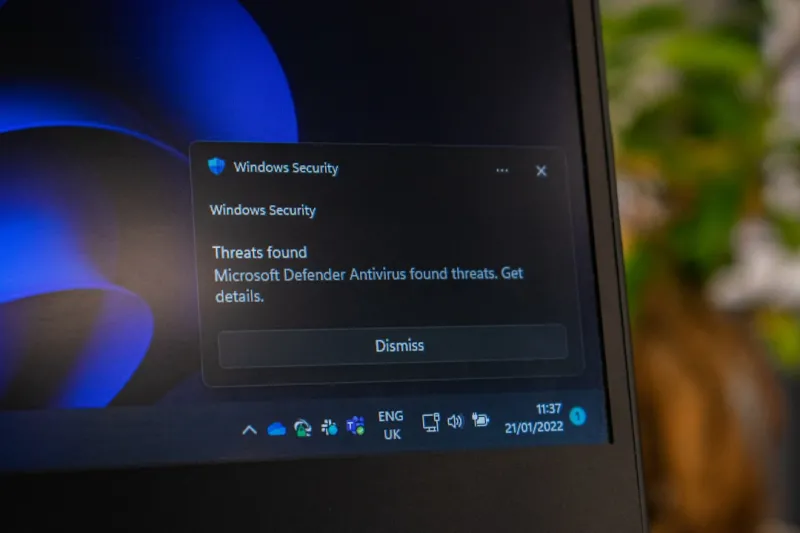
Security is no longer an afterthought; it’s a daily ritual. Windows 2026 ships with an AI‑enhanced Defender that predicts ransomware behavior before it encrypts a single file. I still run a layered defense: hardware‑based TPM for key storage, Secure Boot to enforce firmware integrity, and the new Zero‑Trust Network Access module that authenticates every device on my LAN. Critical updates now arrive in a stream that distinguishes between feature rollouts and vulnerability patches, allowing me to prioritize the latter. I keep an eye on the Critical Updates Power Users Must Act On Now post to ensure I’m not caught off‑guard by a zero‑day exploit. Additionally, I enable Controlled Folder Access for my project directories and set up automated backups to a network‑attached storage that uses immutable snapshots, ensuring a quick recovery if the worst does happen.
The Blue Screen: From Nightmare to Diagnostic Ally
Let’s face it: the Blue Screen of Death (BSOD) still sends a chill down the spine of any seasoned technician. But in 2026, that dreaded screen is a treasure trove of telemetry. Microsoft’s new Crash Dump Analyzer auto‑uploads the minidump to the cloud, correlating it with known driver issues and hardware incompatibilities. I treat each BSOD as a case study, diving into the error codes with the built‑in winver diagnostics. The article Why the Blue Screen Still Matters to Power Users in 2026 explains why embracing the BSOD can actually accelerate your troubleshooting workflow. By logging the faulting module, I can pinpoint whether a rogue driver, a firmware bug, or a memory fault is at play, then apply targeted fixes before the issue resurfaces.
Memory Mastery: Diagnosing RAM Issues Like a Pro
RAM health is the silent backbone of system stability. In 2026, Windows now includes a Memory Integrity Dashboard that visualizes latency spikes, ECC correction rates, and page‑file usage in real time. When I notice stutters in my 3D modeling software, I launch the built‑in Memory Diagnostic tool, which runs a series of stress tests that simulate high‑throughput workloads. If the test flags any errors, I cross‑reference the findings with the guide How to Diagnose and Fix RAM Issues Like a Power User. Often, a simple reseating of the DIMM sticks or updating the motherboard BIOS resolves the issue. For deeper analysis, I enable Page File Optimization, ensuring that Windows intelligently swaps only when necessary, preserving performance while safeguarding against sudden memory exhaustion.
Storage Strategy: When Hard Drives Still Hold Their Own
Solid‑state drives dominate the consumer market, yet I still keep a high‑capacity hard‑disk drive (HDD) in my arsenal for archival footage and raw data dumps. Modern HDDs in 2026 have benefited from improved areal density and vibration‑reduction technologies, making them viable for large‑scale backups. The Storage Spaces Direct feature lets me pool SSDs and HDDs into a tiered storage pool, where hot data lives on the flash tier and cold data slides onto the magnetic tier automatically. I reference the article Hard Drive Essentials Every Power User Should Know for best practices on aligning partitions, enabling write‑caching, and scheduling TRIM commands for hybrid setups. By configuring the system’s I/O scheduler to prioritize low‑latency queues for SSDs, I ensure my workflow never stalls, even when massive datasets are being moved across the pool.
Motherboard Magic: The Unsung Hero of Power‑User Builds
The motherboard is the silent conductor of your PC’s symphony. In 2026, the rise of PCIe 5.0 and DDR5 6000+ memory has pushed manufacturers to design boards with enhanced power delivery and thermal solutions. I always start with a board that supports Intel’s Thread Director or AMD’s Infinity Fabric tuning, allowing fine‑grained control over core performance. The Unlocking the Power‑User Potential of Modern Motherboards post walks through BIOS settings that enable per‑core voltage offsets, memory overclock profiles, and fan curves that keep the VRM temperatures in the sweet spot. By pairing a robust VRM with a well‑ventilated case, I can push my CPU into sustained boost without throttling, which translates to smoother multitasking and faster compile times for code‑heavy projects.
Update Discipline: Automating the Patch Process Without Losing Control
One of the biggest challenges for a power‑user is balancing the need for the latest security patches with the stability of a production environment. Windows 2026 introduces Update Rings, a granular policy that lets me create separate streams for critical security updates, optional feature updates, and driver rollouts. I configure the “Fast Ring” to receive high‑severity patches within hours of release, while non‑essential updates sit in a “Staging Ring” for testing on a sandbox VM. This approach lets me verify compatibility with my custom scripts and third‑party tools before they touch my primary workstation. Leveraging Group Policy, I enforce automatic reboots only during maintenance windows, ensuring my workflow remains uninterrupted.
Future‑Proofing: Preparing for Windows Beyond 2026
Looking ahead, Microsoft’s roadmap points toward deeper integration with cloud‑based AI assistants, seamless cross‑device experiences, and a more modular OS kernel that can be stripped down to essentials for specialized workloads. As a power‑user, I’m already experimenting with Windows Subsystem for Linux 2.0, which now offers near‑native performance for containerized development stacks. I also keep an eye on the upcoming Project Atlas, which promises a unified driver model that could eliminate many of the BSOD incidents we still grapple with today. By staying adaptable—regularly revisiting my hardware choices, refining my PowerShell automation, and engaging with the community—I can ensure that my Windows environment remains a cutting‑edge productivity engine for years to come.