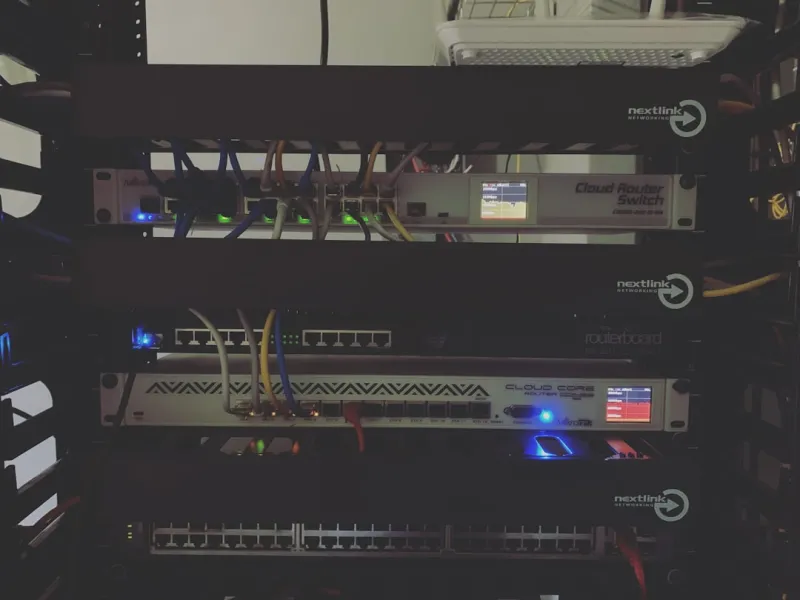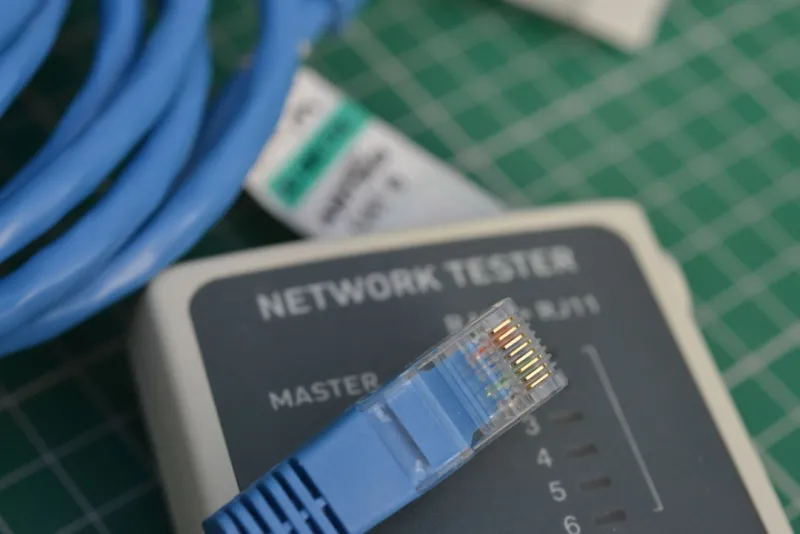
When you’ve spent a decade fine‑tuning CPUs, GPUs, and storage subsystems, the network layer feels like the final frontier of true performance mastery. In 2026, the home and small‑office landscape is finally catching up with enterprise‑grade capabilities, and that shift is reshaping how power users like me think about every packet that traverses our LAN. From the moment you boot a workstation to the instant you push a large video file to a NAS, latency, jitter, and bandwidth become as critical as clock speed. My own journey began with a stubborn Wi‑Fi 6 router that could barely handle a 4K stream; today, I’m deploying Wi‑Fi 7 access points alongside 2.5 Gbps Ethernet uplinks to eliminate bottlenecks before they even appear. This article walks through the trends that matter most, the tools that let us seize control, and the strategic upgrades that keep our networks as swift and secure as the machines they connect.
Wi‑Fi 7 and 2.5 Gbps Ethernet: The New Baselines
The rollout of Wi‑Fi 7 (802.11be) is finally mainstream, delivering multi‑gigabit throughput, lower latency, and enhanced OFDMA scheduling that benefits dense device environments. For a power user juggling multiple high‑resolution monitors, a NAS, and a home lab, the difference between a 600 Mbps link and a 2.4 Gbps connection is palpable when copying large VM images or streaming 8K content. Pair this with 2.5 Gbps Ethernet—once a niche upgrade now supported by affordable NICs and switches—and you create a hybrid network where wireless convenience meets wired reliability. I’ve seen colleagues still cling to 1 Gbps ports; upgrading to 2.5 Gbps not only future‑proofs their setups but also aligns with the bandwidth demands of modern cloud‑backed development tools. When you combine Wi‑Fi 7’s low‑latency handoff with a 2.5 Gbps backbone, the entire ecosystem feels snappier, and the network no longer becomes the hidden performance choke point.
Zero‑Trust Security for the Home Power User
Security is no longer an afterthought; it’s a core network design principle. In 2026, zero‑trust architectures have migrated from corporate data centers to savvy home labs, where every device is assumed compromised until proven otherwise. Implementing VLAN segmentation, strict MAC address filtering, and mutual TLS between critical nodes can dramatically reduce the attack surface. The rise of sophisticated ransomware and supply‑chain exploits means even a single vulnerable IoT device can become a launchpad for broader infection. That’s why I spend time hardening my router firmware, enabling built‑in intrusion detection, and regularly auditing device certificates. For deeper insights on threat mitigation, check out The Hidden Malware Threats Power Users Must Outsmart in 2026, which dives into the specific malware vectors that target networked environments today.
Software‑Defined Networking (SDN) in the Home Lab
SDN isn’t just for hyperscale clouds; it’s an empowering tool for the modern power user seeking granular control over traffic flows. By abstracting the control plane from the data plane, SDN controllers let you program routing policies, QoS rules, and even automated failover without touching physical switch configurations. Open‑source platforms like OpenDaylight or commercial solutions such as Cisco Meraki’s cloud‑managed switches now offer affordable entry points. I’ve deployed an SDN controller to prioritize my development containers, ensuring they receive low‑latency bandwidth while bulk backups run in the background. This dynamic allocation mirrors the resource scheduling we see in hyper‑visors, translating those concepts to the network tier. The result? A resilient, adaptable environment where you can test new services or simulate enterprise topologies without a rack of hardware.
Network Monitoring: Seeing What Really Happens
Even the most meticulously engineered network can hide performance glitches, and the only way to uncover them is through continuous monitoring. Tools like Grafana paired with Prometheus, or the open‑source Netdata agent, provide real‑time visualizations of throughput, packet loss, and latency across every interface. I set up alerts for spikes in retransmissions, which often correlate with firmware bugs in cheap switches—a lesson learned the hard way during a recent upgrade. For a structured approach to hardware upgrades, I recommend reading The Smart Way to Upgrade Your PC in 2026: A Power‑User’s Playbook, which outlines how to align network hardware refresh cycles with broader system improvements. By correlating network metrics with system logs, you can pinpoint whether a slowdown originates from the NIC, the switch, or even the upstream ISP.
IPv6 Adoption: Beyond the Hype
IPv6 is no longer a futuristic concept; it’s a practical necessity as the global address pool dwindles and as more devices demand direct, routable addresses. In my home network, enabling IPv6 on the router and configuring a ULA (Unique Local Address) prefix has simplified firewall rules and eliminated the need for NAT hairpinning. Moreover, many modern services—especially those leveraging peer‑to‑peer connections for gaming or distributed rendering—perform better with native IPv6, avoiding the overhead of NAT traversal. The transition does require updating DNS records, ensuring your DHCPv6 server is correctly handing out prefixes, and confirming that all devices, from smartphones to network‑attached storage, support IPv6. While IPv4 remains dominant, a dual‑stack approach guarantees you’re ready for the next wave of internet services that expect IPv6‑first connectivity.
Edge Computing and AI‑Driven Routing
Edge computing isn’t just for large enterprises; the rise of AI‑enhanced routers brings intelligent traffic shaping to the consumer market. Modern firmware now incorporates machine learning models that learn typical usage patterns—such as streaming in the evening or large file transfers during the day—and automatically adjust QoS priorities. In my setup, the router’s AI module identified that my home studio’s DAW traffic suffered during nightly game streams and re‑allocated bandwidth accordingly, all without manual intervention. This adaptive approach reduces the need for static, often over‑engineered, rule sets and allows power users to focus on creative work rather than constant network tweaking. As AI continues to evolve, expect even deeper integrations, like predictive caching of frequently accessed cloud resources, further blurring the line between local and remote compute.
Future‑Proof Cabling and Hardware Choices
Choosing the right cabling and hardware today can save you countless hours—and dollars—tomorrow. While Cat 6a still serves many 10 Gbps installations, Cat 8 (25 Gbps/40 Gbps) is becoming increasingly affordable and offers a clear upgrade path for those planning to adopt 40 Gbps Ethernet or future 100 Gbps standards. Likewise, investing in modular power supplies and switch chassis with spare slots ensures you can add additional ports or upgrade NICs without a full replacement. My own lab now runs a mixed‑use cabling infrastructure: Cat 7 for core backbone links, Cat 6a for peripheral devices, and fiber optics for inter‑room connections where EMI is a concern. This layered approach mirrors the modular philosophy I champion in Mastering Motherboard Selection: A Power‑User’s Blueprint for 2026, emphasizing that foresight in component selection pays dividends in system longevity and performance.
Conclusion: Network Mastery as a Power‑User Imperative
In 2026, the network is no longer a silent backdrop; it’s a dynamic, high‑performance layer that demands the same level of scrutiny and optimization as CPUs or GPUs. By embracing Wi‑Fi 7, 2.5 Gbps Ethernet, zero‑trust security, SDN, and AI‑driven routing, you transform your home or small‑office environment into a professional‑grade platform ready for any workload. Remember, the best network is one you can see, control, and evolve with. Keep monitoring, stay ahead of security threats, and plan your cabling and hardware upgrades with an eye toward tomorrow’s standards. When you treat networking with the same passion you reserve for overclocking, you unlock a level of productivity and reliability that truly sets a power user apart.