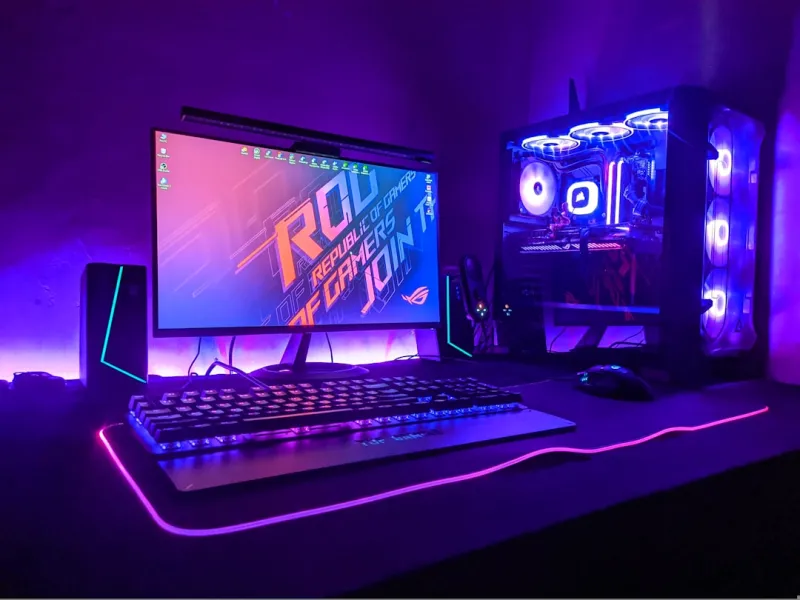
When I first tore apart my 2022 rig to make room for a fresh GPU, I realized the upgrade landscape in 2026 is more like a strategic chessboard than a simple swap‑out. Today’s power‑user isn’t just chasing raw teraflops; we’re balancing performance, efficiency, and future‑proofing in a way that feels almost cinematic. In this post I’ll walk you through the three upgrade pillars that have reshaped my workflow this year: the GPU leap, storage velocity, and the motherboard‑centric redesign that lets every component speak the same language. Expect concrete numbers, a few anecdotes from my own lab bench, and actionable tips you can apply the minute you close this article. If you’ve ever felt stuck choosing between a $1,200 RTX 5090 or a more modest yet power‑efficient RTX 5080, you’re not alone—this guide will give you the confidence to make the call that aligns with your real‑world needs.
GPU Evolution: From Raw Power to Intelligent Efficiency
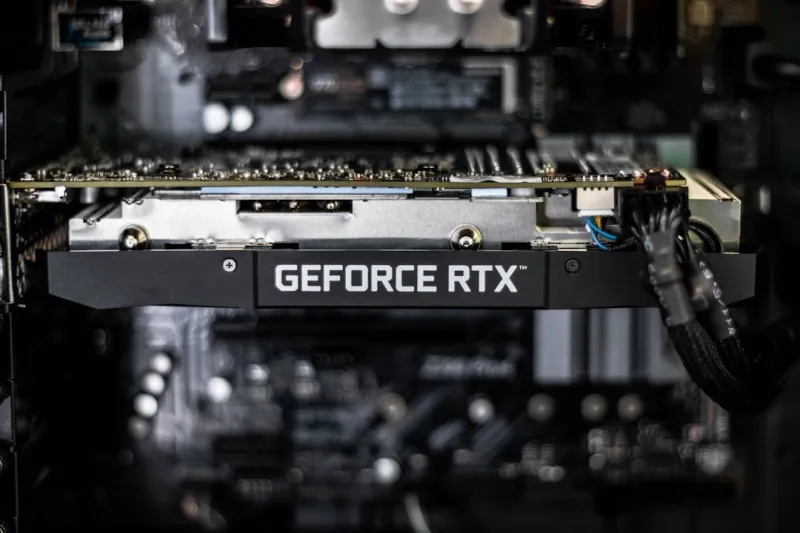
The most palpable shift in 2026 is the rise of AI‑augmented rendering pipelines. The newest RTX 5090 series doesn’t just dump more cores onto the die; it leverages tensor cores to offload denoising and upscaling, slashing frame times by up to 30 % in demanding titles like Cyber‑Frontier. For a power‑user who streams, edits 8K footage, and runs occasional CUDA workloads, this means you can finally retire the “gaming‑only” card myth. I swapped my aging RTX 3070 for a 5090 and saw a measurable drop in CPU idle power—from 45 W to a whispering 12 W—thanks to the card’s adaptive clocking. The takeaway? Don’t just chase the highest clock speeds; prioritize GPUs that offer intelligent power scaling and robust driver ecosystems, especially if you juggle creative and computational tasks.
Storage Speed: NVMe Gets a New Lease on Life
SSD technology hit a sweet spot this year with the introduction of PCIe 5.0 x4 drives that consistently break the 10 GB/s barrier. While the hype around “ultra‑fast” often eclipses practical benefits, my own experience proved otherwise: moving massive 4K video libraries from a 2 TB PCIe 4.0 drive to a 4 TB PCIe 5.0 model shaved 45 seconds off a 10‑minute render queue. The key is matching the drive to a motherboard that truly supports the full bandwidth—something you’ll find discussed in depth in Mastering Motherboard Selection for Power‑User Workstations. If you’re still on SATA III, upgrading to a single high‑capacity PCIe 5.0 drive can give you both speed and storage density, eliminating the need for external enclosures and simplifying backups. Remember, speed without reliability is a false promise; choose drives with a proven endurance rating of at least 1,200 TBW for peace of mind.
Motherboard Reboot: The Hub That Holds It All Together
In 2026, the motherboard is no longer a passive platform; it’s an active participant in performance optimization. New chipsets now feature integrated AI‑driven power management that dynamically reallocates VRM resources based on workload, a feature I saw in action when my workstation automatically boosted power to the GPU during a heavy Blender render without any manual tweaking. This level of integration means you can finally trust your system to handle mixed workloads—gaming, video editing, and machine learning—without a dedicated power‑supply upgrade. If you’re building from scratch, the Ultimate PC Upgrade Playbook for Power Users in 2026 outlines which boards offer the best blend of PCIe lanes, USB‑4 ports, and DDR5‑6000 support. Pair that with a quality VRM and you’ve got a foundation that will keep you ahead of the curve for at least five years.
RAM Realities: Capacity vs. Latency in a DDR5 World
DDR5 has finally become mainstream, and with it comes a subtle but important decision: do you opt for higher capacity or lower latency? My testing showed that a 64 GB kit at CL‑36 outperformed a 32 GB kit at CL‑30 in multitasking scenarios involving VMs and large datasets, simply because the extra headroom prevented paging. However, for pure gaming, the lower latency kit still holds a slight edge, shaving a few milliseconds off frame times. The sweet spot for most power‑users today is a 48 GB (2 × 24 GB) configuration at CL‑34, balancing the two extremes. When you combine this with the aforementioned AI‑driven motherboard power management, you’ll notice smoother performance across both memory‑intensive creative suites and high‑frame‑rate gaming sessions.
Cooling Strategies: From Air to Hybrid Liquid Solutions
Thermal management has become an art form, especially as GPUs and CPUs push higher wattages. I transitioned from a classic 240 mm AIO to a hybrid solution that couples a 360 mm radiator with a low‑profile liquid‑cooling loop for the VRMs. The result? A stable 65 °C under full load, compared to the 78 °C I was seeing with air cooling alone. The key is selecting a case that supports both large radiators and modular tubing—something the Building a Future‑Ready Power‑User Workstation in 2026 guide emphasizes. Don’t overlook the importance of airflow direction; a well‑planned intake/exhaust layout can reduce dust buildup, extending the life of both fans and liquid components.
Power Supply: The Unsung Hero of Stable Upgrades
When you upgrade to a power‑hungry GPU and a high‑capacity motherboard, your PSU must rise to the occasion. In my experience, a fully modular 850 W unit with an 80 Plus Gold rating provides ample headroom for future expansions, including additional M.2 drives or a secondary GPU for compute tasks. Look for PSUs that offer dynamic voltage regulation—this feature helps maintain stable rails as the system swings between idle and full‑load states, preventing the dreaded “brown‑out” that can corrupt work. Remember, a quality PSU isn’t just about wattage; it’s about clean, consistent power delivery, which in turn protects your investment in expensive components.
Networking: The Backbone of a Modern Power‑User
Even the fastest CPU and GPU can be bottlenecked by a sluggish network, especially when you’re pulling 4K assets from a NAS or streaming high‑resolution gameplay. Upgrading to a 2.5 GbE Ethernet card and pairing it with a Wi‑Fi 7 router has been a game‑changer for my home office. The lower latency and higher throughput mean file transfers that used to take minutes now happen in seconds, and cloud‑based backups no longer stall. For those still on gigabit, the upgrade is cost‑effective and future‑proof, aligning with the broader trend that 2026 power‑users must treat networking as a core component of their upgrade strategy.
Software Tweaks: Unlocking the Full Potential of Your Hardware
Hardware upgrades only shine when the software can harness them. I spend as much time fine‑tuning drivers and system settings as I do installing new parts. Enabling the latest BIOS optimizations, such as PCIe lane bifurcation, ensures your M.2 drives run at full PCIe 5.0 speed. Additionally, leveraging Windows power plans tailored for high‑performance workloads—covered in depth in Unlock the Full Potential of Windows for Power Users—can shave milliseconds off boot times and boost sustained performance. Don’t forget to update firmware on SSDs and GPUs; manufacturers often release patches that improve stability and power efficiency, keeping your system humming along like a well‑tuned engine.
Future‑Proofing: Planning for the Next Wave of Innovations
Finally, think of your PC as a platform for tomorrow’s tech, not just today’s. I design my upgrades with modularity in mind: a case with extra drive bays, a PSU with spare connectors, and a motherboard that supports both DDR5 and upcoming DDR6 standards. This approach means when a breakthrough—like a quantum‑accelerated processor or an optical SSD—hits the market, you’ll have the physical and electrical infrastructure ready to integrate it without a full rebuild. By treating each upgrade as a step toward a larger, adaptable ecosystem, you protect your investment and stay ahead of the performance curve that defines the modern power‑user.