Every tech enthusiast knows that the sweet spot between “good enough” and “future‑proof” is shifting faster than a GPU clock boost. In 2026, the AI boom isn’t just a buzzword—it’s the baseline workload for everything from content creation to real‑time analytics. That means the old “upgrade when it breaks” mindset is obsolete. If you’re still running a 2022‑era CPU while dreaming of AI‑assisted workflows, you’re already a step behind. In this post I’ll walk you through the upgrades that matter right now, why they matter, and how to prioritize them without blowing your budget. Think of it as a roadmap that balances raw performance, power efficiency, and the security realities of an AI‑driven threat landscape.
CPU Power: The AI Engine Under the Hood
First off, the heart of any AI‑ready machine is the processor. Modern silicon has moved past pure clock speed; today’s CPUs are judged on their tensor cores, AI instruction sets, and power‑efficiency ratios. In 2026, the top contenders—Intel’s 14‑core “Arcane” line and AMD’s “Zen‑5” series—offer up to 40% better AI inference performance per watt compared to last generation. When selecting a new CPU, look for features like built‑in AI acceleration, AVX‑512 extensions, and a robust L3 cache that can handle large model embeddings. Pairing these chips with a motherboard that supports PCIe 5.0 and DDR5‑6000 memory ensures you won’t bottleneck the AI pipelines you’re about to deploy. For builders who need a balanced approach, a 12‑core mid‑tier chip paired with a quality cooler can deliver a sweet spot between cost and capability, letting you run local inference for tools like Stable Diffusion without needing a dedicated GPU for every task.
Graphics Cards: More Than Just Pixels
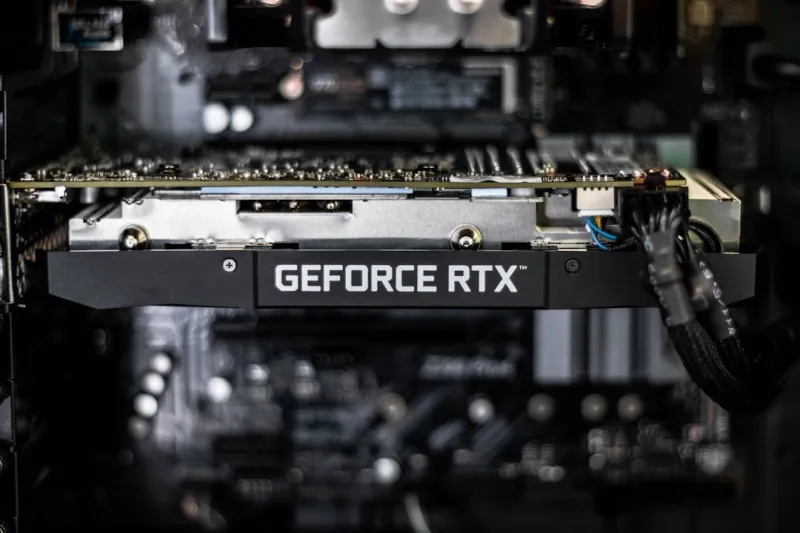
When it comes to GPUs, the narrative has shifted from “gaming only” to “compute everywhere.” The latest RTX 5080 and Radeon RX 8900 cards now ship with dedicated AI cores that accelerate everything from video upscaling to neural‑network inference. If you’re a creator, these cards can shave minutes off render times, and for gamers, they enable ray‑traced experiences at 4K without choking the frame rate. However, the real challenge is heat and power. Modern cards can draw 350 W under load, so a quality power supply and a case with optimized airflow are non‑negotiable. For those troubleshooting performance dips, check out our guide on Mastering Video Card Troubleshooting: Proven Steps for 2026 and Beyond to keep your graphics pipeline humming.
Motherboards: The Secret Sauce Behind AI‑Powered PCs
Many overlook the motherboard, treating it as a mere “platform” rather than a performance catalyst. In 2026, a modern board does more than host components; it orchestrates AI workloads across the system. Features like integrated AI accelerators, advanced power delivery, and robust BIOS tuning for AI cores are now standard on premium models. For a deep dive into why these boards matter, read Why Modern Motherboards Are the Secret Sauce Behind AI‑Powered PCs. Look for boards that support PCIe 5.0 x16 slots, have ample M.2 lanes for NVMe storage, and include dual‑channel DDR5 with high‑frequency support. Additionally, built‑in Wi‑Fi 7 and 10 Gb Ethernet ensure your AI‑driven data streams stay low‑latency. Investing in a high‑quality motherboard now can save you a costly upgrade later, especially as AI workloads demand tighter integration between CPU, GPU, and memory.
Storage Strategies: Speed Meets Capacity
Storage is where your PC feels the most immediate impact of an upgrade. While SSDs have become ubiquitous, the distinction between “fast” and “ultra‑fast” is now measured in real‑world AI model loading times. NVMe 2.0 drives, leveraging PCIe 5.0, can reach sequential read speeds beyond 14 GB/s, dramatically reducing the latency of loading large datasets. For creators who juggle 8K footage and massive AI model files, combining a 4 TB PCIe 5.0 NVMe with a secondary high‑capacity SATA SSD offers both speed and space. Our detailed look at storage options can be found in Hard Drive Strategies for Builders and Creators in 2026. Remember to enable Windows’ Storage Spaces or Linux’s LVM to pool drives intelligently, giving you redundancy without sacrificing performance.
Power Delivery and Cooling: The Unsung Heroes
All the CPU and GPU horsepower in the world is useless if your power supply can’t keep up or if thermal throttling drags your performance down. In 2026, 80+ Platinum 1000 W units have become the sweet spot for high‑end AI rigs, providing stable rails for the latest CPUs and GPUs under full AI load. Pair that with a hybrid cooling solution—a liquid CPU block combined with high‑static pressure fans for the GPU and case—to maintain sub‑70°C temperatures during sustained inference. Don’t forget to monitor power draw with tools like HWInfo or the motherboard’s built‑in telemetry; spikes above 90% capacity can shorten component lifespan. Investing in a quality power supply and cooling loop not only improves performance but also protects against the voltage fluctuations that can corrupt AI model weights during training.
Security‑First Upgrades: Guarding Your AI Assets
With great processing power comes great responsibility—especially when your machine handles sensitive data or proprietary AI models. Upgrading your PC is also an opportunity to harden its security posture. Modern BIOSes now include TPM 2.0 modules and secure boot options that thwart firmware attacks. Coupled with OS‑level protections like encrypted drives and AI‑aware threat detection, you can keep your data safe from the sophisticated attacks outlined in the AI‑Driven Threats and Adaptive Defenses: Securing Your PC in 2026 report. Consider enabling full‑disk encryption with BitLocker or LUKS, and use hardware‑based password managers that store credentials in the TPM. A secure foundation ensures your AI workloads remain confidential and your system stays resilient against the next wave of intelligent malware.
Smart Upgrades That Keep You Ahead of the AI Curve
Finally, the smartest upgrades are those that give you flexibility for future technologies. Modular designs—like using a PCIe 5.0 riser for GPU swaps, or a motherboard with extra M.2 slots—allow you to adopt new standards without a full rebuild. Look for systems that support external GPU (eGPU) enclosures, which can be a cost‑effective way to test emerging GPU architectures before committing. Our article on Smart PC Upgrades That Keep You Ahead of the AI Curve outlines these forward‑thinking strategies. By planning upgrades with modularity and scalability in mind, you’ll avoid the dreaded “locked‑in” scenario and keep your rig adaptable as AI hardware evolves.
Wrap‑Up: Building a Future‑Ready Machine
In the end, a future‑proof PC isn’t built by slapping the newest parts together; it’s crafted with a clear vision of how AI, security, and performance intersect in 2026. Prioritize a CPU with AI acceleration, a motherboard that can orchestrate those workloads, ultra‑fast storage for massive datasets, and a power‑and‑cooling solution that keeps everything stable. Layer in robust security measures, and you’ll have a machine that not only handles today’s AI demands but is ready for the breakthroughs of tomorrow. Whether you’re a creator, developer, or power user, these upgrades will keep you ahead of the curve—without breaking the bank.