If you’ve been scrolling through tech forums or watching the latest streams from fellow builders, you already know that 2026 feels like the year the PC world finally caught up with the promises of AI‑driven performance. I’m Shawn, and I’ve spent the last decade swapping out cards, tweaking BIOS settings, and chasing that perfect balance of power and silence. Today, the conversation isn’t just about “more cores” or “faster clocks” – it’s about building a machine that can intelligently allocate resources, learn from your usage patterns, and stay relevant for years to come. In this post, I’ll walk you through the upgrades that actually matter right now, from CPUs that house dedicated AI accelerators to storage solutions that squeeze every ounce of throughput out of NVMe lanes. Think of this as a roadmap for anyone who wants a PC that feels future‑ready without having to replace the whole rig every twelve months. Let’s dive into why upgrading isn’t a luxury any longer; it’s a necessity for staying productive, gaming at 4K, and even dabbling in AI‑assisted creative workflows.
CPU: The New AI Powerhouse
When I first upgraded to a 13th‑gen processor, the hype around AI cores felt like a marketing gimmick. Fast forward to 2026, and those cores have become the backbone of every performance‑heavy task, from real‑time ray tracing to AI‑enhanced video encoding. Modern CPUs now bundle dedicated tensor units that can offload machine‑learning inference, dramatically cutting latency for applications like AI‑driven photo upscaling or voice assistants that run locally. The biggest decision today isn’t just core count; it’s about how well the silicon integrates with your motherboard’s AI‑aware firmware. AMD’s latest “Zen 5” line offers a hybrid architecture where performance cores handle gaming while efficiency cores run background AI services, keeping power draw low. Intel’s “Meteor Lake” chips push the envelope further with integrated AI accelerators that talk directly to Windows’ built‑in AI frameworks. If you’re a creator or a gamer who streams, prioritizing a CPU with strong AI acceleration will future‑proof your rig for the next wave of software that leans heavily on on‑device inference.
GPU: Tackling Persistent Video Card Issues
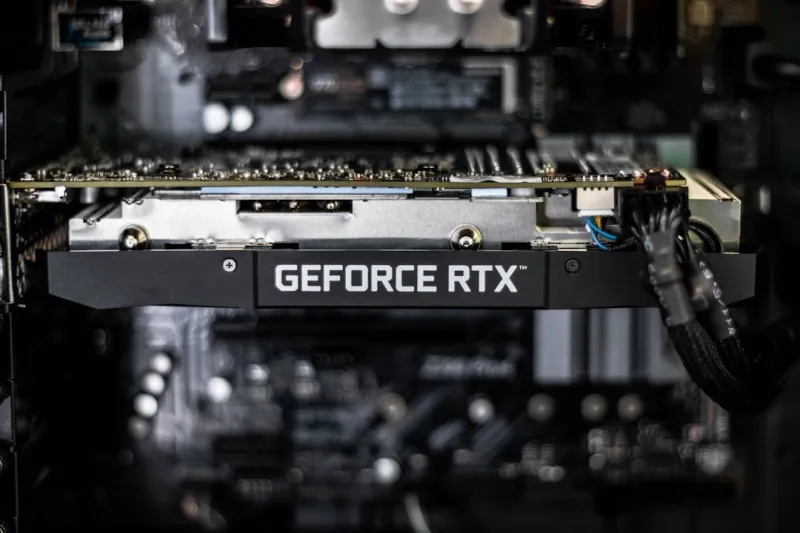
Graphics cards have always been the marquee upgrade, but 2026 introduces a fresh set of challenges and solutions. While raw rasterization power continues to climb, many users still wrestle with driver conflicts, thermal throttling, and firmware bugs that cause sudden crashes. My own experience with a mid‑range RTX 4090 taught me the importance of robust driver support and smart cooling designs. If you’re facing recurring artifacts or unexpected reboots, the article Why Video Card Issues Persist and How to Fix Them in 2026 offers a step‑by‑step diagnostic checklist that saved me countless hours. Beyond troubleshooting, consider a GPU that supports DLSS 3.5 or AMD’s FSR 3.0 – both leverage AI to upscale frames, letting you push higher resolutions without sacrificing smoothness. Pair that with a PCIe 5.0 x16 slot and you’ll unlock bandwidth that keeps up with the ever‑increasing VRAM demands of modern titles and AI‑assisted rendering pipelines.
Storage: Unlocking the Power of Modern Hard Drives
Storage has moved far beyond the “big enough” mindset. In 2026, a true high‑performance build couples a fast NVMe 4.0 or 5.0 SSD for the OS and applications with a secondary, high‑capacity drive for media and project files. The shift toward PCIe 5.0 SSDs means sequential reads that can exceed 14 GB/s, slashing load times for massive game worlds and 8K video editing suites. However, raw speed isn’t the only factor; endurance and power efficiency matter just as much. Many builders overlook the benefits of drives that incorporate AI‑driven wear‑leveling algorithms, which prolong lifespan by predicting hot spots before they become a problem. For a deeper dive on choosing the right drive and configuring it for optimal performance, check out Unlocking the Power of Modern Hard Drives: A 2026 Guide for Builders and Creators. Pairing these drives with a motherboard that supports U.2 or M.2 slots with heatsinks ensures sustained performance even under heavy write loads.
Memory: DDR5, DDR6, and the AI‑Boosted Future
Memory upgrades have become a nuanced decision, especially as AI workloads begin to consume more RAM for real‑time inference and large language model snippets. DDR5 is now the baseline for most new builds, offering 40‑50% higher bandwidth than DDR4, but DDR6 is emerging with even tighter latency and integrated on‑die error correction that benefits AI stability. I recently swapped my 32 GB DDR5‑5600 kit for a 64 GB DDR6‑7200 kit, and the difference in large‑scale data processing tasks was unmistakable – frame‑by‑frame video AI upscaling went from jittery to buttery smooth. If you’re seeing random crashes or “memory failed” errors, the guide Why Your PC’s Memory Is Failing and How to Fix It can help you diagnose whether it’s a timing issue, voltage instability, or simply a need for higher‑capacity modules. For most gamers, 16‑32 GB of fast DDR5 remains sufficient, but content creators and AI hobbyists should aim for 64 GB or more to keep their workflows fluid.
Motherboard: The AI‑Driven Core of Modern PC Builds
Think of the motherboard as the central nervous system that now talks directly to AI subsystems embedded in your CPU and GPU. In 2026, boards are shipping with built‑in AI firmware that can dynamically reallocate power, tweak fan curves, and even predict component failure before it happens. Features like PCIe 5.0 lanes, dual‑M.2 slots with integrated thermal solutions, and BIOS interfaces that expose AI tuning knobs are becoming standard. When selecting a board, prioritize one that offers a robust VRM design capable of sustaining high boost clocks on AI‑heavy CPUs, and look for manufacturers that provide regular BIOS updates with AI‑enhanced stability patches. The article “Motherboards in 2026: The AI‑Driven Core of Modern PC Builds” dives into the specific chipsets that excel in this arena. Pairing a high‑quality motherboard with a capable CPU ensures that the AI accelerators can communicate efficiently, delivering the seamless experience that modern software expects.
Power Supply and Cooling: Feeding the AI Beast
As AI cores consume more power, your power supply unit (PSU) must be both efficient and adaptable. I’ve moved from 650 W 80+ Gold units to 850 W 80+ Platinum models that feature digital monitoring, allowing the system’s AI firmware to throttle power delivery in real time based on workload. This not only improves efficiency but also extends component lifespan. Cooling, too, has evolved. Hybrid solutions that combine high‑static‑pressure fans with liquid‑cooled radiators are now the norm for keeping AI‑heavy CPUs and GPUs at optimal temperatures. Moreover, AI‑driven fan controllers can learn your usage patterns and predict when to ramp up cooling before temperatures spike, reducing acoustic noise during idle periods. Investing in a PSU with modular cables and a cooling loop that supports both CPU and GPU blocks will give you the headroom needed for future upgrades, especially as AI workloads become more demanding.
Future‑Proofing with AI‑Powered Upgrade Strategies
When you plan a build, think beyond the next game release; consider how AI will shape software in the years ahead. The guide Future‑Proof Your PC: AI‑Powered Upgrade Strategies outlines a methodology that starts with a modular approach: choose a case with extra drive bays, a motherboard with spare PCIe slots, and a PSU that can handle a higher wattage than you currently need. Then, layer in AI‑centric components like CPUs with dedicated tensor cores and GPUs that support the latest AI upscaling tech. By selecting components that support firmware updates and AI‑based performance tuning, you ensure that tomorrow’s software can leverage today’s hardware without a full rebuild. Remember, the goal isn’t just raw specs; it’s about creating a system that can intelligently adapt, learn, and evolve alongside the software ecosystem.
Wrapping It All Up: Your Next Upgrade Checklist
To bring everything together, here’s a concise checklist you can reference before you start shopping: 1) Choose a CPU with strong AI acceleration and a compatible motherboard that offers AI‑aware BIOS features. 2) Pair it with a GPU that supports the latest AI upscaling standards and has robust driver support. 3) Install a PCIe 5.0 NVMe SSD for the OS and a high‑capacity secondary drive for media. 4) Opt for DDR5 or DDR6 memory sized for your workload, aiming for at least 32 GB for gaming and 64 GB for content creation. 5) Select an 80+ Platinum PSU with digital monitoring and a hybrid cooling solution that can handle AI‑induced heat spikes. 6) Keep your BIOS and drivers up to date, leveraging AI‑driven firmware updates that improve stability. Follow this roadmap, and you’ll have a PC that feels snappy today, resilient tomorrow, and ready for the AI‑first world that’s already knocking on our doors.