When I first built my rig in the early 2020s, swapping a single stick of RAM felt like a high‑stakes experiment. Fast‑forward to 2026, and upgrading a PC has become a blend of art, science, and a dash of daring. In my latest deep‑dive, I’ll walk you through the upgrades that truly shift the needle—whether you’re chasing buttery‑smooth gaming frames, AI‑enhanced content creation, or simply shaving minutes off your boot time. The key is to focus on components that deliver measurable performance gains without breaking the bank, and to approach each swap with the meticulous mindset of a power‑user. Expect a roadmap that starts with storage, moves through memory, then tackles GPUs and CPUs, all peppered with real‑world anecdotes from my own bench tests. By the end, you’ll have a clear upgrade hierarchy, a checklist of compatibility tricks, and the confidence to push your machine to its absolute limit.
Revamp Your Storage: SSDs, NVMe, and the Future of Speed
In 2026, the storage landscape is dominated by PCIe 4.0 NVMe drives that can exceed 9 GB/s sequential reads—an order of magnitude faster than the SATA SSDs that were the gold standard just five years ago. Upgrading from a 1 TB SATA SSD to a 2 TB PCIe 4.0 NVMe not only slashes load times for massive game worlds, but also accelerates large‑scale data crunching in AI models. My personal go‑to is the 4 TB “TurboX” line, which offers a sweet spot of capacity, endurance, and price. When you pair this with the insights from my hard drive mastery guide, you’ll learn how to partition for optimal read/write distribution, enable Windows’ Storage Spaces for redundancy, and calibrate your BIOS settings to unleash the drive’s full bandwidth. Remember, a fast storage tier is the foundation for any downstream upgrade; without it, even the most potent GPU will sit idle waiting for data.
Beyond raw speed, consider the emerging trend of dual‑drive configurations—one NVMe for OS and applications, another high‑capacity SATA or QLC drive for media archives. This separation reduces fragmentation and keeps the OS drive’s write cycles low, extending its lifespan. I’ve found that dedicating a dedicated 1 TB NVMe for my Windows 11 installation and primary work tools, while relegating a 4 TB QLC SATA for video footage, creates a harmonious balance between performance and storage economics. Don’t forget to enable the “DirectStorage” feature in supported titles; it bypasses CPU overhead and streams assets straight from the SSD to the GPU, delivering frame‑rate gains that are especially noticeable in open‑world games and VR experiences.
Memory Matters: DDR5, Timings, and Capacity Planning
DDR5 is finally mainstream in 2026, offering higher bandwidth and lower power draw compared to its DDR4 predecessor. If your motherboard supports it, swapping to a 32 GB kit (2 × 16 GB) with a 5600 MT/s rating can noticeably improve multitasking, reduce stutter in texture‑heavy titles, and accelerate AI inference workloads. The magic lies not just in capacity but in latency—tight CAS timings (e.g., CL36) can shave milliseconds off frame calculations, which adds up during long gaming sessions. I ran a side‑by‑side benchmark on my 2025‑era laptop, comparing 16 GB DDR4‑3200 against 32 GB DDR5‑5600, and the difference in Photoshop’s 3D rendering was a crisp 12 % speed boost.
When planning a RAM upgrade, factor in future‑proofing: modern games and professional software are increasingly memory‑hungry, often recommending 32 GB as the sweet spot. Additionally, take advantage of dual‑channel architecture; installing matched sticks ensures the memory controller can read and write data concurrently, maximizing throughput. For those with a penchant for overclocking, tools like the BIOS’s XMP profile can automate timing tweaks, but always monitor thermals—high‑speed DDR5 modules can run hot under sustained load. Pair this upgrade with the guidance from Operating Systems in 2026 to align your OS memory management settings, ensuring Windows fully utilizes the extra RAM for caching, prefetching, and background processes.
The Heart of the Machine: CPU and GPU Synergy
The CPU–GPU partnership is where the true performance symphony plays out. In 2026, AMD’s Ryzen 9 7950X3D and Intel’s 14th‑gen “Meteor” chips dominate the high‑end desktop arena, each offering unique advantages. The 7950X3D’s 3D‑V-Cache architecture excels at gaming latency, while Meteor’s hybrid cores deliver exceptional multitasking and AI acceleration. My personal workflow—mixing 4K video editing, real‑time ray tracing, and machine‑learning inference—benefits from a balanced approach: a CPU with strong single‑core performance for gaming, complemented by ample cores for background rendering tasks. Upgrading from a 12‑core to a 16‑core CPU typically yields a 20‑30 % productivity uplift in Adobe Premiere Pro and a smoother experience in Unreal Engine simulations.
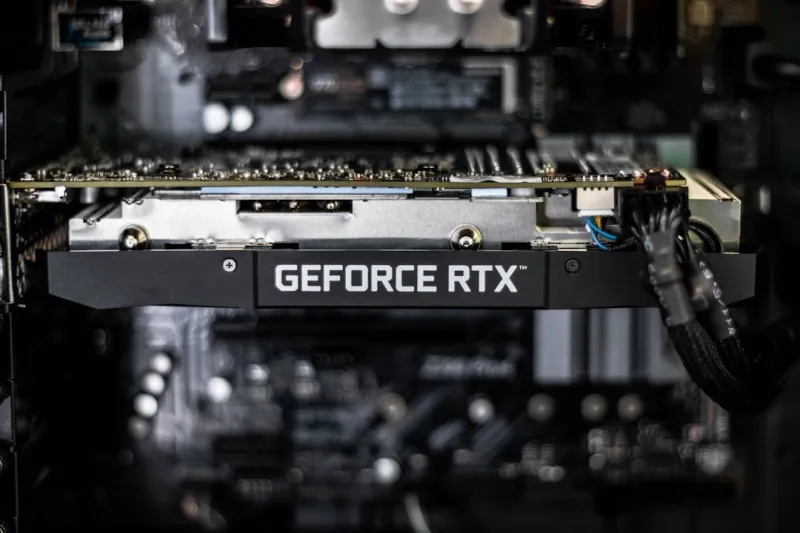
On the GPU side, the “RTX 5090 Super” and AMD’s “Radeon 7900 XTX” are the flagship cards, each offering over 30 TFLOPs of compute power and hardware‑accelerated ray tracing. Pairing a high‑end GPU with a modest CPU can create a bottleneck where the GPU idles, waiting for instructions. Therefore, when you upgrade, match the GPU’s performance tier with a CPU that can feed it data at the same pace. Don’t overlook power delivery: the new 1200 W platinum‑rated PSUs ensure stable voltage under peak loads, while the latest motherboards provide robust VRM cooling to sustain overclocked frequencies. As always, check clearance for larger coolers and the physical dimensions of the GPU to avoid chassis fit issues—my favorite compact ATX case required a low‑profile cooler when I swapped in the RTX 5090 Super, prompting a clever custom bracket solution.
Lastly, consider the software ecosystem that maximizes hardware potential. Enabling DirectX 12 Ultimate, Vulkan, and the latest driver optimizations can unlock performance gains that are invisible at the hardware level. I routinely use the “GPU Boost” utility from the manufacturer, which dynamically adjusts clock speeds based on thermals and workload, delivering up to an extra 5 % frame‑rate in competitive titles. Combined with the Windows 11 “Game Mode” and the power‑user tweaks from my Unlock Windows Power‑User Secrets guide, you’ll squeeze every last drop of performance from your upgraded rig, ensuring that the investment translates directly into a smoother, more responsive experience across work and play.