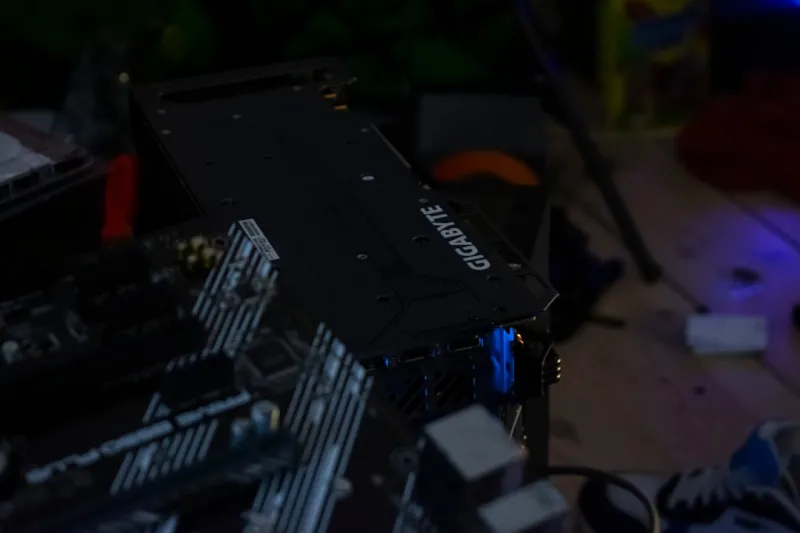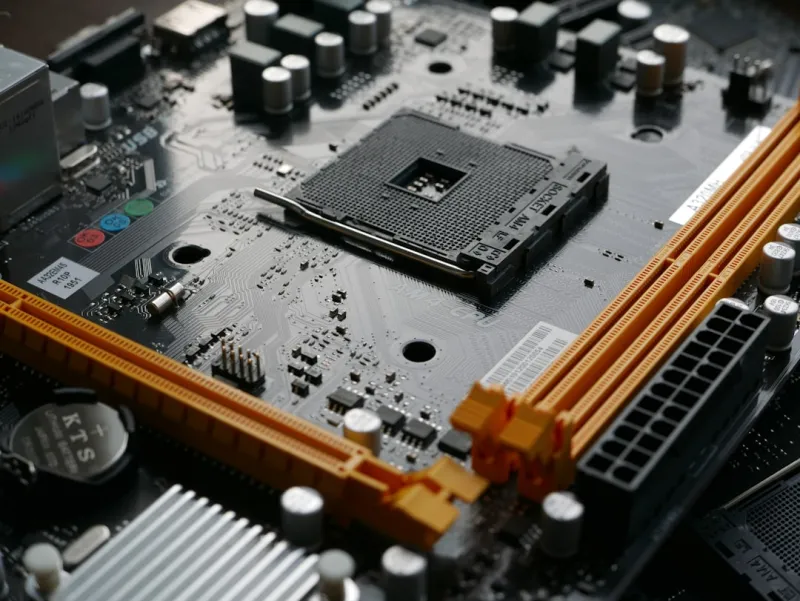
When you hear me talk about motherboards in 2026, you can expect a blend of old‑school enthusiasm and a tech‑savvy eye on AI. I’ve spent the last decade tearing apart boards, soldering capacitors, and chasing the elusive perfect power delivery curve. Today, the landscape has shifted dramatically—AI isn’t just a software layer; it’s a hardware partner that dictates how we design, test, and even choose our next board. From the moment you slap a new CPU onto a socket, the motherboard becomes the command center for AI‑driven workloads, high‑frequency gaming, and content creation pipelines. In this post, I’ll walk you through the most critical trends shaping motherboards right now, explain why you should care about power phases and BIOS intelligence, and give you a roadmap for future‑proofing your rig without blowing your budget.
From Legacy to AI‑Ready: The Evolution of Chipsets
Back in the early 2020s, chipsets were largely a conduit for PCIe lanes and basic I/O. Fast forward to 2026, and they’ve become miniature AI co‑processors. Modern Intel and AMD platforms embed neural‑net accelerators directly into the chipset, enabling real‑time workload distribution between the CPU and dedicated AI cores. This shift means the motherboard you pick determines how efficiently your system can offload tasks like image upscaling, language model inference, or even dynamic power tuning. AI‑enhanced chipsets also improve latency for high‑speed storage and networking, making the board a pivotal component in any AI‑centric build. When evaluating options, look for descriptors like “AI Engine” or “Neural Compute Support” in the spec sheet—these labels signal that the board can communicate with the CPU’s AI extensions without bottlenecks.
Power Delivery: The Unsung Hero of Stability
Power delivery has always been a make‑or‑break factor for overclockers, but in the AI era, it’s more than just voltage stability. With AI workloads spiking power draw unpredictably, motherboards now feature adaptive VRM designs that can react in microseconds. High‑end boards sport 18‑plus power phases, digital PWM controllers, and integrated thermal sensors that feed data back to the BIOS for dynamic adjustments. This not only keeps your CPU cool but also prevents the dreaded “power surge” that can corrupt AI model weights during training. If you’re building a workstation for machine‑learning tasks, prioritize boards with robust VRM cooling—large heatsinks, heatpipes, or even integrated fan headers. Remember, a solid power delivery system is the foundation that lets you push AI acceleration without compromising system integrity.
Connectivity That Keeps Pace with AI Demands
AI workloads thrive on fast data movement, and the motherboard is the highway that connects CPUs, GPUs, storage, and networking. PCIe 6.0 is finally mainstream, delivering up to 64 GT/s per lane—essential for feeding high‑bandwidth GPUs and dedicated AI inference cards. At the same time, USB4 and Thunderbolt 4 have become the default for external AI accelerators and high‑speed peripherals. When browsing specs, note the number of PCIe 6.0 x16 slots and whether they’re electrically full‑length; many mid‑range boards still offer a mix of PCIe 5.0 and 4.0, which can bottleneck future upgrades. Additionally, integrated 10 Gb Ethernet and Wi‑Fi 7 modules now come with AI‑based traffic shaping, ensuring low‑latency communication for distributed training clusters. Choose a board that offers multiple M.2 slots with PCIe 6.0 support to keep your NVMe storage from becoming a performance choke point.
BIOS and UEFI: The New AI‑Enabled Control Plane
Gone are the days of static BIOS tables. Today’s UEFI firmware incorporates AI algorithms that learn your usage patterns and proactively adjust settings. For instance, many manufacturers now ship boards with “Smart Power Profiles” that analyze your typical workload—gaming, video editing, or AI inference—and fine‑tune voltage curves and fan curves on the fly. This dynamic approach reduces the need for manual tweaking and can even extend component lifespan. If you want to dive deeper, look for motherboards that support open‑source firmware like Coreboot, which lets you embed custom AI models for hyper‑personalized tuning. For a deeper dive into how AI is reshaping the PC build process, check out Why AI Computing Is Redefining the Modern PC Build. Understanding these BIOS innovations helps you appreciate why a seemingly “simple” board can become a powerhouse for AI workloads.
Troubleshooting Stability in an AI‑Heavy Environment
When you’re pushing AI models, you’ll notice that system stability becomes more fragile. A sudden spike in GPU memory usage can trigger a cascade of errors that manifest as blue screens or random reboots. One common culprit is insufficient VRM headroom, but firmware bugs and driver incompatibilities also play a role. Modern motherboards now include diagnostic LEDs and AI‑driven error reporting that can pinpoint the exact subsystem causing a fault. If you ever find yourself staring at a blue screen, don’t panic—start by checking the board’s health logs and ensure your power phases are within spec. For a step‑by‑step guide on diagnosing those dreaded crashes, see Why Your PC Keeps Throwing a Blue Screen and How to Stop It. Armed with that knowledge, you can quickly isolate whether the issue lies in the BIOS, the VRM, or an incompatible AI driver.
Smart Upgrades: Staying Ahead of the AI Curve
Future‑proofing a motherboard isn’t just about buying the most expensive board today; it’s about selecting a platform that can adapt as AI workloads evolve. Look for boards that support modular BIOS updates, allowing manufacturers to roll out AI‑specific patches without a full firmware flash. Additionally, consider motherboards with spare PCIe slots and M.2 sockets, so you can add new AI accelerators or faster storage as they become available. The Smart PC Upgrades That Keep You Ahead of the AI Curve article outlines a strategic upgrade path that starts with a solid foundation—your motherboard—and builds outward with incremental, cost‑effective enhancements. By treating the board as a scalable platform, you avoid the costly “replace‑entire‑system” cycle that many builders dread.
Choosing the Right Board for Your Use Case
Not every builder needs a 24‑phase VRM or ten M.2 slots. If you’re a creator focused on video editing and occasional AI rendering, a mid‑range board with a balanced VRM and solid PCIe 5.0 support may suffice. Gamers who dabble in AI‑assisted upscaling will benefit from boards that prioritize low latency networking and fast memory support, especially DDR5‑6000 or higher. Enterprise‑grade workstations, on the other hand, demand the highest phase count, ECC memory support, and dual‑BIOS redundancy. Assess your primary workloads, then match them to the board’s spec sheet—pay close attention to power delivery, AI‑ready chipset features, and expansion capabilities. This targeted approach ensures you get the performance you need without overspending on features you’ll never use.
Conclusion: The Motherboard as an AI Enabler
The motherboard has graduated from a passive circuit board to an active AI enabler in 2026. Its role now spans power delivery, intelligent firmware, high‑speed connectivity, and future‑proof expansion—all critical for extracting maximum performance from AI workloads. By understanding the nuances of chipset AI integration, adaptive VRM design, and AI‑driven BIOS tuning, you can make an informed decision that aligns with your creative or gaming ambitions. Remember, a well‑chosen board not only boosts performance today but also provides a flexible foundation for tomorrow’s AI breakthroughs. Stay curious, keep testing, and let your motherboard be the silent architect behind every AI‑powered achievement you unlock.