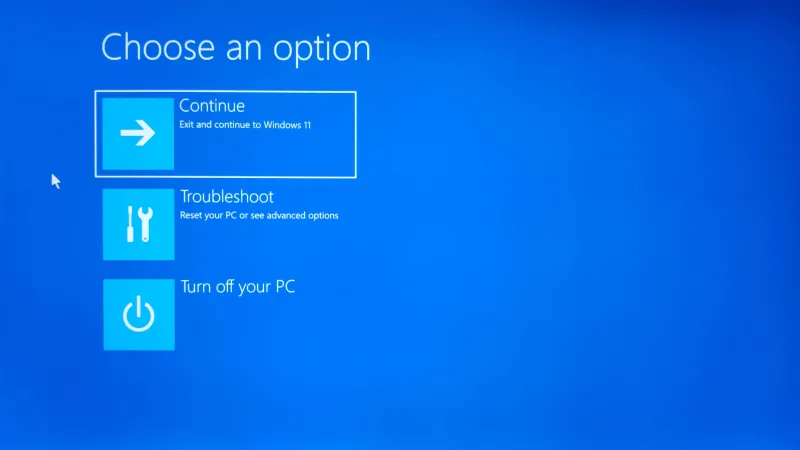
When my workstation threw a classic blue screen of death last month, I felt the familiar rush of panic mixed with a geek’s excitement. In 2026, you’d think the dreaded BSOD would be a relic of the past, yet power users like me still wrestle with it daily. The blue screen isn’t just a nuisance; it’s a cryptic SOS from the OS, screaming that something deep in the hardware‑software stack has gone sideways. My own experience—running intensive AI models, juggling multiple virtual machines, and pushing GPU limits—has taught me that the blue screen is a symptom, not a cause. Understanding its language, from the STOP codes to the memory addresses displayed, is the first step toward turning a catastrophic halt into a teachable moment. In this guide, I’ll walk you through the most common triggers, the diagnostic tools that matter in 2026, and the proactive upgrades that keep your rig humming without the dreaded blue glow.
Root Causes: From Drivers to Defective RAM
The modern blue screen is rarely a simple “hardware failure.” In most cases, it’s a perfect storm of driver incompatibilities, corrupted system files, and hardware fatigue. Outdated graphics drivers remain the top offender, especially when you’re running the latest AI inference libraries that demand the newest CUDA kernels. Likewise, a misbehaving network card driver can cause memory leaks that eventually trip a STOP error. Memory issues—both physical RAM and virtual memory—are another silent assassin; a single faulty DIMM can corrupt critical kernel data structures, leading to an immediate crash. Storage devices aren’t immune either; a failing SSD can stall I/O operations, prompting the kernel to issue a blue screen when it can’t retrieve essential data. To make matters more complex, Windows 11’s rapid release cadence in 2026 means that cumulative updates sometimes introduce subtle bugs that only surface under heavy load. Recognizing these patterns early can save you hours of frustration.
Memory Mayhem: When RAM Becomes the Villain
In my own troubleshooting arsenal, I keep a close eye on memory health because memory issues still crash power‑user workstations with alarming frequency. A quick run of the built‑in Windows Memory Diagnostic or a third‑party tool like MemTest86 can reveal hidden errors that aren’t obvious during regular operation. When you’re running large language model inference or compiling massive codebases, the system constantly shuffles data between RAM and cache, amplifying any weak spot. If you notice the blue screen’s STOP code referencing “PAGE_FAULT_IN_NONPAGED_AREA,” that’s a strong hint that a memory cell is misbehaving. The good news? Upgrading to higher‑density DDR5 modules with on‑die ECC (error‑correcting code) can dramatically reduce these incidents. For a deeper dive into why memory still trips up power users and how to fix it, check out the detailed guide Why Memory Issues Still Crash Power‑User Workstations and How to Fix Them. A proactive memory upgrade is often the most cost‑effective shield against future blue screens.
GPU Glitches: The Silent Blue Screen Triggers
My GPU has been both a blessing and a curse. While it accelerates AI workloads, it also loves to throw cryptic errors that culminate in a blue screen, especially when drivers and firmware aren’t perfectly aligned. The STOP codes “VIDEO_TDR_FAILURE” or “GRAPHICS_DRIVER_IRQL_NOT_LESS_OR_EQUAL” are telltale signs of a graphics subsystem failure. In 2026, the rapid rollout of RTX 5000‑series GPUs means manufacturers push driver updates almost weekly. If you skip a critical patch, the GPU may overclock beyond its safe envelope, leading to thermal throttling and eventually a system crash. To tame this beast, I always keep my driver stack synchronized with the GPU manufacturer’s release notes and use the Mastering GPU Glitches: A Power‑User’s Guide to Fast, Reliable Troubleshooting as a reference checklist. Regularly monitoring temperature curves with tools like MSI Afterburner and ensuring proper power delivery through a quality PSU can prevent many of the blue screen surprises that stem from GPU instability.
Operating System Evolution: Keeping Up with the Kernel
Windows 11’s kernel has become more modular and secure, but that sophistication brings new failure modes. In 2026, the OS introduces “dynamic memory compression” and “hardware‑accelerated scheduling,” features that can backfire if the underlying firmware isn’t fully compatible. A blue screen that cites “SYSTEM_THREAD_EXCEPTION_NOT_HANDLED” often points to a misbehaving kernel driver attempting to hook into these new subsystems. The The OS Evolution Every Power User Must Master article breaks down the latest changes and offers a checklist for ensuring your drivers, especially for storage and networking, are tuned for the current kernel. Additionally, Microsoft’s “Fast Startup” feature, while convenient, can sometimes lock the file system in an inconsistent state after an unexpected power loss, prompting a blue screen on reboot. Disabling Fast Startup in the power settings and keeping a regular system image backup are simple habits that dramatically lower the risk of OS‑related crashes.
Storage Stability: Why Hard Drives Still Matter
Even with NVMe flash dominating the high‑performance market, traditional hard drives remain a critical component for large data archives and backup strategies. A failing HDD can cause the system to hang while waiting for data, and the kernel will eventually issue a STOP error when the I/O request times out. In my own setup, I segregated critical OS and application files onto a PCIe NVMe SSD while relegating bulk media and less frequently accessed datasets to a 4‑TB SATA HDD. This hybrid approach not only optimizes speed but also isolates potential HDD failures from the core OS. If you notice blue screen messages referencing “CRITICAL_STRUCTURE_CORRUPTION” tied to the storage stack, run a chkdsk /f /r and consider migrating essential data to a more reliable SSD. For a broader perspective on the continued relevance of hard drives, see Why Hard Drives Still Matter for Power‑User Workstations. Proactive SMART monitoring can catch early warning signs before they manifest as catastrophic crashes.
Future‑Proof Upgrades: Building a Blue‑Screen‑Resistant Rig
One of the most effective ways to dodge BSODs is to design a system that can gracefully handle future software demands. In 2026, the “Future‑Proof PC Upgrades” playbook emphasizes modularity, robust power delivery, and ample headroom for RAM and storage expansion. By selecting a motherboard that supports DDR5 6000 MHz kits, multiple M.2 slots with heat sinks, and a 1200 W Platinum‑rated PSU, you create a platform where driver and firmware updates can be absorbed without overtaxing the hardware. Additionally, investing in a reliable cooling solution—both CPU and GPU—keeps temperatures in the sweet spot, preventing thermal‑induced blue screens. The internal link Future‑Proof PC Upgrades: A Power‑User’s Blueprint for 2026 outlines specific component recommendations that have saved me countless hours of debugging. Remember, a well‑balanced system not only runs smoother but also gives the OS the breathing room it needs to manage resources without resorting to a fatal stop.
Diagnostic Playbook: From Symptom to Solution
When the blue screen strikes, the fastest path to recovery is a systematic diagnostic routine. First, capture the STOP code and any associated file names; tools like WinDbg or the built‑in Event Viewer provide this data in real time. Next, cross‑reference the code with the Microsoft knowledge base to narrow down the culprit—be it a driver, memory, or hardware component. If the code points to a driver, roll back to a known‑good version or reinstall the latest release. For memory‑related errors, run a full MemTest86 cycle overnight. Should storage errors appear, run SMART diagnostics and consider cloning the OS to a fresh SSD. Finally, document every change in a log so you can trace patterns over time. By treating each blue screen as a data point rather than an isolated incident, you build a resilient troubleshooting habit that turns frustration into mastery. With these strategies, the blue screen becomes less a roadblock and more a valuable feedback mechanism for keeping your power‑user workstation at peak performance.