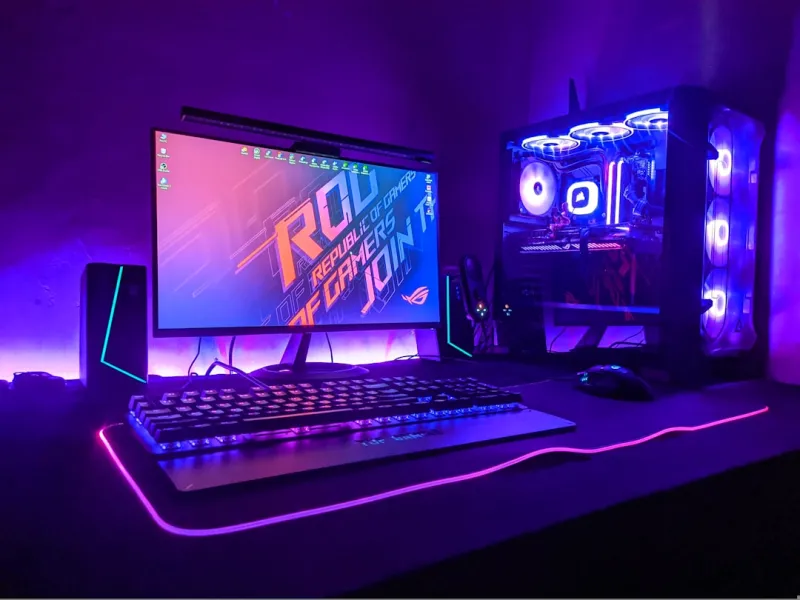
When I first cracked open the case of my 2022 rig last fall, I expected a quick dust‑blow and maybe a new SSD. Instead, I found myself staring at a motherboard that was already choking on the newest instruction sets and a power supply that whispered “not enough juice” every time I tried to push a frame‑rate past 144 fps. Fast‑forward to 2026, and the upgrade landscape feels like a high‑speed train barreling through a tunnel of standards that change every six months. As a power‑user who lives at the intersection of gaming, content creation, and AI‑assisted development, I’ve learned that a successful upgrade isn’t just about swapping parts; it’s about orchestrating a symphony where CPU, memory, storage, and cooling all hit the right notes together. In this post I’ll walk you through the trends that matter most, share the pitfalls I’ve hit (and survived), and give you a roadmap to build a machine that won’t feel ancient before the next big silicon leap.
CPU Evolution: More Than Just Core Counts
2026’s flagship processors have finally moved beyond the “more cores, more speed” mantra that dominated the early 2020s. Vendors are now focusing on heterogeneous architectures that pair high‑performance cores with efficiency cores, all while integrating dedicated AI accelerators on‑die. For a power‑user, this means you can offload machine‑learning inference to the CPU without reaching for a separate GPU, freeing up PCIe lanes for faster storage or additional expansion cards. When I upgraded from a 12‑core beast to a 16‑core hybrid model, the real win was the drop in latency for mixed‑precision workloads—something that traditional benchmarks rarely capture. However, the flip side is that older motherboards often lack the necessary BIOS support for these hybrid designs, forcing a simultaneous motherboard upgrade. Keeping an eye on the socket roadmap and firmware update schedule will spare you from a costly double‑swap later in the year.
Memory Matters: DDR6 is Here, but Stability Is Still Key
DDR6 has finally hit mainstream availability, promising up to 64 GB per module and bandwidths that dwarf DDR5 by a factor of 1.5. The real excitement for power‑users is the reduction in latency for large‑scale data sets, especially when training transformer models locally. Yet, the transition isn’t seamless. I remember a night in March when my workstation crashed repeatedly during a multi‑GPU render—turns out the new high‑speed DIMMs were flirting with the motherboard’s voltage regulator, a classic compatibility glitch. If you’re eyeing the latest memory kits, double‑check the QVL (Qualified Vendor List) and consider a modest overclock headroom of 10‑15 % to accommodate future firmware tweaks. For a deeper dive into why memory still trips up power‑user rigs, see Why Memory Issues Still Crash Power‑User Workstations and How to Fix Them. A stable memory foundation is the silent hero behind smooth multitasking, rendering, and AI inference.
Storage Strategies: SSDs, HDDs, and the Sweet Spot in Between
NVMe SSDs now routinely top out at 14 TB, and the PCIe 5.0 lane budget on modern boards can accommodate two of them without bottlenecking. For day‑to‑day tasks—gaming, software compilation, video editing—that’s more than enough raw speed. However, I still keep a 12‑TB 7200 RPM hard drive in my build, not for nostalgia but for archival media that doesn’t need instant access. The economics of SSDs still favor a tiered approach: a lightning‑fast OS and app drive paired with a larger, slightly slower secondary SSD for active projects, and an HDD for long‑term storage. This hierarchy not only optimizes cost per gigabyte but also reduces wear on your primary SSD. If you’re debating whether a hard drive belongs in a 2026 power‑user workstation, check out Why Hard Drives Still Matter for Power‑User Workstations for the full argument.
Motherboard Mastery: The Unsung Backbone
Choosing a motherboard in 2026 feels like picking a partner for a long‑term relationship. You need the right mix of PCIe lanes, robust power delivery, and future‑proof connectivity like USB4, Thunderbolt 4, and 10 GbE Ethernet. I learned the hard way that a board with a thin VRM can’t sustain the power spikes from a top‑tier GPU under sustained AI workloads, leading to throttling that’s invisible in normal gaming but deadly in compute‑heavy sessions. The new “Pro‑Series” boards from several manufacturers now advertise up to 20 + phase power stages and dual BIOS, which is a lifesaver when a firmware update goes sideways. For a detailed walkthrough of what to look for, especially in the context of hybrid CPUs, see Mastering Motherboard Selection for Power‑User Workstations in 2026. Remember, a solid motherboard not only supports current parts but also provides the expansion headroom you’ll need for the next wave of upgrades.
GPU Upgrades: From Gaming to AI Acceleration
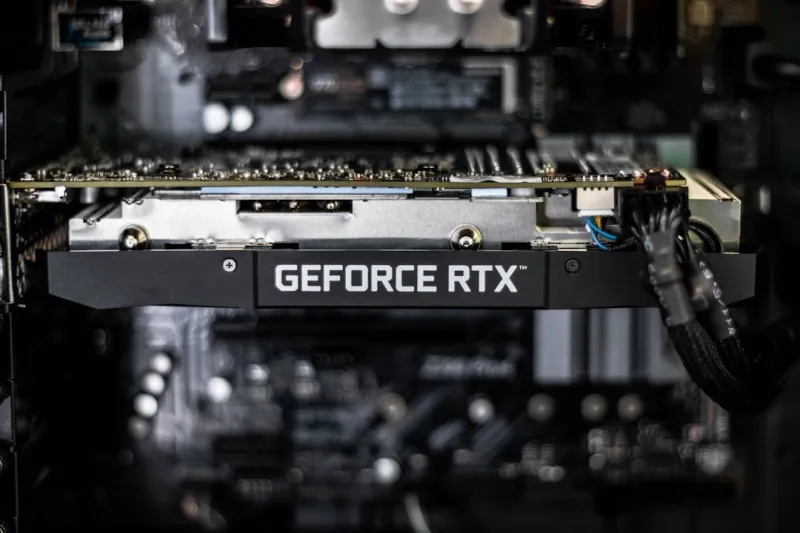
The GPU market in 2026 has bifurcated into two clear camps: ultra‑high‑refresh-rate gaming cards and AI‑centric accelerators. The latest RTX‑7 series delivers 48 TFLOPs of rasterization power while also featuring dedicated tensor cores that can double the speed of image‑to‑image diffusion models. I swapped my previous RTX‑4080 for an RTX‑7080 to shave minutes off nightly video renders and to run stable‑diffusion locally without cloud latency. However, the upgrade introduced a new set of challenges—primarily driver quirks that caused sporadic frame‑pops during long‑duration training runs. My go‑to resource for diagnosing those hiccups is the community guide on Mastering GPU Glitches: A Power‑User’s Guide to Fast, Reliable Troubleshooting. Keeping your GPU firmware current and leveraging the vendor’s profiling tools can turn those glitches into a thing of the past.
Power Delivery & Cooling: The Quiet Workhorses
When you stack a hybrid CPU, DDR6, dual NVMe, and a heavyweight GPU, the power supply becomes the unsung hero that either keeps the system humming or triggers a cascade of throttles. In 2026, 1200‑Watt Platinum‑rated units with fully modular cables are becoming the norm for high‑end builds, offering enough headroom for overclocking and future expansion. On the cooling side, the shift toward hybrid liquid‑air solutions is gaining momentum; a 240 mm AIO coupled with a high‑static‑pressure fan on the VRM area can keep temperatures under 55 °C even under full AI load. I also installed a dedicated VRM heatsink with a copper base, which shaved another 5 °C off the hottest component. The key takeaway? Don’t skimp on power and cooling; they’re the foundation that lets the rest of your upgrades shine without thermal or electrical throttling.
Network & Peripheral Future‑Proofing
Even the fastest workstation can feel sluggish if the network link can’t keep up. This year, 10 GbE is no longer a premium add‑on; it’s a baseline for anyone who streams 8K video, syncs massive datasets to a NAS, or runs distributed AI training across multiple machines. I upgraded to a motherboard with dual 10 GbE ports and paired it with a managed switch that supports Link Aggregation, effectively doubling my bandwidth without a single cable upgrade. For peripherals, the rise of USB4 docking stations means you can daisy‑chain external GPUs, fast storage, and monitors over a single cable, simplifying desk clutter. If you want a deeper look at the networking trends that matter most, see Networking Trends That Power Users Can’t Ignore in 2026. A well‑wired ecosystem ensures that your internal upgrades aren’t bottlenecked by external connections.
Actionable Checklist: Building a Future‑Proof PC in 2026
To wrap things up, here’s a concise checklist that captures the lessons from this deep‑dive: 1) Choose a hybrid CPU with a compatible motherboard that supports PCIe 5.0 and has robust VRM phases. 2) Install DDR6 memory from the vendor’s QVL, leaving at least 10 % headroom for voltage tweaks. 3) Deploy a tiered storage plan: primary NVMe SSD for OS/apps, secondary NVMe for active projects, and a high‑capacity HDD for archives. 4) Select a GPU that matches your primary workload—gaming, AI, or both—and keep its firmware current. 5) Invest in a 1200 W Platinum PSU and a hybrid cooling loop that covers both CPU and VRM. 6) Enable 10 GbE networking and consider a USB4 dock for future peripheral expansion. 7) Document firmware and driver versions before each upgrade to simplify troubleshooting. Follow this roadmap and you’ll have a system that not only dominates today’s benchmarks but also stays relevant as the next wave of silicon arrives.