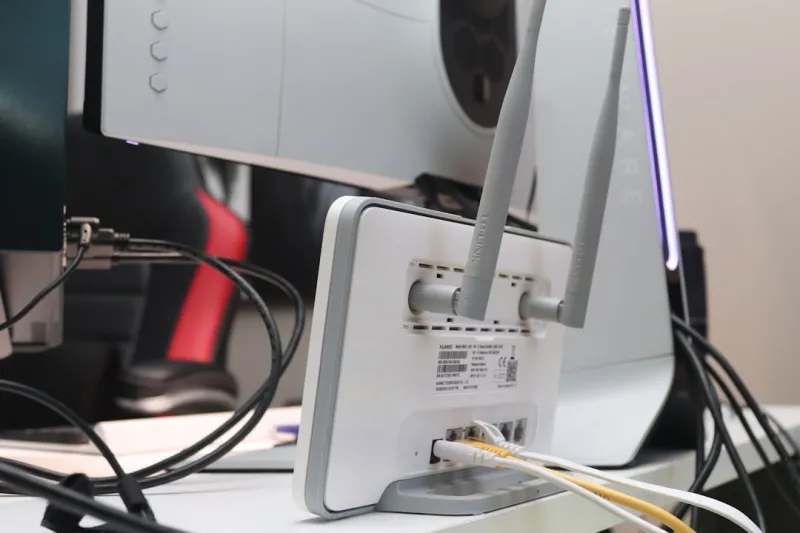
When I first set up a home office in the early 2020s, the idea of a “smart” network felt like a futuristic gimmick—something reserved for corporate data centers, not my living room. Fast forward to 2026, and the landscape has transformed dramatically. AI is no longer an optional add‑on; it’s the backbone of any resilient, high‑performance network. As a power user juggling 8K video streams, AI‑enhanced gaming rigs, and a swarm of IoT devices, I’ve learned that the old “router‑and‑switch” paradigm simply can’t keep up with today’s bandwidth demands and latency‑sensitive applications. The moment you realize that every device is constantly negotiating for bandwidth, you start to appreciate why AI‑driven mesh solutions have become the gold standard. In this post, I’ll walk you through the why, the how, and the practical steps to future‑proof your home network, all from the perspective of someone who lives and breathes high‑performance computing daily.
The Shift to AI‑Powered Mesh
Traditional routers were built for a time when a handful of static devices shared a single broadband pipe. Those devices had predictable traffic patterns, and the router’s firmware could manage them with a simple FIFO queue. Today, our homes host dozens of devices that generate bursty, AI‑intensive workloads—from real‑time video transcoding on a NAS to edge inference on smart cameras. This is where AI‑driven mesh networks step in. They embed machine‑learning models directly into the firmware, allowing each node to predict traffic spikes, re‑route packets on the fly, and dynamically allocate spectrum. The result is a self‑optimizing fabric that reduces latency by up to 40 % compared to legacy gear. For power users like us, that means smoother 8K streams, less jitter in competitive gaming, and more reliable data pipelines for AI workloads that run on the edge of the network.
One of the most compelling advantages of AI mesh is its ability to balance load across multiple radios and frequency bands without manual intervention. In practice, the system monitors each client’s signal strength, latency, and throughput, then decides whether to keep it on 2.4 GHz for range or push it to 5 GHz/6 GHz for speed. Over time, the mesh learns the optimal placement for each device, even adjusting for daily patterns—like moving a home office laptop to a higher‑performance node during work hours and freeing it up for streaming in the evening. This continuous, data‑driven optimization mirrors what enterprises have done for years, but now it’s accessible at the consumer level. If you’ve ever manually tweaked channel settings and still saw interference, you’ll appreciate how AI eliminates that guesswork entirely.
Beyond raw performance, AI mesh introduces a layer of predictive maintenance that can preempt failures before they impact you. By analyzing error logs, signal degradation trends, and even temperature spikes in the hardware, the network can alert you to a potential faulty node or recommend a firmware update. This proactive approach is a game‑changer for power users who can’t afford unexpected downtime. It also dovetails nicely with the concept of an “edge‑first” architecture, where compute resources are distributed throughout the home, reducing reliance on distant cloud services. In short, an AI‑powered mesh doesn’t just connect devices—it intelligently orchestrates them, turning a chaotic array of gadgets into a harmonious, high‑throughput ecosystem.
Security and Future‑Proofing
With great connectivity comes great responsibility, especially when AI algorithms are making routing decisions on your behalf. In 2026, modern malware has evolved to target network firmware, seeking to corrupt the very AI models that keep our traffic flowing smoothly. This means that a secure mesh solution must incorporate continuous threat intelligence updates, sandboxed AI processing, and zero‑trust principles at the node level. I’ve found that vendors who provide regular OTA (over‑the‑air) security patches and transparent AI model audits give me confidence that my network can resist emerging threats. Pairing AI mesh with a robust firewall and segmented VLANs for IoT devices creates a multi‑layered defense that’s essential for power users who handle sensitive data or run AI workloads locally.
Future‑proofing isn’t just about buying the latest hardware; it’s about ensuring that your network can adapt to tomorrow’s standards. That’s why I always cross‑reference my networking plans with broader system upgrades. For example, the article Future‑Proof Your PC outlines the upcoming shift toward DDR6 memory and PCIe 5.0‑plus GPUs, both of which will demand higher bandwidth and lower latency from the network. By aligning your mesh deployment with these hardware trends—selecting nodes that support Wi‑Fi 7, 10 GbE uplinks, and modular AI processors—you ensure that the network won’t become the bottleneck as your workstation evolves. It’s a holistic approach: the better your PC can compute, the more it can benefit from an equally capable network.
Another often‑overlooked aspect is the integration of AI for security analytics. Modern mesh platforms can run lightweight intrusion detection models at each node, flagging anomalous traffic patterns in real time. When a device suddenly begins scanning ports or exfiltrating data, the mesh can isolate it, alert the user, and even initiate a quarantine VLAN without manual intervention. This kind of autonomous security response is a natural extension of the same AI that optimizes traffic—turning the network into both a performance engine and a vigilant guardian. For power users who value both speed and safety, this dual capability is no longer a nice‑to‑have; it’s an essential component of any future‑ready setup.
Getting Started Today
Ready to make the switch? The first step is an honest audit of your current network topology. List every device, note its bandwidth requirements, and map out where signal drop‑offs occur. Armed with that data, you can choose a mesh system that supports AI‑driven load balancing and offers modular node expansion. Look for features like built‑in Wi‑Fi 7 radios, support for 10 GbE backhaul, and an open API for custom AI model integration. I recommend starting with a three‑node kit placed strategically: one in the central hub (often the office), one near the media room, and a third in the bedroom to cover the far side of the house. This layout ensures overlapping coverage and gives the AI enough data points to make intelligent routing decisions.
Once the hardware is installed, the real magic happens in the management app. Most AI mesh solutions provide a dashboard that visualizes traffic heat maps, node health, and AI confidence scores for routing decisions. Spend a weekend letting the system learn your routine—don’t micromanage it initially. After a few days, review the analytics: you’ll see which devices are being prioritized, how bandwidth is allocated during peak hours, and any anomalies the AI has detected. If you notice a device consistently throttling performance, you can manually assign it to a dedicated node or adjust its QoS profile. This blend of automated optimization and user‑driven fine‑tuning gives you the best of both worlds.
Finally, adopt a maintenance rhythm that aligns with your broader tech ecosystem. Schedule monthly firmware checks, enable automatic security updates, and periodically review the AI’s training data to ensure it reflects any new devices or usage patterns. By treating your network as an evolving AI service—rather than a set‑and‑forget appliance—you’ll keep pace with the rapid advances in both hardware and threat landscapes. As we continue to push the boundaries of home computing in 2026, an AI‑powered mesh isn’t just a nice upgrade; it’s the foundation that lets power users like us stay ahead of the curve, enjoy uninterrupted performance, and maintain robust security across every connected device.