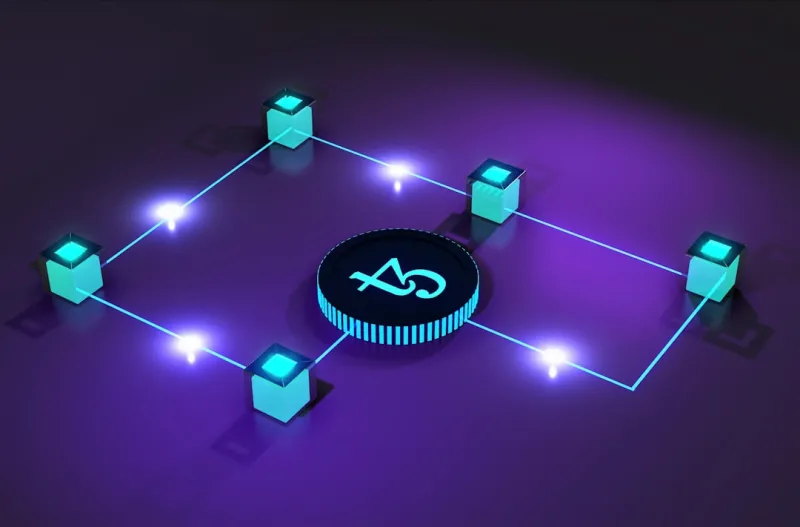
When I first spun up a home lab back in the early 2020s, I thought “networking” was just a fancy word for a couple of routers and a handful of cables. Fast forward to 2026, and the landscape looks more like a living organism—pulsating with AI, edge compute nodes, and a mesh of devices that talk to each other in ways our 2020 selves could barely imagine. As a power‑user who lives on the bleeding edge of hardware upgrades and system tweaks, I’m constantly wrestling with the paradox of wanting absolute control while the network itself is learning to make decisions for me. This tension fuels today’s most exciting trend: AI‑driven, self‑optimizing mesh networks that promise both rock‑solid performance and hands‑off management. In this post, I’ll peel back the layers of this evolution, explore why it matters for power users, and give you a roadmap to harness these technologies without surrendering the granular control you love.
AI at the Core: From Static Routes to Intelligent Pathfinding
Artificial intelligence is no longer a buzzword confined to data centers; it’s now embedded directly into consumer‑grade routers and access points. Modern firmware leverages machine learning models to analyze traffic patterns, predict congestion, and dynamically reroute packets—often before you even notice a slowdown. The result is a network that adapts in real time, optimizing bandwidth allocation for everything from 4K streaming to low‑latency gaming. As a power user, I’ve found that this intelligence can be a double‑edged sword: while it smooths out the day‑to‑day experience, it also abstracts away the knobs I love to turn. The key is to strike a balance—enable AI features that enhance stability, but keep a manual override for critical workloads. Many flagship devices now expose APIs that let you script custom policies, meaning you can still dictate QoS rules for your workstation or lab rigs while the AI handles the mundane traffic.
The Mesh Revolution: Wi‑Fi 6E and Beyond
Mesh networking has been around for a few years, but 2026’s rollout of Wi‑Fi 6E and the upcoming Wi‑Fi 7 standard has turned it into a true performance engine. Instead of a single “bottleneck” router, a mesh system distributes multiple nodes throughout your home, each acting as a mini‑router that collaborates to maintain a seamless, high‑throughput connection. The real magic lies in the back‑haul—modern meshes use dedicated 5 GHz or even 60 GHz bands to stitch nodes together, freeing up the primary spectrum for client devices. For power users who run virtual machines, host local servers, or stream 8K content, this translates to near‑wired speeds without the clutter of Ethernet cables. To get the most out of a mesh, I recommend placing nodes strategically near high‑traffic zones and using the device’s AI‑based placement wizard, but then fine‑tuning channel selection and transmit power manually to avoid interference from neighboring networks.
5G Edge Integration: Turning the Home Into a Mini‑Cloud
What used to be the domain of telecom giants is now creeping into the living room. 5G fixed wireless access (FWA) combined with edge compute platforms lets you offload heavy workloads to a nearby micro‑data center, reducing latency to single‑digit milliseconds. Imagine running a GPU‑intensive AI inference locally on a small form‑factor device, then having the results processed at the edge for rapid distribution across your mesh. This hybrid model blurs the line between “local” and “cloud,” offering power users unprecedented flexibility. The challenge is managing the security surface—each edge node is a potential attack vector. That’s why I keep an eye on evolving threats; for instance, the rapid evolution of malware discussed in Why Modern Malware Is Evolving Faster Than Your Antivirus Can Keep Up underscores the need for zero‑trust policies even in home environments.
Security in a Hyper‑Connected World
With great connectivity comes great responsibility. AI‑driven networks can detect anomalies faster than any human, but they also generate richer telemetry that attackers can exploit if not properly secured. Implementing a zero‑trust architecture—where every device, even a trusted laptop, must authenticate and authorize each network transaction—has become best practice for power users. Many modern routers support integrated certificate‑based authentication and can segment traffic into VLANs automatically based on device type. Pair this with regular firmware updates, a habit I reinforce by reading the Critical 2026 Power‑User Updates You Can’t Afford to Miss, and you’ll dramatically reduce the attack surface. Additionally, keep an eye on emerging threats like AI‑powered ransomware, which can leverage network visibility to spread laterally with alarming speed.
SD‑WAN for the Home Power User
Software‑Defined WAN (SD‑WAN) was once a corporate‑only solution, but the rise of affordable virtual appliances and cloud‑based controllers has made it accessible to enthusiasts. By abstracting the underlying transport—be it fiber, cable, 5G, or satellite—SD‑WAN lets you define policies that prioritize critical traffic (like a home lab’s CI/CD pipeline) over less important streams (such as a family’s video calls). The benefit? Consistent performance across disparate connections and the ability to failover seamlessly when one link drops. Setting up an SD‑WAN hub at home can be as simple as deploying a lightweight virtual router on a spare NAS and pointing your mesh nodes to it. The result is a unified, centrally managed network that still offers the granular control power users crave, especially when you need to troubleshoot a latency spike on a specific subnet.
Practical Steps to Future‑Proof Your Network
So, how do you translate all this hype into a concrete action plan? First, audit your current hardware: check firmware versions, replace legacy 2.4 GHz‑only routers, and consider a Wi‑Fi 6E mesh kit with AI capabilities. Second, enable AI‑based traffic optimization but lock down the API endpoints so you can script custom overrides when needed. Third, integrate a 5G FWA gateway if your ISP offers low‑latency plans, and pair it with an edge compute box—something like a compact Intel NUC with a dedicated GPU works wonders for on‑the‑fly AI tasks. Fourth, adopt zero‑trust principles: use device certificates, segment your network, and enforce strict firewall rules. Finally, keep a habit of reading power‑user focused updates—resources like the Why RAM Troubles Keep Haunting Power Users—and How to Fix Them in 2026 guide keep you ahead of the curve. By following these steps, you’ll have a network that’s both high‑performance and resilient, ready for whatever the next wave of tech throws at you.
The Human Element: Why Hands‑On Still Matters
All the AI, mesh, and edge compute in the world won’t replace the satisfaction of manually fine‑tuning a network. The process of sniffing packets with tools like Wireshark, adjusting channel widths, or crafting custom routing tables is still an art that sharpens your technical intuition. Moreover, a deep understanding of the underlying protocols gives you the leverage to troubleshoot when AI makes a wrong call—something that happens more often than you’d think when firmware bugs slip through. As power users, we must balance automation with expertise, ensuring we remain the ultimate arbiters of our own digital ecosystems. In the end, the network is a canvas, and our knowledge is the brush that paints performance, security, and reliability.
Looking Ahead: The Next Frontier of Home Networking
The next big leap will likely be the convergence of quantum‑resistant encryption with AI‑managed routing, creating networks that are not only fast and self‑optimizing but also impervious to the emerging threats of the quantum era. While still in its infancy, early prototypes are showing promise in lab environments, and I expect to see consumer‑grade implementations within the next few years. Until then, staying adaptable, continuously learning, and leveraging the tools and updates that the power‑user community curates will keep you ahead of the curve. So, fire up that mesh, plug in your 5G edge, and let the AI do the heavy lifting—just don’t forget to keep one hand on the controls.