When I first opened the chassis of a high‑end workstation back in 2022, the RAM modules gleamed like a row of tiny skyscrapers, promising teraflops of AI‑driven performance. Fast‑forward to 2026, and those same modules are the bottleneck for many of us who push models through billions of parameters or run multiple VMs side‑by‑side. The truth is, memory problems don’t just cause a sluggish feel—they can corrupt data, trigger spontaneous reboots, and even erase hours of work in an instant. In my own troubleshooting diary, I’ve logged more “random crash” entries than any other hardware issue, and each time the root cause traced back to RAM. That’s why I’m dedicating this deep dive to the most reliable, repeatable methods for diagnosing, fixing, and future‑proofing your system’s memory. Whether you’re a power user, a creator, or a developer who relies on the AI toolchain, understanding how to tame RAM in 2026 is essential for keeping your workflow smooth and your uptime high.
Recognizing the Tell‑Tale Symptoms of Faulty RAM
Before you even open your case, the system will start sending subtle warning signs. Blue screens with “MEMORY_MANAGEMENT” codes, sudden application crashes during heavy data loads, and inexplicable freezes when you launch a new browser tab are classic clues. In 2026, many of us also see “Kernel‑mode exception not handled” errors when AI inference engines demand rapid tensor swaps. Another red flag is the dreaded “Random Access Memory error” that appears in Windows Event Viewer, often accompanied by a timestamp that aligns with intensive tasks like training a diffusion model. If you notice that your PC restarts after a long gaming session or when you enable a new CUDA‑enabled plugin, don’t dismiss it as a driver glitch—RAM could be the silent culprit. I’ve learned that the pattern of these failures—especially when they occur under load but not at idle—is a strong indicator that the memory hierarchy is under stress.
Running Proven Diagnostic Tools
The first line of defense is to let the system speak for itself. Windows 11 still ships a built‑in Memory Diagnostic utility, and it’s been updated for the latest DDR5 timings. Run it from the Start menu, choose “Restart now and check for problems,” and let it scan for at least three full passes; any error code will be logged in the system’s Event Viewer. For a more granular test, I swear by MemTest86, which boots from a USB stick and can stress each memory cell at the highest frequency your BIOS permits. In 2026, MemTest86 now includes ECC detection for consumer modules, so you can see if a single bit error is recurring. When I run a 12‑hour pass on a newly built rig, I often catch intermittent failures that the Windows tool missed. Record the exact module slot and the pattern of failure—it will guide you when you start reseating or swapping sticks later on.
Checking BIOS/UEFI Settings and XMP Profiles
Even the most reputable memory kit can behave erratically if the firmware isn’t configured correctly. Dive into your BIOS or UEFI and verify that the XMP (or the newer EXPO for AMD platforms) profile matches the specifications printed on the module’s label. In 2026, many motherboards default to a conservative “Auto” setting that throttles speed to 4800 MHz even on kits rated for 5600 MHz, which can cause latency spikes under AI workloads. Enable the profile, then manually confirm the voltage—most DDR5 modules run safely between 1.20 V and 1.35 V, but pushing beyond 1.40 V can accelerate wear. Don’t forget to enable “Memory Hole Remapping” if your system supports it; this ensures the OS can address the full installed capacity. I’ve found that a simple mismatch between the advertised timings and the BIOS defaults is often the reason why a brand‑new kit fails the first MemTest86 pass.
Physical Inspection: Reseating and Cleaning
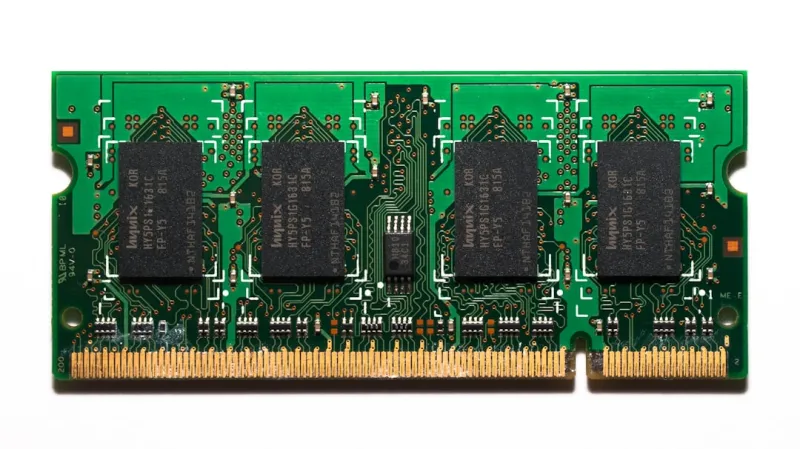
It’s easy to overlook the most basic step: a firm, even seat in the DIMM slots. After a few months of heavy use, thermal expansion can loosen the contacts, especially on the newer low‑profile DDR5 modules that fit tighter on compact motherboards. Power down, unplug, and ground yourself before you gently release each latch. Clean the gold contacts with a lint‑free cloth and a touch of isopropyl alcohol—just enough to remove oxidation without leaving residue. While you’re in there, take a moment to clear out any dust that may have settled on the heat spreaders; clogged airflow can raise temperatures enough to cause intermittent errors. I’ve rescued more than one “dead” system by simply reseating the sticks and giving them a quick clean, turning a weekend of frustration into a couple of minutes of work.
Compatibility Pitfalls: Speed, Timings, and Motherboard Revisions
Not all DDR5 is created equal, and 2026 has introduced a dizzying array of speed bins, latency tables, and JEDEC versus manufacturer‑specific profiles. Before you splurge on a 6400 MHz kit, double‑check that your motherboard’s firmware supports that frequency. Some newer B650E boards still require a BIOS update to recognize the highest‑speed modules, and the update is often bundled in the “Critical 2026 Power‑User Updates You Can’t Afford to Miss” release notes. Additionally, pay attention to the CAS latency; a 36‑cycle module at 5600 MHz can actually perform worse than a 40‑cycle module at 5200 MHz in certain AI pipelines due to the way the memory controller schedules reads and writes. When I first upgraded to a high‑speed kit, I discovered that the motherboard’s memory controller was throttling the timings, leading to sporadic freezes. The solution was a BIOS flash and a manual timing adjustment, which restored stability and gave me the full advertised bandwidth.
Software Interactions: AI Workloads, Virtualization, and Pagefile Management
Modern operating systems in 2026 are more aggressive about allocating memory to AI accelerators and virtual machines. If you’re running a Docker container with a GPU‑backed inference engine, the host OS may aggressively swap pages to the SSD, causing latency spikes that masquerade as RAM failures. Adjust your pagefile settings to a fixed size on a fast NVMe drive, and consider disabling automatic memory compression if you notice frequent “low memory” warnings. I also recommend turning off “Memory Integrity” in Windows Security only if you’re certain your drivers are signed—this feature can interfere with certain low‑level memory access patterns used by AI frameworks, leading to “unexpected reboot” logs. By fine‑tuning these software parameters, you can often eliminate crashes that would otherwise be blamed on faulty hardware.
When It’s Time to Upgrade: Capacity, Speed, and ECC Considerations
If you’ve walked through the diagnostic steps and still see errors, or if your workload has simply outgrown your current kit, it’s time to look at an upgrade. For most power users, 32 GB is the sweet spot for multitasking and AI model prototyping, but 64 GB or even 128 GB is becoming the norm for heavy‑duty training sessions. DDR5‑5600 modules provide a good balance of speed and latency, while newer DDR5‑6200 kits can shave off precious milliseconds in data‑intensive pipelines. If data integrity is paramount—say you’re handling financial models or scientific datasets—consider ECC‑enabled memory, which is now supported on select consumer motherboards. I found the decision process much clearer after reading Unlock Maximum Power: A 2026 Guide to PC Upgrades for Power Users, which walks through the cost‑benefit analysis of each tier. Pair your new RAM with a motherboard that supports dual‑channel or quad‑channel configurations to maximize bandwidth.
Connecting the Dots: Learning from the Community and Further Reading
One of the most valuable resources I rely on is the collective wisdom of fellow power users who have faced the same RAM demons. The deep dive in Why RAM Issues Still Haunt Power Users—and How to Fix Them highlights real‑world case studies where mismatched timings and BIOS quirks caused night‑marish instability. By cross‑referencing those scenarios with your own system’s specs, you can often pinpoint the exact trigger without endless trial and error. Additionally, keeping an eye on the latest firmware releases—especially those bundled in the “Critical 2026 Power‑User Updates You Can’t Afford to Miss”—ensures you’re not missing a simple patch that resolves a known memory controller bug. Engaging with forums, sharing MemTest86 logs, and staying current on manufacturer advisories has saved me countless hours and prevented data loss across multiple builds.
Preventive Maintenance and Final Takeaways
Ram is the lifeblood of any modern PC, and like any critical system, it requires regular check‑ups. Schedule a quarterly MemTest86 run, especially after major driver or OS updates, and keep your BIOS firmware current. When you add new modules, always verify that the system recognizes the full capacity in Task Manager before you dive into demanding workloads. A simple habit—monitoring memory usage with built‑in tools like Windows Resource Monitor or the newer AI‑aware Performance Analyzer—can alert you to creeping leaks before they become catastrophic. Lastly, remember that RAM isn’t just a hardware component; it’s part of a delicate ecosystem that includes CPU, GPU, storage, and software. Treat it with the same care you would a high‑performance engine, and your 2026 workstation will stay reliable, fast, and ready for the next AI breakthrough.