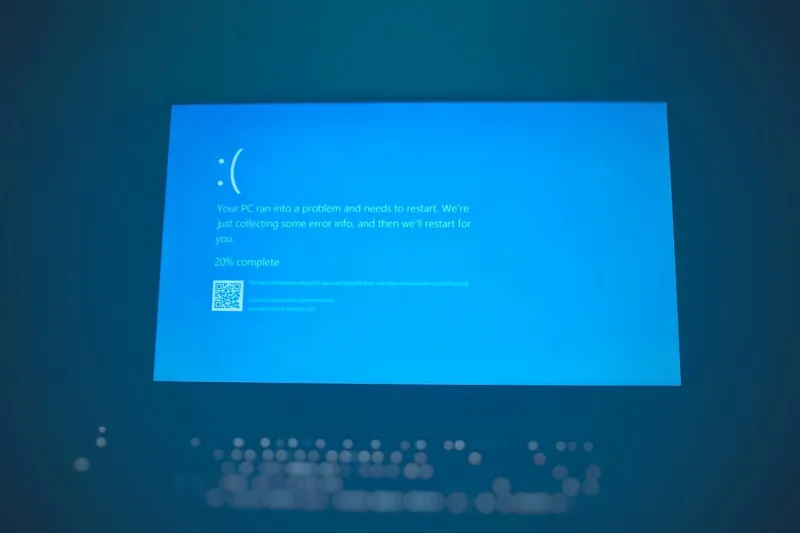
Ever since I first saw a classic Blue Screen of Death (BSOD) on a dusty workstation in my college lab, the sight has been both a horror story and a badge of honor for me. In 2026, when I sit at a custom‑built rig that runs Windows 12, the fear of a sudden, neon‑lit crash still feels real—especially when I’m deep in a multi‑threaded AI model compile or juggling several Docker containers. The blue screen isn’t just an old Windows relic; it’s a modern symptom of the complex dance between firmware, drivers, and the raw horsepower we demand from today’s silicon. Over the years I’ve turned BSODs into data points, logging each error code, analyzing dump files, and building a personal playbook that now helps my community avoid those dreaded halts. In this post, I’ll walk you through why the blue screen persists, how to diagnose it efficiently, and what strategic upgrades can keep your system humming even when you push the limits of AI‑driven workloads.
First, let’s demystify why the BSOD still haunts power users in 2026. The core of the issue lies in the increasing abstraction layers between the OS kernel and the hardware. Modern CPUs and GPUs are packed with microcode that must be perfectly synchronized with the operating system’s expectations. When a driver—whether it’s for a cutting‑edge RTX 5000 GPU or a high‑speed NVMe SSD—delivers an unexpected instruction or corrupts memory, Windows drops to the blue screen to protect the system’s integrity. Add to that the rapid rollout of firmware updates for PCIe 5.0 devices and the growing reliance on AI accelerators, and the margin for error shrinks dramatically. Even a seemingly trivial BIOS tweak can cause a cascade of errors that manifest as a BSOD, especially under the heavy, parallel workloads we see in today’s data‑centric pipelines.
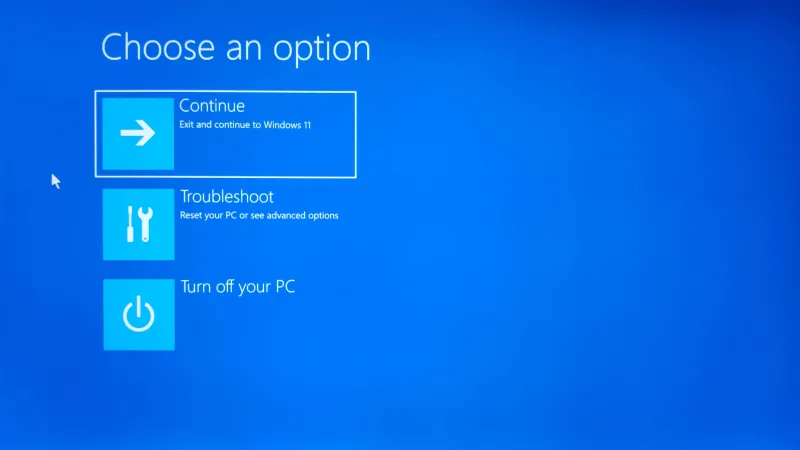
When the dreaded blue screen finally appears, the first thing you should do is resist the urge to panic and instead treat it like a forensic clue. Start by noting the error code and any listed driver files—these are the breadcrumbs that will guide your investigation. In Windows 12, you can press Shift + Restart to boot into the Advanced Startup Options, then select “Troubleshoot → Advanced options → Startup Settings → Restart” and enable “Safe Mode with Networking.” From there, run the built‑in WinDbg or the newer Windows Debugger Preview to open the memory dump located at C:\Windows\Minidump. Look for patterns: repeated references to a specific driver, recurring memory addresses, or timestamps that line up with recent software installations. Document these findings in a log—something I keep in a simple Markdown file synced across my devices—so you can correlate them with recent driver updates or hardware changes.
One of the most overlooked culprits behind a BSOD is outdated firmware. While most users focus on OS patches, the underlying UEFI/BIOS often lags behind, especially on motherboards that ship with legacy firmware to maintain broad compatibility. In 2026, manufacturers are releasing microcode updates that address subtle timing issues with DDR5 memory modules and PCIe lane allocation. Ignoring these updates can cause the kernel to misinterpret hardware signals, resulting in fatal exceptions. The best practice is to schedule a quarterly firmware audit: visit the motherboard vendor’s support page, compare your current version with the latest release, and flash the BIOS using a USB stick in a controlled environment. Pair this with a systematic driver update strategy—preferably using the vendor’s “clean install” option to wipe residual files and avoid version conflicts that often trigger blue screens.
For a deeper dive into why the blue screen still haunts power users—and how to defeat it—check out my earlier analysis Why the Blue Screen Still Haunts Power Users—and How to Defeat It. That piece walks through the historical evolution of the BSOD, the specific kernel mechanisms that trigger it, and a step‑by‑step guide to creating a custom crash‑dump policy that gives you richer diagnostics without sacrificing performance. It’s a must‑read if you want to turn each blue flash into actionable insight rather than a blind panic button.
Hardware choices play a pivotal role in BSOD prevention. When I assembled my current rig, I prioritized components with robust driver ecosystems and strong vendor support. For instance, the latest AMD Threadripper 9000 series offers a stable platform with well‑documented power‑management features, while the Intel Xeon E7‑X series still provides a reliable backbone for server‑grade workloads. Pairing these CPUs with a motherboard that supports full PCIe 5.0 bandwidth and has a proven track record of timely BIOS updates can dramatically reduce crash frequency. If you’re looking for a curated list of components that balance performance, stability, and future‑proofing, my Hardware Playbook Power Users Need to Dominate 2026 breaks down the best picks, along with real‑world testing results that highlight which parts tend to cause the most driver‑related blue screens.
Security isn’t just about firewalls and passwords; it’s also about the integrity of the low‑level code that runs on your machine. Malicious or compromised drivers can inject malformed instructions that force the kernel into a crash, a tactic often used by advanced ransomware to sabotage recovery attempts. In 2026, with the rise of supply‑chain attacks targeting firmware, it’s crucial to adopt a zero‑trust stance even for drivers you trust. Verify the digital signatures of every driver you install, enable Windows 12’s Secure Boot, and consider using a hypervisor‑based integrity monitor that flags unexpected driver behavior before it reaches the kernel. By hardening this layer, you not only protect your data but also drastically cut down the number of blue screens triggered by rogue code.
If you want to explore the security angle more thoroughly, I’ve outlined a comprehensive strategy in Fortify Your Rig: Power‑User Strategies for Unbreakable Computer Security. The guide walks you through setting up a hardware root of trust, configuring kernel‑mode code signing policies, and leveraging the latest Windows 12 security baselines to keep malicious drivers at bay. Implementing these measures can transform a system that once crashed under a stray driver into a fortress that gracefully handles even the most aggressive code injections.
Looking ahead, the integration of AI workloads into everyday computing is reshaping how we think about stability. Modern AI models demand massive amounts of GPU memory and rapid data movement between CPU, RAM, and storage. If any of those pathways falter—say, an NVMe drive stalls due to a firmware bug—the system may hit a critical failure point, prompting a BSOD to protect data integrity. To mitigate this, I recommend aligning your AI stack with the native Windows 12 AI acceleration frameworks, which provide better error handling and more granular crash reporting. Pair this with a solid backup strategy for your model checkpoints, and you’ll minimize both data loss and downtime when the blue screen does appear.
For those eager to squeeze every ounce of performance from Windows 12 while keeping the system rock‑solid, my deep dive Unlocking the Full Potential of Windows 12 for Power Users offers a roadmap. It covers everything from power‑plan tuning and kernel‑mode driver isolation to leveraging the new Memory Integrity feature that catches malformed memory accesses before they cause a crash. By following those recommendations, you’ll not only reduce the likelihood of a blue screen but also enjoy smoother multitasking, faster AI model training, and a more responsive development environment.
In the end, the blue screen remains a valuable, albeit dreaded, safety net that signals something has gone seriously wrong beneath the surface. By treating each crash as a diagnostic opportunity—capturing dump files, staying on top of firmware, vetting drivers, and hardening security—you turn a moment of frustration into a learning experience that makes your rig more resilient. As power users, we thrive on pushing technology to its limits, and with the right habits and tools, those limits become milestones rather than roadblocks. Keep your system updated, monitor your logs, and remember that the blue screen is not the end of the road; it’s simply a signpost pointing toward the next optimization. Happy hacking, and may your screens stay green—or at least stay on.