Stepping into 2026 feels like opening a fresh chapter in the hardware saga. The pace of innovation has accelerated to a point where yesterday’s “high‑end” specs are today’s baseline, and power users are constantly chasing the next performance sweet spot. From silicon that can juggle AI workloads on‑the‑fly to storage solutions that blur the line between speed and capacity, the ecosystem is a dense web of interdependent technologies. As a long‑time tinkerer, I’ve learned that the key to staying ahead isn’t just buying the flashiest part—it’s understanding how each component talks to the others. In this article, we’ll dissect the major trends shaping computer hardware right now, spotlight the parts that matter most for demanding workloads, and outline a roadmap you can follow to keep your rig both powerful and future‑proof.
The CPU Evolution: Hybrid Cores and Beyond
CPU design in 2026 is dominated by the hybrid architecture model, a concept that matured from early‑2020s experiments. Modern processors blend high‑performance “P‑cores” with energy‑efficient “E‑cores,” dynamically allocating tasks based on workload intensity. This approach not only maximizes single‑thread performance for gaming and content creation but also scales gracefully for parallel AI inference and massive compilation jobs. When paired with advanced instruction sets like AVX‑512‑VNNI, these hybrids can accelerate machine‑learning kernels without a dedicated GPU. For power users, the takeaway is simple: prioritize CPUs with a balanced ratio of performance to efficiency cores, and ensure your motherboard supports the latest power‑management firmware to unlock the full scheduling potential.
GPU Power: The AI Acceleration Frontier
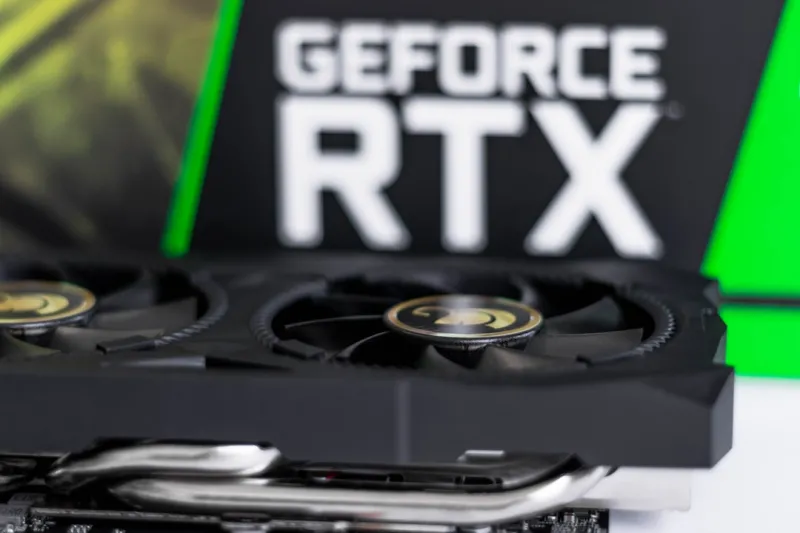
Graphics cards have transcended their original role as pure rasterizers. Today’s GPUs are hybrid compute engines, boasting dedicated tensor cores, ray‑tracing accelerators, and massive VRAM buffers. In 2026, the most compelling GPUs feature 48 GB of GDDR7 memory and a unified memory architecture that lets the CPU and GPU share address spaces without costly data copies. This is a game‑changer for developers running large language models locally or for creators rendering 8K video with real‑time AI denoising. If you’re eyeing a new graphics card, look for a high tensor‑core count and driver support for the AI Computing Trends Every Power User Must Master. Those features will keep you ahead of the curve as AI workloads become a staple in everyday computing.
Storage Hierarchy: SSDs, HDDs, and the Emerging NVM Express Tier
The storage landscape has finally settled into a three‑tiered hierarchy: ultra‑fast NVMe drives for OS and applications, high‑capacity SATA SSDs for bulk data, and a surprising resurgence of enterprise‑grade HDDs for archival workloads. While NVMe drives now breach 15 GB/s sequential read speeds, the cost per gigabyte still favors SATA SSDs for media libraries. Meanwhile, HDD technology has embraced helium‑filled platters and SMR (Shingled Magnetic Recording) optimizations, delivering terabyte‑scale storage at a fraction of the price of SSDs. For power users who manage massive video archives or scientific datasets, combining these tiers yields a balanced system. Don’t forget to check out Why Hard Drives Still Matter for Power Users in 2026 for a deeper dive into why that legacy tech remains essential.
Memory Momentum: DDR6, LPDDR6X, and Bandwidth Battles
Memory technology has caught up with the demands of AI‑heavy applications, introducing DDR6 modules that push 64 GB/s per channel and operate at tighter voltage tolerances. Paired with a 6000 MT/s clock, these kits provide the bandwidth required for large model inference and real‑time video encoding. On the laptop front, LPDDR6X offers comparable speeds with significantly lower power draw, making it the go‑to choice for mobile workstations. However, the real secret weapon lies in the emerging “memory‑side caching” techniques that let GPUs directly tap into system RAM, reducing latency spikes during data‑intensive tasks. When building or upgrading, aim for at least 32 GB of DDR6, and consider a dual‑channel configuration to maximize throughput for both CPU and GPU workloads.
Cooling Innovations: From Vapor Chambers to Liquid Stacks
As component power density climbs, thermal management has become a decisive factor in system stability. Traditional air coolers are giving way to hybrid solutions that combine vapor‑chamber base plates with high‑flow radial fans, delivering low noise and sub‑70°C idle temperatures even under sustained AI inference loads. For the most ambitious rigs, liquid‑stack cooling—where a single loop cools the CPU, GPU, and even VRMs—offers unparalleled thermal headroom. These systems now feature modular reservoirs with magnetic quick‑connects, simplifying maintenance. When selecting a cooler, prioritize a solution with a high CFM rating and a well‑designed fin stack; the extra investment pays dividends in overclocking potential and component lifespan.
Power Delivery and Efficiency: The Rise of 48 VPP and Smart PDUs
The power ecosystem has undergone a quiet revolution. The industry is moving toward a 48 V primary power plane (48 VPP) for desktops, reducing current draw and improving cable efficiency. This shift enables smaller, more efficient PSUs that can deliver up to 1500 W without the bulk of previous generations. Coupled with smart power distribution units (PDUs) that monitor per‑rail usage in real time, users can fine‑tune power budgets to match workload demands, trimming waste and extending component life. Look for PSUs with an 80 PLUS Titanium rating and built‑in digital telemetry; they’ll integrate seamlessly with motherboard power‑management software, giving you granular insight into consumption trends.
Future‑Proofing Your Build: Strategies for the Long Haul
Future‑proofing is no longer a buzzword—it’s a disciplined approach to component selection. Start with a motherboard that supports PCIe 5.0, DDR6, and the latest USB 4.0 standards, ensuring you won’t hit a connectivity dead‑end when new peripherals emerge. Next, adopt a modular chassis that can accommodate additional storage bays and larger radiators, allowing you to upgrade without a full case swap. Finally, keep your BIOS and firmware updated; manufacturers now release performance patches that unlock hidden features years after launch. For a holistic view on staying ahead, check out Future‑Proof Your Development Workflow: Strategies for 2026 Power Users, which outlines how hardware decisions intersect with software productivity.
Security at the Silicon Level: Hardware‑Rooted Trust
Security concerns have shifted from software firewalls to silicon‑level protections. Modern CPUs embed a Trusted Execution Environment (TEE) that isolates cryptographic keys and authentication processes from the OS, mitigating firmware attacks. Additionally, GPUs now feature encrypted memory pipelines, preventing unauthorized reads of AI model weights. For power users handling sensitive data, enable hardware‑based secure boot and ensure your motherboard supports a TPM 2.0 chip with firmware attestation. Pair these measures with a secure bootloader that verifies each component’s signature at startup—this layered defense is essential in a world where supply‑chain threats are increasingly sophisticated.
Putting It All Together: A Practical Upgrade Playbook
Now that we’ve explored each hardware pillar, let’s synthesize a concrete upgrade path. Start by swapping to a DDR6‑compatible motherboard and pairing it with a hybrid‑core CPU that offers at least 8 P‑cores and 8 E‑cores. Add a GPU with 48 GB of GDDR7 and robust tensor‑core support for AI workloads. Install a 2 TB NVMe SSD as your primary drive, complemented by a 10 TB helium‑filled HDD for archival storage. Top the stack with a dual‑radiator liquid‑stack cooler and a 1500 W 48 VPP PSU equipped with smart telemetry. Finally, enable all hardware security features in BIOS, and keep your firmware updated. This balanced configuration delivers raw performance, efficient cooling, ample storage, and a future‑ready foundation—exactly what a modern power user needs to dominate both creative and computational challenges.