When I first cracked open a 3.5‑inch platter back in the early 2010s, the hum of the spindle was practically a soundtrack to my DIY builds. Fast forward to 2026, and that same mechanical heart has been turbo‑charged with innovations that would make a seasoned SSD blush. In this deep dive, I’ll walk you through why hard drives are no longer the “slow, old‑school” relic they once were, how they’ve become smarter and safer, and why they still deserve a place in modern rigs. If you’ve been tracking the rise of self‑optimizing hardware, you’ll notice the same principles at play in today’s HDDs—principles explored in detail in Intelligent PC Building: How Self‑Optimizing Hardware Is Changing the Game. Buckle up, because the platter is about to spin faster, store smarter, and protect your data better than ever before.
From Magnetic Ink to Multi‑Terabyte Marvels
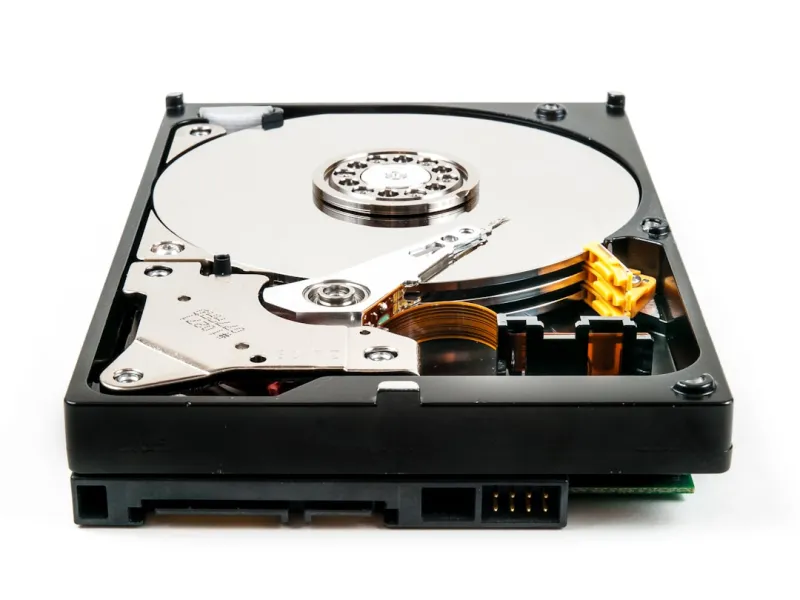
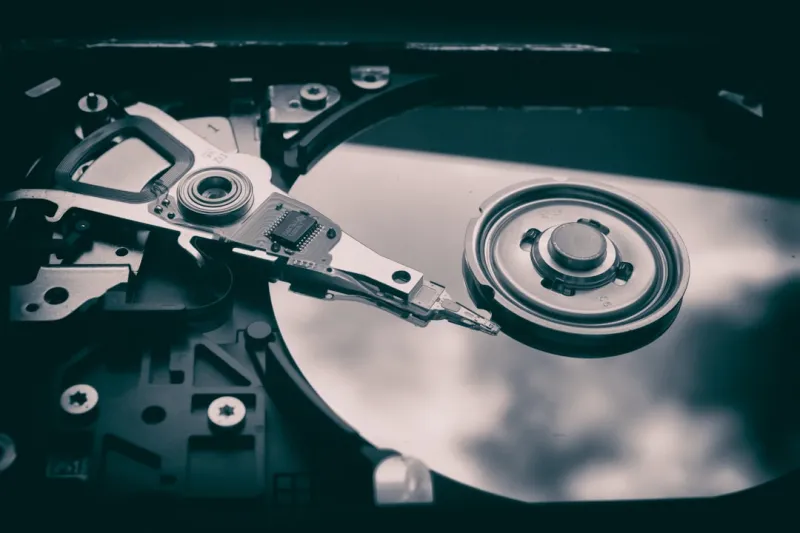
The journey of hard drives over the past decade has been nothing short of a renaissance. Early 2020s models were still shackled by 5400 RPM speeds and modest capacities, but the relentless demand for high‑resolution video, AI model training, and massive game libraries forced manufacturers to rethink the magnetic medium. In 2026, we see drives that combine heat‑assisted magnetic recording (HAMR) and shingled magnetic recording (SMR) to push densities beyond 2 TB per platter. This hybrid approach allows for both high sequential throughput and efficient random access, a balance that was once thought impossible. Moreover, the integration of on‑board processors that manage head positioning in real‑time has slashed latency, making large file transfers feel almost instantaneous. The result? A hard drive that can sit comfortably alongside NVMe SSDs in the performance hierarchy, delivering massive storage without the premium price tag of pure flash solutions.
Speed: The New Benchmark for Mechanical Storage
Speed has always been the Achilles’ heel of hard drives, but 2026 brings a paradigm shift. With rotational speeds now climbing to 10 000 RPM on select enterprise models and the introduction of dual‑actuator designs on consumer drives, sequential read/write rates regularly exceed 300 MB/s—numbers that were once exclusive to mid‑range SSDs. The dual‑actuator architecture essentially gives a drive two independent read/write heads, allowing simultaneous operations on separate zones of the platter. This reduces seek times dramatically, especially when handling multiple simultaneous I/O streams typical in gaming and content creation workloads. Add to that the intelligent caching algorithms that predict which data will be needed next, and you have a system that pre‑fetches intelligently, shaving seconds off load times. It’s a reminder that the old “spinning disk equals slow” myth is finally being retired.
Reliability Reimagined: Smarter Error Detection
Reliability has always been a selling point for HDDs, but the stakes are higher now with petabyte‑scale data sets. Modern drives employ advanced SMART (Self‑Monitoring, Analysis, and Reporting Technology) that not only logs temperature and error rates but also runs predictive models using on‑board AI to forecast imminent failures. In 2026, these predictive models are trained on billions of real‑world failure scenarios, allowing the drive to warn users days before a catastrophic head crash. Additionally, error‑correcting code (ECC) schemes have evolved to handle larger block sizes, reducing the probability of unrecoverable read errors (URE) to near‑zero levels for most consumer workloads. The combination of proactive health monitoring and robust error correction translates to a hard drive that can be trusted for critical backups, archival storage, and even as a secondary OS drive.
Security: Encryption and Self‑Optimizing Safeguards
Data security is no longer an afterthought. Many 2026 HDDs now ship with hardware‑based AES‑256 encryption that is seamlessly integrated with the drive’s firmware, ensuring that data at rest is protected without sacrificing performance. What’s more, the same self‑optimizing logic that powers intelligent caching also monitors access patterns for anomalous behavior, flagging potential ransomware activity before it can encrypt large swaths of the disk. This mirrors the defensive strategies discussed in the broader tech landscape, such as those outlined in The Invisible Battle: How AI, Quantum Tech, and Self‑Optimizing Hardware Are Redefining Computer Security. By embedding these safeguards directly into the hardware, hard drives become a frontline defense, giving peace of mind to both home users and enterprises alike.
Hybrid Storage: Marrying HDD Capacity with SSD Agility
One of the most compelling trends in 2026 is the rise of hybrid storage solutions that blend the massive capacity of HDDs with the lightning‑fast access of SSDs. Many manufacturers now bundle a modest NVMe cache directly on the drive’s PCB, creating a “tiered” storage model where hot data lives on flash while cold data remains on magnetic platters. This architecture dramatically reduces boot times and improves game load performance without the cost of a full‑size SSD. For builders who crave the best of both worlds—think a 4 TB game library paired with a 500 GB SSD for the OS and key applications—hybrid drives offer a compelling middle ground. They also simplify cabling and power consumption, an advantage for compact builds where every millimeter and watt counts.
The Future: AI‑Driven Caching and Quantum‑Level Error Detection
Looking ahead, the next wave of hard drive innovation will be driven by AI and quantum‑enhanced error detection. Imagine a drive that continuously learns your workflow—whether you’re editing 8K footage, streaming massive multiplayer battles, or running AI inference—and dynamically reallocates its cache and read/write strategies on the fly. Early prototypes are already leveraging edge‑AI chips to predict data hot‑spots with 99% accuracy, essentially turning the HDD into a living, breathing component that adapts in real time. On the quantum side, researchers are exploring quantum tunneling sensors that can detect minute magnetic fluctuations, potentially catching errors before they even manifest. While these technologies are still in their infancy, the trajectory suggests that hard drives will become increasingly autonomous, further blurring the line between traditional storage and intelligent computing hardware.
Selecting the Perfect HDD for Your 2026 Build
Choosing the right hard drive today involves more than just checking the capacity label. Start by assessing your workload: gamers and content creators benefit from drives with high RPM, large cache (256 MB or more), and dual‑actuator designs. For archival storage, prioritize models with robust encryption and proven reliability metrics—look for drives that have logged a low annualized failure rate (AFR) in independent studies. Don’t overlook the importance of compatibility with your motherboard’s SATA or newer NVMe‑over‑SATA interfaces; mismatched speeds can bottleneck performance. If you’re still unsure, the comprehensive guide Hard Drives in 2026: Why They’re Faster, Safer, and Smarter Than Ever offers a side‑by‑side comparison of the top models. Pairing the right HDD with a well‑balanced RAM configuration—especially if you’ve encountered issues described in Why Your RAM Is Acting Up in 2026 and How to Fix It—ensures that your system runs smoothly without unnecessary bottlenecks.
Maintenance Tips to Extend the Life of Your Hard Drive
Even the smartest hard drive benefits from regular TLC (tender, love, care). Begin with a clean, vibration‑free mounting environment; even minor resonances can accelerate wear on the spindle bearings. Schedule periodic firmware updates—manufacturers release patches that refine error‑correction algorithms and improve power management. Use built-in SMART tools to monitor temperature, spin‑up time, and reallocation counts; a sudden spike in any of these metrics is a red flag. Defragmentation, once a dreaded chore, is now an optional optimization for drives that support it; modern OSes typically handle this automatically, but a manual run can still boost performance on heavily fragmented media libraries. Finally, always keep a reliable backup strategy—preferably a 3‑2‑1 rule (three copies, two different media, one off‑site)—to safeguard against the rare but inevitable mechanical failure.
Conclusion: Hard Drives Are Not Dead, They’re Evolving
The narrative that hard drives are obsolete has been disproven time and again, and 2026 is the year they finally get their due credit. With breakthroughs in speed, reliability, security, and intelligent self‑optimization, HDDs now offer a compelling value proposition for anyone who needs massive storage without breaking the bank. Whether you’re a gamer building a high‑performance rig, a video editor handling terabytes of raw footage, or an IT pro archiving critical data, modern hard drives provide the capacity, speed, and peace of mind you demand. So the next time you hear “upgrade to SSD,” remember that a well‑chosen hard drive—especially one that embraces today’s AI‑driven innovations—can be the unsung hero of your system. Embrace the spin, and let the platters do the heavy lifting.