In 2026 the term “hyper‑connected” has moved from buzzword to daily reality, and as a power‑user I’ve learned that networking is no longer a background service—it’s the backbone of every workflow, hobby, and creative project. From ultra‑low‑latency gaming rigs to AI‑driven development pipelines, the network’s performance, reliability, and security dictate whether a setup feels seamless or constantly stutters. My experience juggling multiple 4K streams, cloud‑based render farms, and on‑premise virtualization labs has taught me that a power‑user mindset means treating the network with the same meticulous care I give to my CPU cooling or SSD selection. In this deep dive I’ll share the strategies I use to stay ahead of bottlenecks, secure every packet, and future‑proof my home and office environments, all while keeping the setup flexible enough to adopt tomorrow’s innovations.
Why Networking Deserves a Power‑User’s Full Attention
Most tech enthusiasts still view networking as a set‑and‑forget layer, but that complacency is a recipe for hidden latency, dropped connections, and security blind spots. In 2026, the proliferation of Wi‑6E and the rollout of Wi‑7 have pushed wireless speeds into the multi‑gigabit range, yet without a solid wired backbone many devices fall back to sub‑optimal paths. I’ve found that a balanced architecture—combining high‑speed Ethernet, intelligent mesh Wi‑Fi, and software‑defined routing—creates redundancy that protects against ISP hiccups and ISP‑level throttling. Moreover, the rise of edge computing means my local network now handles AI inference workloads that previously lived in the cloud; any misconfiguration can double inference latency and cripple real‑time applications. By treating the network as a first‑class citizen, power‑users can unlock consistent performance, avoid costly downtime, and maintain the control necessary for advanced customizations.
Building a Future‑Proof Physical Layer
The physical layer is where theory meets reality, and choosing the right cabling and hardware can save countless hours of troubleshooting later. I upgraded to Cat‑8 cabling across my primary workstations, ensuring support for up to 40 Gbps Ethernet—something that felt excessive a few years ago but is now essential for moving large AI model files internally without choking the network. Pairing that with a 10 GbE NIC in each rig gives me the headroom to run simultaneous 8K video streams and high‑throughput backups. For wireless, I’ve installed a tri‑band Wi‑6E access point that seamlessly hands off devices to the new Wi‑7 routers as they become available, providing both backward compatibility and a clear upgrade path. If you’re wondering how to align these upgrades with broader system planning, the Future‑Proof PC Upgrades guide offers a comprehensive checklist that dovetails perfectly with a networking overhaul.
Security: Zero‑Trust at the Edge
Network security in 2026 is no longer an afterthought; it’s a proactive discipline that must be baked into every device and segment. The rise of zero‑day exploits targeting router firmware and IoT gateways has forced power‑users to adopt a zero‑trust model, where each hop is authenticated, encrypted, and continuously inspected. I run a lightweight IDS/IPS on my edge router, leveraging signature‑based detection for known threats and behavioral analytics for anomalies. This approach aligns with the insights from Why Modern Malware Demands a Power‑User Security Mindset, emphasizing that even a single compromised device can pivot to the entire LAN. By segmenting my network into VLANs for work, gaming, and IoT, and enforcing strict ACLs, I keep the blast radius minimal while still enjoying the convenience of unified connectivity.
Essential Tools for the Power‑User Network Engineer
Having the right toolkit transforms network diagnostics from guesswork into precise science. I rely on a combination of open‑source and commercial solutions: Wireshark for deep packet inspection, Nmap for rapid host discovery, and PowerShell’s Get-NetAdapter cmdlets for real‑time interface statistics. For continuous monitoring, I’ve deployed Grafana dashboards fed by Prometheus exporters on my switches, visualizing bandwidth usage, error rates, and latency spikes in real time. These tools let me spot a rogue broadcast storm before it overwhelms the LAN. Additionally, the Key Tech Updates Every Power User Must Know article highlights recent firmware improvements that enable advanced QoS profiles, which I’ve fine‑tuned to prioritize latency‑sensitive traffic like video conferencing and cloud IDE sync.
Designing a Home Lab That Scales With Your Ambitions
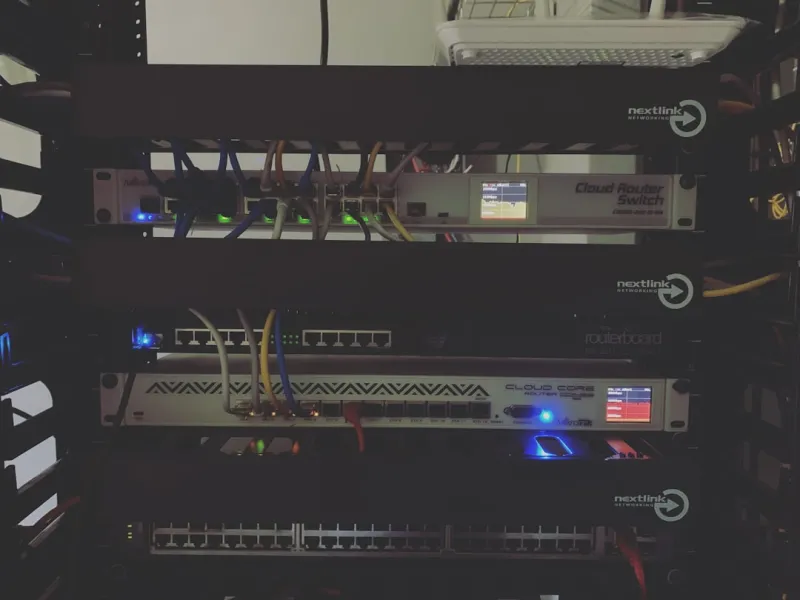
Many power‑users start with a modest home lab, but as workloads grow, the lab must evolve into a mini‑data center. I built a rack‑mounted setup featuring a pair of Intel Xeon‑based servers, each running nested virtualization for isolated test environments. A dedicated 10 GbE uplink connects the servers to a managed switch with PoE+ ports, powering my Wi‑7 APs and a small set of security cameras. This configuration lets me spin up Kubernetes clusters, emulate complex network topologies with GNS3, and test edge‑AI models without compromising my primary workstation. The key is modularity: using hot‑swappable SSDs, stackable switch modules, and a UPS that supports network‑grade power conditioning, ensuring that power fluctuations never corrupt data or cause unexpected reboots.
Hybrid Cloud Integration and Multi‑Cloud Networking
In 2026, a pure‑on‑premise network rarely meets the scalability demands of modern workloads, which is why I’ve embraced hybrid cloud architectures. By deploying an SD‑WAN appliance at the edge, I can route traffic dynamically between my local network, AWS, Azure, and emerging private clouds based on latency, cost, and policy constraints. The appliance also supports encrypted tunnels, ensuring that data in transit remains confidential even when traversing public backbones. This approach reduces the need for massive on‑site storage while keeping critical workloads—like my proprietary AI pipelines—close to the hardware that processes them. For those looking to bridge the gap between on‑prem and cloud, the strategies outlined in Mastering Modern Networking provide a roadmap for secure, high‑performance connectivity.
Performance Tuning: QoS, Traffic Shaping, and Latency Management
Even the fastest hardware can be throttled by unmanaged traffic, which is why I spend time fine‑tuning Quality of Service (QoS) policies. By classifying traffic into tiers—real‑time (gaming, VoIP), interactive (remote desktops), and bulk (backups, downloads)—I assign strict bandwidth caps and priority queues on my managed switch. Traffic shaping ensures that large file transfers don’t starve latency‑sensitive packets, a crucial factor when I’m streaming 8K content while compiling code on a remote CI server. I also leverage BBRv2 congestion control on my Linux servers, which adapts to variable bandwidth and reduces jitter for real‑time applications. These adjustments have shaved milliseconds off my round‑trip times, a noticeable improvement when working with high‑frequency trading simulations or low‑latency VR environments.
Looking Ahead: AI‑Driven Orchestration and Intent‑Based Networking
The next wave of networking innovation is AI‑driven orchestration, where the network automatically aligns itself with business or personal intent. Intent‑Based Networking (IBN) platforms now learn from usage patterns, predict congestion before it happens, and reallocate resources on the fly. In my lab, I’ve experimented with an open‑source IBN framework that monitors application performance metrics and adjusts routing tables in real time, effectively creating a self‑optimizing mesh. Coupled with upcoming 6G rollouts, which promise sub‑millisecond latencies, these technologies will make the network feel almost invisible—reacting instantly to new devices, workloads, or security threats. Staying ahead means keeping an eye on these emerging standards, testing them in sandbox environments, and gradually integrating them into production to reap the benefits without disruption.
Final Thoughts: Embrace the Power‑User Network Philosophy
Networking is the silent engine that powers every digital experience, and as a power‑user I’ve learned that treating it with the same rigor as my CPU, GPU, and storage yields exponential returns. By investing in high‑grade cabling, adopting zero‑trust security, mastering diagnostic tools, and preparing for AI‑driven orchestration, you can build a network that not only meets today’s demands but also scales gracefully into the future. I encourage you to explore the linked resources for deeper dives, experiment with the configurations discussed, and share your own insights with the community. When we all elevate our networking game, the entire power‑user ecosystem benefits—creating faster, safer, and more adaptable environments for everyone.