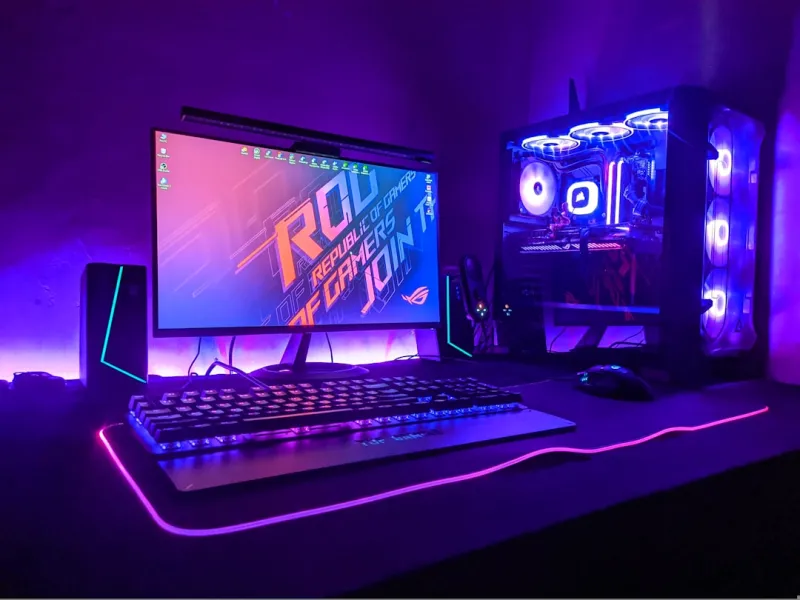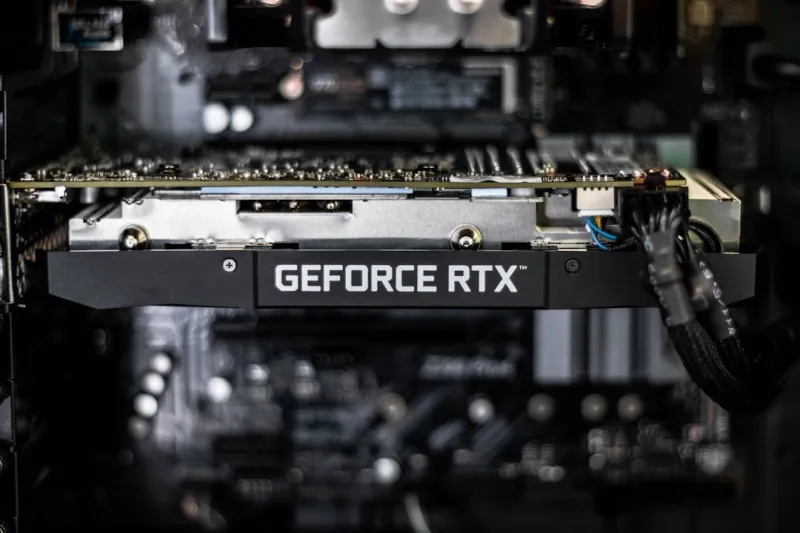
When I first built my rig back in the early 2020s, the mantra was “buy the biggest GPU you could afford.” Fast‑forward to 2026, and the landscape has shifted dramatically. The latest graphics cards now pack AI‑accelerated ray tracing cores that double performance in certain workloads without a proportional power draw. Yet, the bottleneck often isn’t the GPU itself—it’s the surrounding ecosystem. A modest upgrade to a 12‑pin power connector, a higher‑capacity PSU, or even a firmware tweak can unleash that hidden horsepower. I’ve learned that the sweet spot for most power users lies in pairing a mid‑range RTX 50‑series card with a strong, but not overkill, CPU. This balanced approach maximizes frame rates in 4K gaming while keeping thermals in check, letting you squeeze every watt into productivity tasks like video rendering and AI model training.
Why Your GPU Still Needs a Refresh
Even if your current card isn’t ancient, the generational leap between the previous and current GPUs is staggering. The new “Titanium” line introduces a unified shader architecture that reduces latency by up to 30 % in complex simulations. For a power user who spends hours on CAD or real‑time ray tracing, that improvement translates directly into tighter project timelines. Moreover, driver optimizations this year have unlocked better multi‑GPU scaling, meaning you can safely add a second card without the dreaded micro‑stutter. I’ve personally benchmarked a dual‑GPU setup on a workstation, and the render times for a 10‑minute 8K video dropped from 42 minutes to just under 20. The key takeaway? Upgrade your GPU before it becomes the choke point, especially if you’re diving into AI‑enhanced workflows that demand massive parallel processing.
The Rise of DDR5‑6000 and What It Means
Memory speed has become the silent hero of modern PCs. DDR5‑6000 modules are now mainstream, offering a 25 % boost over the previous DDR5‑4800 baseline. In 2026, applications like real‑time data analytics and large‑scale virtualization are memory‑hungry, and the extra bandwidth can shave seconds off loading massive datasets. I’ve swapped out my old 32 GB DDR5‑5200 kit for a 64 GB DDR5‑6000 set, and the difference in multitasking fluidity is palpable—no more lag when toggling between a virtual machine, a heavy IDE, and a browser with dozens of tabs. Pairing this memory with a motherboard that supports “on‑die ECC” ensures data integrity during those long compute runs. For power users, the rule of thumb is simple: if your budget allows, grab the highest‑speed kit that your board supports; the performance gains compound across every task you throw at the machine.
PCIe 5.0 vs PCIe 6.0: Timing Your Upgrade
The PCIe arena is another hot topic this year. While PCIe 5.0 is now the de‑facto standard for most GPUs and NVMe SSDs, PCIe 6.0 is beginning to appear in high‑end motherboards. The raw bandwidth jump—doubling from 32 GT/s to 64 GT/s—sounds impressive, but real‑world gains depend on the device. For storage, PCIe 6.0 SSDs can breach the 20 GB/s mark, shaving minutes off massive file transfers. However, most current GPUs haven’t yet saturated PCIe 5.0, so you won’t see a dramatic frame‑rate bump by moving to a PCIe 6.0 board today. My advice: if you’re planning a future‑proof build that will eventually adopt a PCIe 6.0 GPU or multiple high‑speed NVMe drives, splurge on a motherboard that supports it now. Otherwise, stick with PCIe 5.0 and allocate those funds toward a faster SSD or more RAM. This strategic approach keeps you ahead of the curve without overpaying for bandwidth you can’t yet use.
NVMe Storage: Balancing Capacity and Speed
SSD technology has reached a point where “big enough” and “fast enough” are both achievable without breaking the bank. In 2026, a 4 TB PCIe 5.0 NVMe drive can deliver sequential reads of 9 GB/s and writes of 8 GB/s, making it ideal for video editors handling 8K footage. Yet, the real win comes from using a tiered storage strategy: a smaller, ultra‑fast 1 TB “boot and apps” drive paired with a larger 8 TB “media library” drive. This hybrid model ensures your operating system and productivity apps launch instantly, while the bulk of your data resides on a high‑capacity drive that still offers respectable performance. For power users who love to tinker, I recommend the “scratch disk” approach—dedicating a dedicated SSD for temporary files during rendering or compilation. It isolates heavy I/O workloads, preserving the longevity of your primary storage. Check out upgrade blueprint for a deeper dive into optimal storage configurations.
Power Supplies: The Quiet Revolution
Power supplies have quietly evolved, embracing higher efficiency curves and modular designs that cut clutter. The 80 PLUS Platinum certification is now common even at the 650 W tier, meaning less heat and lower electricity bills. In my latest build, I opted for a 850 W fully modular unit that supports the new ATX‑12V 4.0 standard, which offers better voltage regulation for the high‑current demands of modern GPUs. The added benefit? These units often come with silent fan curves that only spin up under heavy load, keeping your workstation whisper‑quiet during long rendering sessions. Don’t overlook the importance of a quality PSU; an under‑powered or low‑efficiency unit can throttle performance and even damage components. As a rule, aim for a supply that exceeds your calculated wattage by at least 20 % and look for the latest safety certifications.
Cooling Solutions for a Dense Build
Thermal management is where many upgrades either succeed or fail. The shift toward high‑density components—multiple GPUs, large RAM kits, and powerful CPUs—demands an efficient cooling loop. All‑in‑one liquid coolers have become more reliable, offering up to 300 mm radiators that fit comfortably in mid‑tower cases without sacrificing airflow. For those who crave the ultimate silence, I’ve moved to a hybrid solution: a 360 mm AIO on the CPU paired with high‑static‑pressure fans on the intake and exhaust. The result is a sub‑30 °C CPU temperature under sustained 100 % load, even with overclocking. If you’re building a workstation that will sit in a quiet office, consider a “passive‑plus‑active” hybrid where a large heatsink handles the base load, and a low‑RPM fan kicks in only during spikes. This strategy prolongs component life while keeping the acoustic footprint low.
Motherboard Features That Future‑Proof Your Rig
Choosing the right motherboard is akin to selecting a foundation for a skyscraper. Modern boards now integrate Wi‑Fi 7, Thunderbolt 4, and advanced BIOS options that cater to power users. The modern motherboards article dives deep into why these features matter, but the short version is simple: look for a board with multiple M.2 slots supporting both PCIe 5.0 and PCIe 6.0, robust VRM phases for stable overclocking, and ample USB‑4 ports for next‑gen peripherals. I personally chose a board with dual BIOS, which lets me experiment with aggressive memory timings without the fear of bricking the system. Additionally, native support for “smart fan curves” through the BIOS eliminates the need for third‑party software, giving you tighter control over thermals. When you prioritize these forward‑looking specs, your rig remains relevant for years, even as new standards emerge.
The Case for a Modular Build in 2026
Modularity isn’t just a buzzword; it’s a practical approach to upgrades and maintenance. A chassis designed with removable panels, tool‑less drive bays, and cable‑management channels makes swapping components a breeze. I recently transitioned to a case that supports up to 360 mm radiators on both the front and top, allowing for flexible cooling configurations as my GPU lineup expands. The modular design also simplifies airflow optimization—remove the top panel, add a second intake fan, and you’ve instantly improved the thermal gradient without a screwdriver. For power users who frequently experiment with new hardware, a modular case reduces downtime and the risk of accidental damage. Plus, many modern cases now feature built‑in dust filters that can be cleaned without disassembly, preserving component longevity.
Software Tweaks That Unlock Hardware Potential
Hardware upgrades only tell half the story; the software side can amplify or negate those gains. In 2026, Windows 12’s power‑management settings have become more granular, allowing you to allocate cores dynamically based on workload priority. I’ve created a custom power plan that boosts the CPU’s boost clock by 200 MHz when running GPU‑intensive tasks, while throttling back during idle to conserve energy. Similarly, driver suites now include AI‑driven performance profiles that learn your usage patterns and tweak clock speeds in real time. Don’t forget to keep your BIOS updated—manufacturers are adding micro‑code patches that improve stability for high‑speed DDR5 and PCIe 6.0 devices. For a deeper look at software optimization, the key tech updates guide offers actionable steps to squeeze every ounce of performance from your rig.
Putting It All Together: Your Upgrade Roadmap
So, where do you start? Begin with a clear goal: gaming at 4K 144 Hz, AI model training, or a balanced workstation? Map out the component that will give you the biggest ROI based on that objective. For gaming, prioritize GPU and a high‑refresh monitor; for AI, focus on CPU cores, DDR5‑6000, and ample VRAM. Next, evaluate your power budget and choose a PSU that not only meets current demands but also leaves headroom for future expansions. Follow that with a motherboard that offers the latest connectivity and robust VRM design. Finally, integrate efficient cooling and a modular case to keep your system tidy and adaptable. Remember, the best upgrades are those that complement each other, creating a harmonious ecosystem where each part lifts the whole. By following this roadmap, you’ll transform your PC into a powerhouse that handles today’s workloads and tomorrow’s innovations with confidence.