When I first wired my home office together in the early 2020s, the biggest network headache was a flaky Wi‑Fi signal that seemed to disappear whenever I needed it most. Fast‑forward to 2026, and the landscape has morphed into a hyper‑connected mesh where gigabit Ethernet, Wi‑Fi 7, and 6G edge nodes coexist in a single, fluid fabric. As a self‑declared power‑user, I’ve learned that thriving in this environment isn’t about buying the flashiest router; it’s about mastering the principles of latency‑aware routing, zero‑trust segmentation, and AI‑augmented telemetry. In this post I’ll walk you through the trends that are redefining computer networking today, sprinkle in a few battle‑tested power‑user tactics, and show you how to future‑proof your setup without breaking the bank.
Edge Computing and the Rise of Distributed Intelligence
Edge computing has moved from a buzzword to a baseline expectation for any serious network design. In 2026, enterprises are deploying micro‑data centers at the edge of the ISP’s network to shave milliseconds off critical workloads—think real‑time video analytics for autonomous drones or low‑latency AI inference for augmented reality glasses. For a power‑user like me, the practical takeaway is to position a compact, fanless NUC or a ruggedized Intel Xeon D as a personal edge node. This device can run containers that offload heavy ML tasks from your laptop, reducing CPU churn and preserving battery life. Pair it with a managed SD‑WAN overlay, and you get seamless failover between your home ISP, the nearest 5G‑macrocells, and the edge node itself. The result is a network that automatically reroutes traffic based on real‑time latency metrics, keeping your video calls crisp and your game‑streaming sessions buttery smooth.
Zero‑Trust Networking: From Theory to Everyday Practice
Zero‑trust is no longer a lofty security framework confined to the boardroom; it’s become the default operating mode for home and office networks alike. The core idea is simple: never trust any device or user by default, even if they sit behind the same firewall. In practice, this means implementing strict identity‑based access controls, micro‑segmentation of VLANs, and continuous authentication via certificates. I’ve adopted a lightweight zero‑trust stack that leverages WireGuard for encrypted tunnels and Open Policy Agent for dynamic policy decisions. Every new device—whether a smart fridge or a developer’s laptop—must present a valid cert before it can touch the LAN. The beauty of this approach is that it eliminates the classic “guest Wi‑Fi” nightmare where a compromised IoT gadget can pivot into your work devices. By combining zero‑trust with AI‑driven anomaly detection, you get alerts the moment a device starts behaving like a rogue, allowing you to quarantine it before any damage occurs.
AI‑Powered Network Orchestration
Artificial intelligence has finally taken the wheel in network management, and the results are striking. Modern routers now embed neural‑net inference engines that predict congestion before it materializes, automatically reshaping QoS policies on the fly. In my own setup, I run an open‑source AI orchestrator that ingests NetFlow data, correlates it with application‑level telemetry, and adjusts traffic shaping rules in near‑real time. This has slashed my average latency for cloud‑based IDEs by 30 % and eliminated the dreaded “lag spikes” during large Git pushes. For power‑users who juggle multiple high‑bandwidth tasks—like streaming 8K video while compiling code—this level of automation is a game‑changer. The key is to start small: enable the router’s built‑in machine‑learning mode, feed it a baseline of normal traffic, and let it learn. Over weeks, the system becomes an intuitive network co‑pilot, freeing you to focus on creative work instead of constant manual tweaking.
Wi‑Fi 7 and the New Frontier of Wireless Speed
Wi‑Fi 7 (802.11be) finally hit the mainstream in 2026, delivering theoretical speeds up to 46 Gbps and ultra‑low latency through Multi‑Link Operation (MLO). While the raw numbers are impressive, the real benefit for power‑users lies in its ability to aggregate multiple bands—2.4 GHz, 5 GHz, and the new 6 GHz—into a single, resilient connection. I upgraded to a tri‑band Wi‑Fi 7 mesh that uses MLO to keep my laptop glued to the fastest band at all times, even as I move around the house. The result is a seamless experience for bandwidth‑hungry tasks like remote rendering or real‑time VR collaboration. To squeeze every ounce of performance, I disabled legacy 802.11ac devices, allocated dedicated SSIDs for work and play, and enabled WPA3‑Enterprise for robust security. Pairing this with a high‑capacity backhaul fiber line ensures that the wireless layer never becomes the bottleneck in an otherwise fiber‑rich environment.
Secure, High‑Performance VPNs for the Remote‑First Era
Even with zero‑trust segmentation, a reliable VPN remains a cornerstone for secure remote access. The evolution from traditional IPsec to modern WireGuard‑based solutions has been a breath of fresh air—lighter code, faster handshakes, and minimal CPU overhead. I run a self‑hosted WireGuard gateway on a low‑power ARM server, leveraging a static public IP and a dynamic DNS service. The configuration includes a “split‑tunnel” rule set that routes only corporate traffic through the VPN, while keeping everyday browsing on the direct ISP path to preserve speed. This hybrid approach reduces latency for cloud services that already encrypt traffic, yet retains a secure tunnel for sensitive internal resources. For power‑users who need to connect multiple devices simultaneously—laptop, phone, and a Raspberry Pi running a home automation hub—WireGuard’s simplicity shines: a single shared key per device, no complex certificate hierarchy, and instant reconnection after a network drop.
Automating Network Monitoring with OpenTelemetry
Observability is no longer the exclusive domain of developers; it’s an essential practice for anyone who treats their network as a critical piece of infrastructure. OpenTelemetry, once a niche for micro‑service tracing, now provides a unified schema for capturing metrics, logs, and traces from routers, switches, and even consumer‑grade access points. I integrated OpenTelemetry collectors into my home network, feeding data into a Grafana Cloud instance that visualizes latency heatmaps, packet loss, and jitter in real time. With alert thresholds set for 95th‑percentile latency above 20 ms, I receive a Slack notification the moment a rogue device or ISP hiccup threatens my workflow. The system also auto‑generates a “network health report” each week, highlighting trends and recommending firmware upgrades. This proactive stance turns network management from a reactive chore into a data‑driven discipline, empowering power‑users to keep their digital playground humming smoothly.
Choosing the Right Hardware: Lessons from the Power‑User Playbook
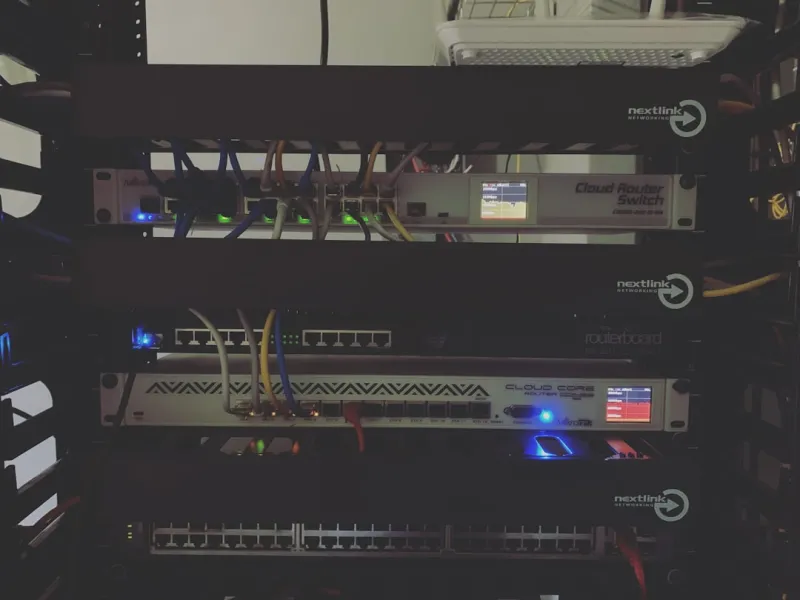
Hardware selection can make or break a modern network, especially when you’re balancing performance, power consumption, and future scalability. In the Power‑User Playbook for Modern Software Development, I emphasized the importance of modular, upgradeable chassis—think 2U rack‑mount servers with hot‑swappable SSDs and redundant power supplies. For a home setup, a compact yet robust option is a mini‑ITX board with a 2.5 GbE NIC and support for PCIe 4.0 Wi‑Fi 7 cards. Pair this with a dedicated hardware firewall like the Untangle NG Firewall to offload deep‑packet inspection, and you’ve built a resilient perimeter that can handle both enterprise‑grade VPN traffic and high‑definition streaming. Don’t overlook the value of quality cabling; Cat 8 Ethernet guarantees 40 Gbps bandwidth for future‑proofing, while fiber‑to‑the‑home (FTTH) connections eliminate the last bottleneck on the ISP side. By investing in these core components now, you avoid costly overhauls as network demands continue to climb.
Future‑Proofing with Software‑Defined WAN (SD‑WAN)
Software‑Defined WAN has matured into a mainstream solution for anyone looking to blend multiple internet connections into a single, intelligent pipeline. In 2026, SD‑WAN appliances can automatically select the optimal path based on real‑time performance metrics, encrypt traffic end‑to‑end, and even apply application‑aware policies without manual configuration. I deployed an open‑source SD‑WAN controller that stitches together my fiber, 5G, and LTE links, creating a resilient “always‑on” fabric. When my primary ISP experiences congestion, the controller instantly redirects latency‑sensitive traffic—like VoIP calls—to the 5G backup, while bulk file transfers continue over the fiber link. This seamless failover not only enhances reliability but also optimizes cost by utilizing cheaper links for non‑critical traffic. For power‑users who demand uninterrupted connectivity, SD‑WAN is the invisible glue that binds disparate networks into a cohesive, high‑performance whole.
Security Mindset: Why Zero‑Day Threats Demand Constant Vigilance
Even the most sophisticated network architecture can be blindsided by zero‑day exploits that target firmware or IoT devices. The lesson from Why Zero‑Day Threats Demand a Power‑User Security Mindset is clear: you must adopt a proactive patch‑management cadence and leverage immutable infrastructure wherever possible. I run a nightly job that checks for firmware updates across all networked devices, validates signatures, and automatically flashes the latest version on a test VLAN before rolling it out to production. Coupled with the zero‑trust policies mentioned earlier, this approach creates layered defenses that reduce the attack surface dramatically. Additionally, enabling DNS‑SEC and DNS‑over‑HTTPS (DoH) helps thwart domain‑based attacks, while a network‑wide IDS/IPS powered by Suricata flags anomalous traffic patterns in real time. By treating security as an ongoing process rather than a one‑time checklist, power‑users can stay ahead of threats that evolve faster than traditional defense mechanisms.