In 2026, the phrase “zero‑day” feels less like a headline and more like a daily alarm clock for anyone who treats their workstation as a serious tool rather than a disposable gadget. As a long‑time power‑user who’s built rigs, tweaked kernels, and survived countless blue‑screen marathons, I’ve learned that the same obsessive attention to performance now has to be redirected toward security. Modern attackers are leveraging AI to automate exploit generation, meaning the window between vulnerability disclosure and active exploitation shrinks to minutes. This reality forces us to adopt a proactive security mindset that mirrors our approach to performance tuning—constant, data‑driven, and unrelenting. In this post, I’ll walk through the strategies that keep a power‑user’s machine resilient against zero‑day threats, from hardening the firmware to encrypting every byte of data, and I’ll sprinkle in a few of my favorite internal resources that have helped shape my own workflow.
Zero‑Day Threats Have Evolved Into AI‑Powered Speedsters
The classic image of a lone hacker painstakingly crafting a custom exploit is being replaced by sophisticated AI bots that scan public code repositories, identify vulnerable functions, and generate payloads in near‑real time. In 2026, these bots can also adapt on the fly, bypassing traditional signature‑based antivirus solutions with a chameleon‑like agility. For power‑users, this means the old “keep your OS patched” mantra is necessary but no longer sufficient. We must anticipate that an unpatched kernel, a misconfigured BIOS, or even a legacy driver could become the launchpad for a zero‑day chain attack. The key is to treat every layer of the system as a potential vector and apply the same rigorous testing standards we use when overclocking a CPU or benchmarking a GPU. By thinking like the AI‑driven attacker—looking for the lowest‑effort foothold—we can prioritize the most impactful defensive measures before the next wave hits our inbox.
Adopt an Attacker’s Playbook: Threat Modeling for the Everyday Power‑User
When I first started building custom rigs, I’d spend hours sketching performance diagrams, mapping bottlenecks, and simulating workloads. The same discipline should be applied to security: create a threat model that identifies assets, adversaries, and attack surfaces specific to your setup. Ask yourself, “Which data is most valuable to me?” and “What would an attacker gain by compromising my development environment?” For many power‑users, the answer is source code, proprietary scripts, and access tokens for cloud services. Once identified, you can rank these assets by impact and likelihood, then allocate resources accordingly. This practice dovetails nicely with the strategies outlined in Zero‑Day Defense: Power‑User Security Strategies, where I emphasize the importance of a layered defense that starts with a solid threat model. By visualizing the attack surface, you can spot hidden vulnerabilities—like an outdated USB controller firmware—that might otherwise slip through the cracks.
Patch Management Isn’t Just a Checkbox; It’s a Continuous Performance Loop
Power‑users often delay patches because of concerns about driver compatibility or loss of custom tweaks. In 2026, however, the cost of postponing updates far outweighs the inconvenience of a brief reboot. Zero‑day exploits thrive on the lag between vulnerability disclosure and patch deployment, so the fastest path to mitigation is an automated, yet controlled, update pipeline. I recommend using a staged rollout: first apply patches to a sandbox VM, run your critical workloads, and verify stability before pushing them to the primary machine. This mirrors the iterative testing cycles we use for overclocking. Additionally, leverage tools that provide granular control over which components receive updates—some BIOS manufacturers now let you approve firmware updates individually. By treating patch management as a performance optimization loop, you keep the system both fast and fortified against emerging threats.
Encrypt Everything: Lock Down Data at Rest and in Motion
Encryption is the single most effective line of defense against data exfiltration, especially when a zero‑day exploit gains low‑level access. As a power‑user, you’re already comfortable with partitioning drives and configuring LVM; now extend that expertise to full‑disk encryption (FDE) and file‑level encryption for sensitive directories. Modern tools integrate seamlessly with the OS, offering hardware‑accelerated AES‑256 without noticeable performance penalties. For those who store large media libraries or massive codebases, consider encrypting only the most critical partitions to balance speed and security. My go‑to reference for this process is Encrypt Everything: A Power‑User’s Guide to Modern Data Security, which walks through setting up BitLocker, LUKS, and even encrypted containers for cloud sync. Remember, encryption is only as strong as the passphrase you choose—use a passphrase manager and enable multi‑factor authentication for the unlock process.
Secure Boot, Firmware, and the Supply Chain: The New Frontlines
Most power‑users focus on the OS and applications, but the firmware layer is increasingly the target of sophisticated supply‑chain attacks. In 2026, compromised BIOS or UEFI firmware can silently install persistence mechanisms that survive OS reinstalls. To defend against this, enable Secure Boot with a custom key database, and regularly verify the firmware signatures provided by the motherboard vendor. If you’re running a Linux‑based system, tools like fwupd now support automated firmware updates with integrity checks. Moreover, consider flashing the latest firmware yourself, using a verified USB stick, rather than relying on auto‑updates that could be intercepted. For additional safety, maintain a minimal hardware configuration—disable unused ports and controllers in the BIOS—to reduce the attack surface. By treating firmware as a critical component of your security stack, you close the door on many zero‑day footholds before they even appear.
Telemetry, EDR, and Real‑Time Monitoring: Turning Data Into Alerts
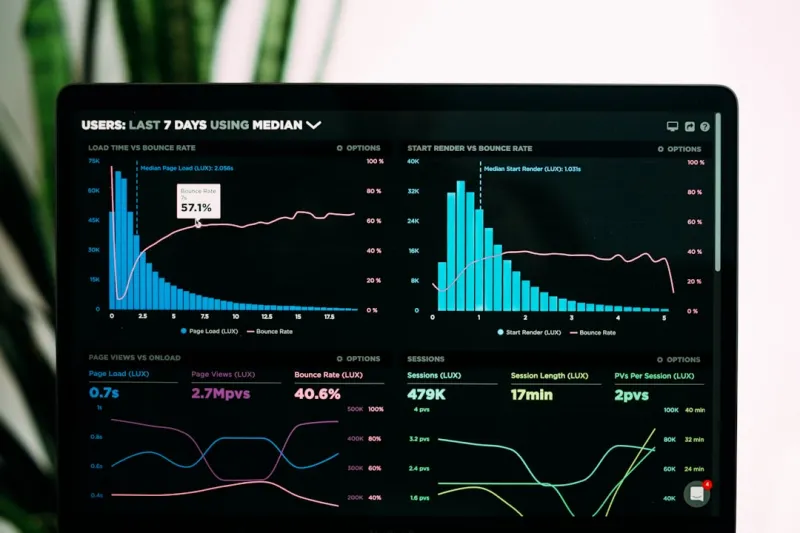
Just as we monitor temperature spikes and power draw, we must also monitor security events in real time. Endpoint Detection and Response (EDR) solutions have matured to the point where they can run with minimal overhead on high‑performance machines. I configure my EDR to alert on unusual process spawning, kernel module loading, and network connections to known malicious IP ranges. Pair this with a lightweight log aggregation tool—like the open‑source Loki stack—to visualize trends over time. When a zero‑day exploit attempts to execute, you’ll see anomalous behavior within seconds, giving you a chance to isolate the machine before the payload spreads. For power‑users who enjoy scripting, write a custom watchdog that queries the EDR API and triggers a system snapshot or automatic rollback when a critical threshold is crossed. This proactive monitoring transforms raw telemetry into actionable defense, much like a performance dashboard that warns you before thermal throttling kicks in.
Incident Response Playbooks Tailored for the Solo Power‑User
Professional incident response teams have detailed runbooks, but a solo power‑user needs a streamlined version that can be executed without a full SOC. Start by documenting a step‑by‑step recovery plan: isolate the network, capture volatile memory, create a forensic image of the drive, and then reboot into a trusted live environment. Tools like Velociraptor and Rekall are now user‑friendly enough to run on a personal workstation. Keep a USB stick pre‑loaded with these utilities and a clean OS image for rapid deployment. Practice the plan quarterly—just as you would benchmark a new GPU—to ensure you can act quickly under pressure. The goal isn’t to become a forensic expert overnight, but to have a clear, rehearsed path that limits damage and preserves evidence for any later deep dive.
Future‑Proofing Your Hardware and OS Choices
Choosing the right operating system and hardware platform can make or break your security posture in a zero‑day world. While many power‑users gravitate toward the latest Linux distributions for their configurability, Windows 11 now offers robust security features like hardware‑based isolation and integrated ransomware protection. The key is to align the OS with your workflow while ensuring it supports modern security controls—such as virtualization‑based security (VBS) and Credential Guard. Similarly, select motherboards that provide TPM 2.0, secure firmware update mechanisms, and ample I/O control to disable legacy interfaces. If you’re interested in a deeper dive, check out the article Choosing the Right Operating System for Power Users in 2026, which compares the security trade‑offs of the leading platforms. By future‑proofing your rig at the component level, you reduce the need for costly overhauls when a new zero‑day vector emerges.
Wrapping Up: Security Is the Next Performance Frontier
For power‑users, security isn’t a separate discipline—it’s the final frontier of performance tuning. Just as we obsess over clock speeds, latency, and thermal headroom, we must now obsess over patch latency, encryption overhead, and firmware integrity. By adopting an attacker’s mindset, automating patch management, encrypting data, securing firmware, and maintaining real‑time telemetry, you turn your workstation into a fortress that can weather even the most rapid AI‑driven zero‑day attacks. Remember, the tools and strategies discussed here are only as effective as the consistency with which you apply them. Make security checks a regular part of your maintenance routine, and you’ll find that the peace of mind you gain is a performance boost in its own right. Stay vigilant, stay updated, and keep your rig—and your data—running at peak security.