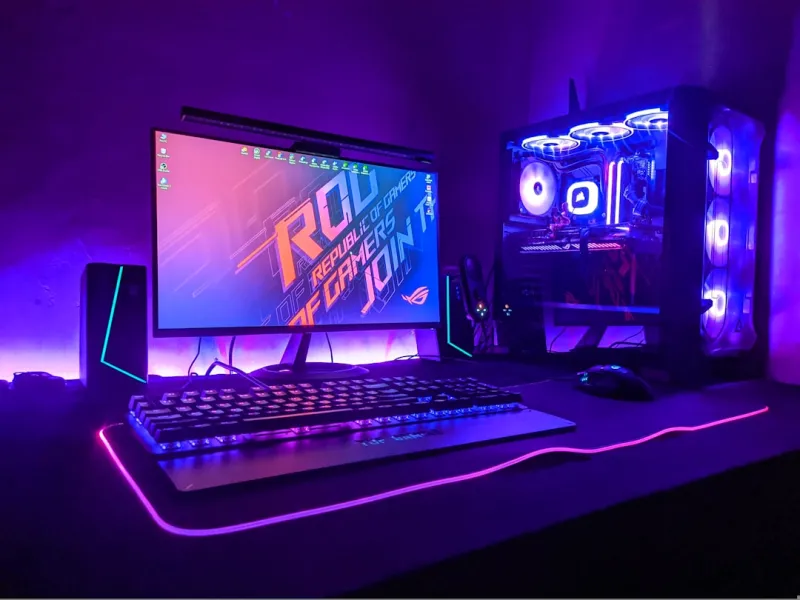
When I first cracked open my 2023 rig for a quick upgrade, I never imagined that by 2026 the upgrade landscape would feel like a high‑stakes chess match. Every component now talks to AI‑driven software, and the line between hardware and code is blurrier than ever. As a long‑time power user, I’ve learned that the best upgrades aren’t just about raw specs; they’re about harmony, future‑proofing, and squeezing every ounce of performance from a system that’s already humming. In this post, I’ll walk you through the upgrades that have the biggest impact today, why timing matters, and how to avoid the pitfalls that trip up even seasoned builders. Expect a blend of practical advice, a few personal anecdotes, and a sprinkle of the latest trends that keep my workstation ahead of the curve.
CPU: The Brain That Still Rules the Roost
Even in an era where GPUs are stealing the spotlight for AI workloads, the central processing unit remains the backbone of multitasking, compile‑time crunches, and real‑time data handling. In 2026, the market is dominated by hybrid architectures that combine high‑efficiency cores with performance cores, delivering a seamless blend of power and energy savings. When selecting a new processor, I prioritize core count that matches my workflow—six to eight high‑performance cores for gaming‑heavy builds, but twelve to sixteen for development and AI inference tasks. Don’t overlook the importance of cache size; larger L3 caches dramatically cut latency when running large language models locally. Pair your CPU with a motherboard that supports PCIe 5.0 and DDR5‑6000+ RAM to unlock the full potential of the chip. And remember, a modest overclock on a well‑cooled die can yield up to a 12% performance bump without sacrificing longevity, provided you keep an eye on thermals.
GPU: Powering AI, Ray Tracing, and Everything In‑Between
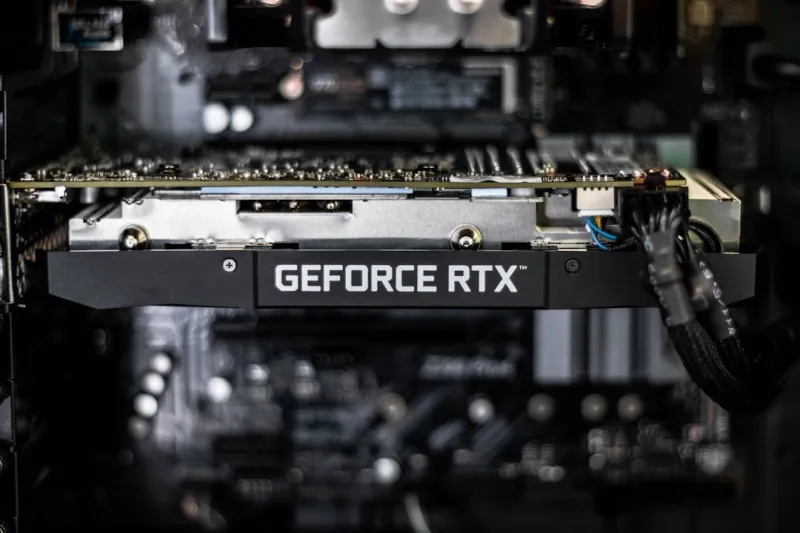
The graphics card market in 2026 feels like a roller coaster—new releases drop every few months, and each generation pushes ray tracing and tensor core capabilities forward. For a power user like me, the decision hinges on two primary use‑cases: real‑time rendering and AI‑accelerated workloads. The latest RTX 50‑series cards deliver unprecedented ray‑tracing performance, but their true game‑changer is the expanded Tensor Core count, which slashes inference times for models like Stable Diffusion and local LLMs. If you’re primarily gaming, a mid‑tier RTX 50 card still outperforms its predecessor by 30‑40% in most titles. However, if you spend time training or fine‑tuning AI models, consider a workstation‑class GPU that offers higher VRAM—24 GB or more—to keep large datasets resident in memory. Don’t forget to verify that your power supply can handle the extra draw; a 850 W unit with an 80+ Gold rating is now the sweet spot for most high‑end builds.
Memory: More Than Just Bigger Numbers
RAM is the unsung hero that can turn a smooth experience into a nightmare if it falters. In 2026, DDR5 has become the baseline, with kits hitting 6400 MT/s and beyond. The key is not just speed, but also latency and capacity. For heavy multitasking, virtual machines, and AI inference, I keep a minimum of 64 GB, split across four DIMM slots to enable dual‑channel operation. Lower latency modules (CL‑30 or better) shave off crucial milliseconds in data‑intensive tasks. If you’ve ever been frustrated by random crashes, you’ll want to check out this RAM crash troubleshooting guide—it walks you through voltage tweaking and timings that can rescue a finicky kit. Lastly, enable XMP profiles in the BIOS; they automatically configure the rated speed and timings, ensuring you get the promised performance without manual fiddling.
Storage: Speed, Security, and Smart Management
Storage in 2026 is less about capacity and more about intelligent data flow. NVMe 2.0 drives now push sequential reads past 10 GB/s, and many of them support hardware‑based encryption, which is a boon for privacy‑concerned power users. I recommend a primary 2 TB NVMe for the OS and active projects, coupled with a secondary 4 TB PCIe 5.0 SSD for bulk media and archives. This tiered approach keeps hot data lightning‑fast while still offering ample room for everything else. For those still holding onto SATA SSDs, consider using them as a cache tier with software like Intel RST, which can automatically move frequently accessed files to the faster drive. Keep an eye on the evolving hard‑drive trends article for insights on emerging storage technologies that might become the next big thing.
Motherboard: The Foundation of Future‑Proofing
Choosing the right motherboard is akin to picking a solid foundation for a skyscraper. In 2026, the motherboard revolution article highlighted several trends that influence upgrade paths: native PCIe 5.0 slots, expanded M.2 lanes, and robust VRM designs that can handle sustained high‑core‑count CPU loads. I gravitate toward boards with at least eight power phases for the CPU and reinforced heatsinks for the VRMs—this ensures stable performance during prolonged overclocking sessions. Additionally, look for boards that support USB 4.0 and Thunderbolt 4; these ports simplify peripheral connectivity and future‑proof your system for upcoming high‑bandwidth devices. Finally, BIOS flexibility is crucial—boards that offer easy BIOS flashing and modular firmware updates reduce the headache of keeping up with rapid chipset revisions.
Power Delivery and Cooling: Keeping the Beast Calm
Even the most efficient components can overheat or starve for power if the supporting infrastructure isn’t up to par. A high‑quality 80+ Platinum PSU with a minimum of 1000 W is now a common recommendation for a build that includes a top‑tier GPU and a power‑hungry CPU. Look for modular cables to improve airflow inside the case. Cooling has also evolved; hybrid AIO coolers that combine liquid cooling with integrated fans now deliver superior thermal performance while maintaining a low noise floor. I favor a 360 mm radiator positioned at the front of the case, drawing cool air from outside. Pair this with high‑static‑pressure fans on the exhaust side to exhaust hot air efficiently. Don’t forget to apply high‑quality thermal paste—ceramic‑based compounds have become the standard for long‑term stability.
Peripheral Enhancements: Beyond the Core Hardware
Upgrading your core components is only half the story; the peripherals you interact with daily can either amplify or bottleneck your productivity. In 2026, 4K‑120 Hz monitors with HDR and low input lag have become affordable, offering a buttery‑smooth experience for both gaming and content creation. For developers and power users, a 1440p ultrawide monitor with a 144 Hz refresh rate provides ample screen real estate without sacrificing responsiveness. Mechanical keyboards with hot‑swap switches let you customize typing feel on the fly, while high‑precision mice with adjustable DPI settings ensure pixel‑perfect control in design and gaming scenarios. Investing in a quality DAC and headphones can also reduce audio latency, which matters when syncing audio to video or during live streaming sessions.
Software Optimization: The Final Piece of the Puzzle
Hardware upgrades only shine when paired with a finely tuned software stack. In 2026, operating systems have become increasingly AI‑aware, offering predictive resource allocation that can dramatically improve performance. I recommend diving into the OS evolution guide to understand how to leverage these new features—especially the AI‑driven scheduler that intelligently moves processes to the most suitable cores. Keep your drivers up to date, but be selective; sometimes the “latest” driver can introduce regressions, so rely on community‑tested versions when possible. Additionally, tools like Windows Performance Analyzer can pinpoint bottlenecks, while power‑plan tweaks (setting the plan to “High Performance” with custom CPU scaling) ensure you extract maximum horsepower from your upgrades.
Future‑Proofing: Building for Tomorrow, Today
At the end of the day, a successful upgrade strategy is about anticipating the next wave of technology while extracting the most value from today’s components. That’s why I keep a close eye on the roadmap of upcoming standards—PCIe 6.0, DDR6, and even emerging quantum‑accelerated co‑processors. While it’s impossible to future‑proof a system completely, designing with modularity in mind—extra M.2 slots, ample power connectors, and a case that supports larger radiators—gives you the flexibility to adapt as new innovations arrive. For a comprehensive checklist that ties all these ideas together, refer to the ultimate PC upgrade guide. Armed with the right components, a strategic approach, and a dash of curiosity, you’ll keep your rig humming at the cutting edge for years to come.