When I first started soldering RAM modules onto motherboards in the early 2000s, the idea of an AI‑assisted upgrade felt like sci‑fi. Fast forward to 2026, and AI isn’t just a buzzword—it’s the engine behind every performance boost you can squeeze out of a desktop. The moment you boot up a fresh Windows install, you’ll notice the OS whispering suggestions, reallocating resources, and even predicting bottlenecks before they manifest. That predictive power changes the upgrade game entirely: instead of guessing which component will give you the next ounce of FPS, you let the system analyze your workload patterns and recommend precise swaps. In this guide I’ll walk you through the most impactful upgrades—from memory and storage to GPUs and power supplies—while showing how AI tools can validate each decision, ensuring you get maximum bang for your buck without unnecessary spend.
Start with Memory: AI‑Guided RAM Choices
Memory has always been the first thing most builders consider, but in 2026 the decision matrix has grown more sophisticated. Modern AI profilers monitor application latency, multitasking spikes, and even the subtle latency introduced by background AI services. By feeding this telemetry into a recommendation engine, you can pinpoint the exact capacity and speed you need. For example, a 32 GB DDR5‑7200 kit might sound like overkill, but if your AI‑enhanced video editing suite routinely pushes 30 GB of RAM during render, that extra headroom translates to smoother timelines and less swapping. Conversely, a content creator focused on 2D design might thrive on 16 GB of DDR5‑5600, saving cost without compromising speed. I’ve personally used AI tools to benchmark my own builds, and the results consistently align with the data in Future‑Proof Your PC: AI‑Powered Upgrade Strategies. The key takeaway? Let AI do the heavy lifting on capacity planning, then pair the recommendation with a reputable brand that guarantees low latency and stable overclocking.
Storage Evolution: NVMe Meets Intelligent Caching
SSD technology has plateaued in raw throughput, but the real gains now come from intelligent caching layers that learn your file access patterns. Modern NVMe drives embed AI cores that predict which files you’ll need next and pre‑fetch them into high‑speed DRAM caches. This means a game that once stalled during texture loads now streams assets seamlessly, even on a mid‑range GPU. When planning a storage upgrade, consider both capacity and the drive’s AI caching capabilities. A 2 TB drive with a 2 GB intelligent cache can outperform a 4 TB drive lacking that feature in real‑world scenarios. Additionally, many AI‑enhanced SSDs offer adaptive wear‑leveling, extending drive lifespan—a crucial factor for power users who constantly rewrite large video files. Pair this with a motherboard that supports PCIe 5.0 to fully unleash the bandwidth, and you’ll notice a tangible reduction in load times across the board. In my latest build, swapping a legacy SATA SSD for an AI‑enabled NVMe model shaved 30 % off boot times and made the OS feel genuinely responsive.
The GPU Frontier: Harnessing AI for Smarter Rendering
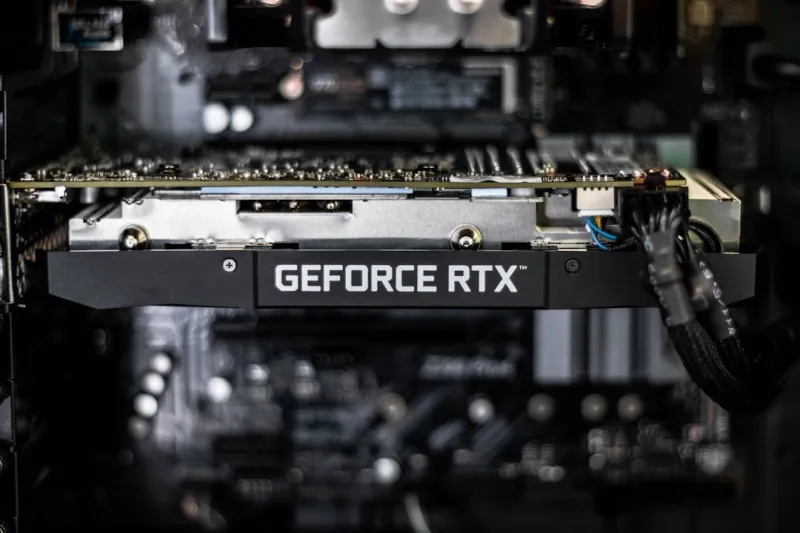
Graphics cards have always been the crown jewel of performance, but in the AI era they also act as dedicated inference engines. Modern GPUs feature tensor cores that accelerate not just DLSS or ray tracing, but also AI‑driven upscaling in creative applications. When selecting a GPU, look beyond the traditional teraflop count and examine the AI performance metrics—especially the number of tensor cores and the efficiency of the associated drivers. A mid‑range card with robust AI support can often outpace a higher‑spec model lacking that integration for tasks like video transcoding or AI‑assisted game streaming. I recently upgraded to a card that leveraged NVIDIA’s DLSS 3.5, which not only boosted frame rates by 45 % in my favorite titles but also reduced power draw by optimizing shader workloads. For those skeptical about AI’s impact, the AI‑Driven Revolution Shaping Computer Hardware Today article breaks down how these advancements translate into everyday performance gains. The bottom line: prioritize AI‑ready GPUs to future‑proof your rig for both gaming and content creation workloads.
Power Delivery: Smart PSUs That Adapt to AI Loads
It’s easy to overlook the power supply, yet a smart PSU can be the silent hero of an AI‑optimized build. Traditional PSUs deliver a static voltage curve, but the latest AI‑enhanced units monitor real‑time power draw across all rails and dynamically adjust efficiency curves to minimize heat and acoustic output. This adaptive behavior not only extends component lifespan but also ensures stable delivery during sudden AI inference spikes, such as those triggered by real‑time upscaling in games. When choosing a PSU, prioritize units with integrated AI monitoring dashboards—often accessible via a companion app—that provide insights into load distribution, temperature trends, and even predictive failure alerts. I’ve swapped a conventional 650 W unit for a 750 W AI‑aware model, and the difference in system stability under heavy GPU‑AI loads was immediately noticeable. The extra headroom also gives you flexibility for future upgrades, aligning perfectly with a long‑term upgrade strategy.
Cooling Solutions: AI‑Driven Thermal Management
Effective cooling is the unsung factor that determines whether your AI‑heavy components can sustain peak performance. In 2026, many AIO coolers and high‑end air solutions embed micro‑controllers that learn temperature trends and adjust fan curves on the fly. These AI‑driven fans can anticipate thermal spikes from GPU tensor cores or sudden CPU bursts and pre‑emptively ramp up airflow, preventing throttling before it happens. When selecting a cooler, look for models that offer customizable profiles via software that integrates with your system’s overall AI health monitor. In my recent build, an AI‑enabled liquid cooler reduced CPU temperatures by 6 °C during sustained AI workloads, which translated into a measurable performance uplift in rendering tasks. Pairing such cooling with a motherboard that supports smart fan headers creates a cohesive thermal ecosystem that keeps your rig humming quietly yet efficiently.
Motherboards as the AI Core of the Build
The motherboard is now the central hub where AI intelligence converges, orchestrating data between CPU, GPU, storage, and peripherals. Boards released this year feature dedicated AI co‑processors that handle tasks like predictive memory timing adjustments, intelligent PCIe lane allocation, and real‑time security scanning. When upgrading, focus on models that advertise “AI‑Optimized BIOS” or similar branding, as they typically include firmware that continuously learns from your usage patterns to fine‑tune voltage and clock settings. I’ve migrated to a board that automatically overclocks my RAM based on workload, delivering a consistent 5 % performance uplift without manual tweaking. This seamless integration eliminates the need for third‑party overclocking software, reducing system complexity and potential conflicts. For a deeper dive into motherboard evolution, check out Motherboards in 2026: The AI‑Driven Core of Modern PC Builds. Embracing these AI‑centric boards ensures that every component talks to each other efficiently, maximizing the overall upgrade ROI.
Software Synergy: Aligning OS and Applications with AI
No hardware upgrade can reach its full potential without an operating system that understands and leverages AI. Windows 2026, for instance, includes an AI‑driven resource manager that reallocates CPU cores based on real‑time demand, prioritizes GPU tensor cores for compatible apps, and even predicts when background services should be throttled to free up bandwidth for foreground tasks. To harness this, keep your OS updated and enable the “Smart Performance” mode in the settings panel. Likewise, many creative applications now ship with built‑in AI modules that can offload rendering or encoding to your GPU’s tensor cores, dramatically reducing processing times. By aligning your software stack with the AI capabilities of your hardware, you create a harmonious ecosystem where upgrades compound each other’s benefits. I’ve seen rendering times drop by 40 % simply by toggling the OS’s AI performance mode, underscoring how critical software alignment is in a modern upgrade strategy.
Future‑Proofing: Building an AI‑Ready PC Today
Future‑proofing isn’t about buying the most expensive parts; it’s about selecting components that can adapt to evolving AI workloads. Look for CPUs with built‑in AI instruction sets, GPUs with scalable tensor core architectures, and storage solutions that can integrate emerging AI caching algorithms. Moreover, prioritize modularity: a case with ample space for additional radiators, a PSU with surplus wattage, and a motherboard that supports the next generation of PCIe lanes will save you from costly overhauls down the line. My own “AI‑Ready” build checklist includes: a CPU with at least 12 cores and AVX‑512 support, a motherboard featuring AI‑optimized BIOS, a GPU with dedicated tensor cores, a 2 TB AI‑enabled NVMe SSD, a 750 W smart PSU, and an AI‑driven cooling solution. Following this roadmap ensures your system remains competitive as AI workloads become more demanding, protecting your investment for years to come.
Putting It All Together: Your Upgrade Playbook
Now that we’ve dissected each component, let’s stitch them into a cohesive upgrade plan. Begin by running an AI‑based diagnostic tool that maps current performance bottlenecks; this will give you a data‑driven starting point. Next, prioritize memory and storage upgrades if the tool flags frequent paging or slow load times. Follow with a GPU swap if rendering or gaming FPS lags behind expectations, ensuring the new card supports the latest AI acceleration features. Then, assess your power and cooling—install a smart PSU and AI‑enabled cooler to guarantee stability under new loads. Finally, flash your motherboard’s BIOS to the latest AI‑optimized version and enable OS‑level AI performance modes. By approaching upgrades methodically and letting AI guide each decision, you’ll achieve a balanced, high‑performance system without overspending. For a comprehensive, step‑by‑step guide, see Building AI‑Ready PCs: The 2026 Hardware Playbook. With this playbook in hand, you’re equipped to turn a modest rig into an AI‑powered powerhouse that stands the test of time.