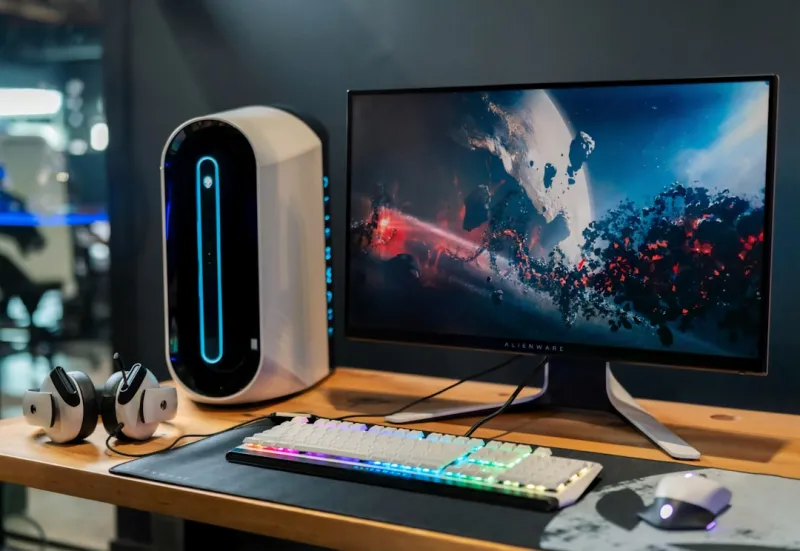
When I first cracked open a case back in the early 2010s, the hum of a spinning 3‑gigahertz CPU felt like the soundtrack of the future. Fast‑forward to 2026, and the hardware conversation has exploded into a kaleidoscope of silicon, photonics, and AI‑accelerated pipelines. As a power‑user who builds workstations for everything from real‑time 8K video rendering to massive parallel data science, I’ve learned that the hype‑cycle alone can’t guide a build; the real story lives in the trade‑offs between raw performance, reliability, and upgrade flexibility. In this post I’ll peel back the layers of today’s most critical components, share the lessons that keep my rigs humming under load, and point you toward the resources that helped me navigate the maze of choices—especially when the next‑gen motherboard or GPU promises a leap but also threatens to lock you out of tomorrow’s upgrades.
CPU Evolution: From Clock‑Speed Race to Heterogeneous Core Design
2026’s flagship processors have finally embraced the hybrid model that early‑stage ARM designs hinted at a decade ago. Instead of pushing clock speeds past 5 GHz, manufacturers now pair high‑performance “big” cores with power‑efficient “little” cores, letting the scheduler allocate tasks dynamically. For power users, the sweet spot lies in workstations that expose the full suite of cores to the OS without throttling, which means selecting a CPU with a generous core count—often 24‑plus threads—while also ensuring the motherboard’s BIOS can fine‑tune boost behavior. The real win is not just raw speed but thermal headroom; the newer silicon runs cooler at comparable loads, freeing up budget for robust cooling solutions. If you’re still chasing the highest GHz number, you may be overlooking the latency benefits of a well‑balanced heterogeneous design that can handle mixed workloads—from single‑threaded compiles to massively parallel GPU training—without hitting thermal throttling.
GPU Landscape: AI Acceleration Meets Traditional Rendering
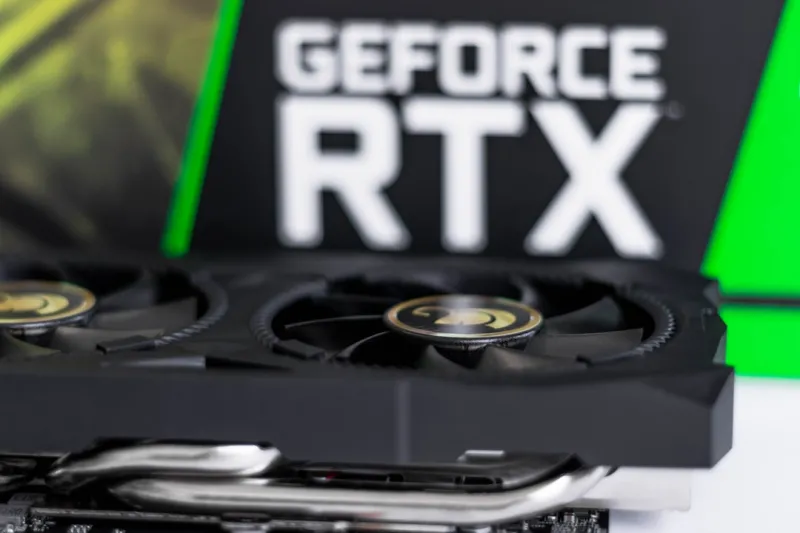
The graphics card market in 2026 is a battleground between pure rasterization power and AI‑centric tensor cores. Nvidia’s RTX 6000 Series and AMD’s Radeon Pro 8000 series both tout multi‑modal engines that accelerate ray tracing, deep learning super‑sampling, and inference workloads. For a power‑user, the key is to match the GPU’s strengths to your primary tasks. If your pipeline leans heavily on AI‑driven upscaling or neural network inference, a card with a high tensor‑core count will shave minutes off each iteration. Conversely, if you’re still grinding out complex 3D simulations, raw raster throughput and large VRAM buffers matter more. I’ve found that a dual‑GPU configuration—one optimized for AI, the other for traditional rendering—can deliver the best of both worlds, provided your motherboard and power supply can handle the bandwidth and power draw. The balance between AI acceleration and classic GPU horsepower defines the next wave of workstation performance.
Memory and Storage: Why Hard Drives Still Matter
SSD adoption is universal, but the notion that hard drives are obsolete is a myth that still circulates in many forums. In 2026, high‑capacity HDDs have evolved with helium‑sealed designs and shingled magnetic recording, offering multi‑terabyte storage at a fraction of the cost per gigabyte of NVMe. For power‑users who juggle petabyte‑scale video archives or massive scientific datasets, the economics of storing everything on SSDs quickly become untenable. A hybrid storage strategy—fast NVMe for OS and active projects, paired with a 20‑TB or larger HDD for cold storage—delivers both speed and affordability. Moreover, modern RAID controllers and caching algorithms can intelligently tier data, moving frequently accessed files to the SSD cache while keeping bulk data on the spinning disk. If you’ve been tempted to go all‑in on SSDs, consider the long‑term ROI of a well‑balanced storage array; it’s a move that keeps budgets in check without sacrificing performance. For a deeper dive into this approach, check out Why Hard Drives Still Matter for Power‑User Workstations.
Motherboard Mastery: The Foundation of Future‑Proofing
Selecting the right motherboard in 2026 is less about finding the most PCIe lanes and more about ensuring extensibility for the next five years. Features like PCIe 5.0 x16 slots, DDR5 6000+ memory support, and integrated USB4 ports have become baseline expectations for high‑end workstations. However, the real differentiator is the BIOS ecosystem—whether the vendor provides frequent firmware updates, granular power‑delivery settings, and robust debugging tools. I gravitate toward boards that expose full control over CPU power states, allow for BIOS‑level overclocking of individual cores, and support dual‑M.2 NVMe slots with heatsinks pre‑installed. Pairing such a board with a high‑quality VRM ensures stable operation under sustained loads, especially when you’re pushing a 24‑core processor and dual GPUs simultaneously. For a step‑by‑step guide on navigating these choices, see Mastering Motherboard Selection for Power‑User Workstations in 2026.
Power Delivery and Cooling: Keeping the Beast Tamed
A workstation that can’t sustain power under load is a liability, no matter how cutting‑edge the components. In 2026, 1200‑Watt platinum‑rated power supplies have become the norm for rigs running multiple GPUs and high‑core‑count CPUs. Look for modular designs with fully isolated rails and digital monitoring that integrates with software dashboards. On the cooling side, hybrid liquid‑to‑air solutions are gaining traction; a closed‑loop AIO for the CPU combined with a dedicated pump for GPU blocks can maintain sub‑70 °C temperatures even under 24‑hour rendering sessions. Don’t overlook the chassis airflow—high‑static‑pressure fans placed strategically at intake and exhaust points create a pressure‑balanced environment that reduces dust buildup. I’ve also experimented with phase‑change cooling for extreme overclocking, but for most power users, a well‑designed hybrid loop offers the best performance‑to‑cost ratio while keeping noise at bay.
Building a Future‑Proof Upgrade Path
The smartest upgrades are those that extend the life of your platform without necessitating a complete rebuild. In 2026, the most effective strategy is modularity: choose a case with ample drive bays, extra PCIe slots, and a PSU that can handle additional wattage headroom. This way, when a new GPU architecture drops, you can simply swap the card without worrying about power or space constraints. Likewise, investing in a motherboard that supports both DDR5 and upcoming DDR6 standards (through firmware updates) can protect your memory investment. I often map out a three‑year upgrade roadmap, starting with a high‑performance CPU, followed by incremental GPU upgrades, and finally a storage refresh that swaps out older HDDs for newer NVMe‑based tiered storage. For a comprehensive blueprint, see Future‑Proof PC Upgrades: A Power‑User’s Blueprint for 2026, which outlines how to align each component’s lifecycle with emerging tech trends.
Networking: The Unsung Hero of a Power‑User Workstation
Even the fastest workstation is bottlenecked if its network interface can’t keep pace with data‑intensive workflows. In 2026, 10 GbE has become the entry point for serious creators, while 25 GbE and even 40 GbE are gaining traction in labs that move terabytes of data daily. A motherboard with built‑in 2.5 GbE is no longer sufficient; I recommend adding a dedicated NIC that supports either 10 GbE or the newer 25 GbE standards, paired with CAT‑7 or fiber cabling for minimal latency. Additionally, the rise of software‑defined networking (SDN) tools lets power users carve out VLANs and prioritize traffic for GPU clusters versus backup streams, ensuring that rendering jobs never stall because of network congestion. Keeping your network stack as up‑to‑date as your GPU drivers is a subtle but crucial part of maintaining an efficient workflow.
Final Thoughts: Stay Curious, Stay Upgraded
Hardware is an ever‑moving target, and the only constant is change. My personal mantra as a power‑user is simple: build a solid, extensible foundation, then let the newest innovations slide in as upgrades rather than wholesale replacements. By focusing on a balanced CPU‑GPU pairing, hybrid storage, a future‑ready motherboard, and a robust power‑and‑cooling plan, you’ll create a workstation that not only meets today’s demanding workloads but also adapts gracefully to tomorrow’s breakthroughs. Keep an eye on emerging standards—PCIe 6.0, DDR6, and AI‑specific accelerators—and you’ll stay ahead of the curve without breaking the bank. Happy building, and may your rigs stay cool and your frames render fast!