When I first set up a home lab in the early 2020s, my networking strategy was simple: a gigabit Ethernet cable to my router, a few Wi‑Fi extenders, and I called it a day. Fast‑forward to 2026, and that approach feels almost prehistoric. Today’s power users are juggling AI‑driven workloads, 8K streaming, real‑time collaboration, and the ever‑growing demands of cloud‑native development—all on the same network. The stakes have risen, and the tools have evolved. In this post I’ll walk you through the trends that are reshaping computer networking for power users, why a hybrid wired‑wireless architecture is no longer optional, and how you can future‑proof your setup without breaking the bank. Buckle up; we’re about to dive deep into the mesh of speed, security, and scalability that defines a truly modern network.
Hybrid Connectivity: Wi‑Fi 7 Meets Multi‑Gigabit Ethernet
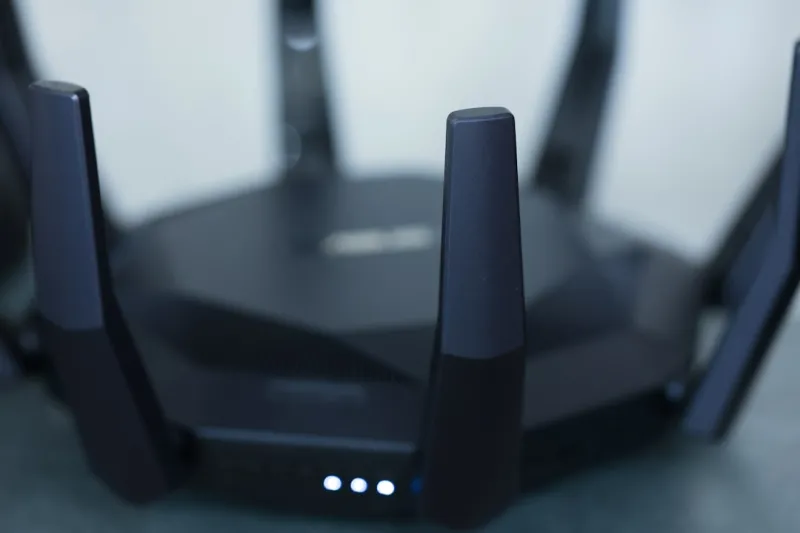
Wi‑Fi 7 (802.11be) finally hit the consumer market this year, delivering up to 30 Gbps in ideal conditions and ultra‑low latency that rivals many wired connections. Coupled with the resurgence of multi‑gigabit Ethernet (2.5 Gbps, 5 Gbps, and even 10 Gbps), the new hybrid model lets you place high‑throughput devices—like AI‑accelerated workstations—behind a wired link while still providing blazing‑fast wireless for laptops, tablets, and IoT gadgets. The secret sauce is intelligent traffic steering: modern routers can detect which devices benefit most from a wired path and automatically shift them, preserving bandwidth for the rest of the household. For power users, this means your AI‑ready workstation can stay on a 10 Gbps fiber‑to‑the‑home (FTTH) line, while your mobile dev rigs enjoy the low‑latency edge of Wi‑Fi 7. The result is a seamless experience that feels like a single, unified network rather than a patchwork of disjointed segments.
The Edge Revolution: Bringing Compute Closer to the Data
Edge computing isn’t just a buzzword; it’s a practical answer to the latency nightmare that plagues real‑time AI inference and high‑frequency trading simulations. By deploying mini‑servers or “edge nodes” within your own network—often as small as a NUC or a purpose‑built AI accelerator—you can process data locally before sending the distilled results to the cloud. This dramatically reduces round‑trip times, which in 2026 can be the difference between a smooth 4K video conference and a jittery mess. Moreover, edge nodes can act as intelligent caches for large datasets, meaning you download a model once and reuse it across multiple devices without repeatedly pulling from distant servers. The synergy between edge hardware and Wi‑Fi 7’s low latency creates a feedback loop where AI workloads become more responsive, and your network feels faster even when the internet is under strain.
Security at the Speed of Light: Encryption That Doesn’t Slow You Down
Speed without security is a recipe for disaster, especially when you’re handling sensitive code or proprietary datasets. Modern encryption protocols like WireGuard and the upcoming post‑quantum algorithms are designed to run at line‑rate even on modest hardware. However, the real challenge lies in managing keys and policies across a sprawling, hybrid network. That’s where the Power‑User’s Playbook for Bulletproof Encryption in 2026 comes in handy, offering a step‑by‑step guide to automate key rotation, enforce zero‑trust segmentation, and integrate hardware security modules (HSMs) into your home lab. By offloading cryptographic workloads to dedicated NICs or TPM chips, you can keep encryption overhead below 2 %, preserving the raw throughput of your Wi‑Fi 7 and multi‑gigabit links. The bottom line: you can have a network that’s both lightning‑fast and iron‑clad, without sacrificing user experience.
Quality of Service (QoS) and VLANs: Prioritizing What Matters
Not all traffic is created equal. A 4K livestream, a large Git repository clone, and a simple ping to your router all compete for the same pipe. Quality of Service (QoS) settings let you assign priority levels, ensuring mission‑critical packets—like SSH sessions to a remote server or AI model updates—reach their destination first. VLANs (Virtual LANs) add another layer of granularity, letting you isolate IoT devices, guest traffic, and production workloads into separate logical networks even if they share the same physical hardware. Modern routers now provide intuitive drag‑and‑drop interfaces for creating these rules, but the real power lies in scripting them via APIs. For example, you can write a simple Python script that detects when a large file transfer starts and temporarily boosts its priority, then reverts once the transfer completes. This dynamic QoS approach keeps your network fluid, preventing a single heavy download from choking your AI training sessions.
AI‑Powered Network Monitoring: Seeing the Unseen
In 2026, network monitoring has graduated from static dashboards to predictive analytics powered by machine learning. Tools like NetBrain and open‑source platforms such as Prometheus now include anomaly detection models that flag unusual traffic spikes, potential DDoS attacks, or even hardware failures before they manifest. By feeding these systems data from your router, switches, and edge nodes, you gain a holistic view that highlights hidden bottlenecks—say, a misbehaving IoT device hogging bandwidth during peak hours. The beauty of AI‑driven monitoring is its ability to learn your typical usage patterns and adapt thresholds automatically, reducing false alarms. As a power user, you can integrate these insights with your CI/CD pipelines, pausing resource‑intensive builds when the network is under stress, and resuming them when capacity clears. This proactive stance turns your network from a passive conduit into an active participant in your productivity workflow.
Hardware Choices: From Mesh Nodes to PoE Switches
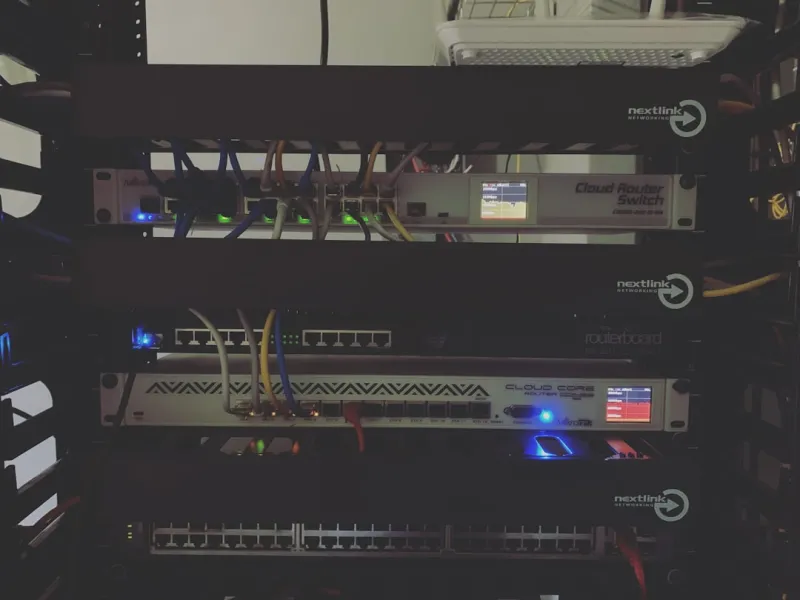
Choosing the right hardware is half the battle. Mesh Wi‑Fi systems have matured to the point where a three‑node setup can blanket a 4,000 sq ft home with consistent 2‑3 Gbps speeds, all while supporting seamless roaming for devices that move between rooms. Yet, for power users who demand absolute reliability, a wired backbone is still king. Power‑over‑Ethernet (PoE) switches let you power access points, security cameras, and even edge AI boxes from a single cable, simplifying cable management and reducing points of failure. Look for switches that support 802.3bt (90 W) if you plan to run high‑power devices like mini‑PCs or AI accelerators. Additionally, consider a router that supports modular expansion—adding a 10 Gbps SFP+ module later ensures you can scale without a wholesale replacement. Pairing a robust mesh with a solid PoE backbone gives you the flexibility to move devices around while keeping the core network rock‑solid.
Rethinking Your Network Strategy for the Power User
All the pieces we’ve discussed—Wi‑Fi 7, edge nodes, AI monitoring, and bulletproof encryption—fit together only if you step back and rethink your overall network architecture. The Why Modern Power Users Must Rethink Their Network Strategy article outlines a framework that starts with defining your primary workloads (AI training, game streaming, remote development) and mapping them to the optimal transport layer. From there, you can prioritize investments: perhaps a 10 Gbps fiber line for the main workstation, a Wi‑Fi 7 mesh for mobility, and a dedicated edge server for inference. This strategic approach prevents the common pitfall of “sprinkling” technology without a clear purpose, ensuring each component adds measurable value. By aligning hardware, software, and security policies around your unique use cases, you create a network that not only meets today’s demands but is ready for tomorrow’s breakthroughs.
Future‑Proofing with an AI‑Ready Power‑User PC
Even the best network can be hamstrung by a workstation that can’t keep up. That’s why I always recommend pairing your network upgrades with a build that’s primed for AI workloads. The Future‑Proof Your AI‑Ready Power‑User PC in 2026 guide walks you through selecting a motherboard that supports PCIe 5.0, ample M.2 NVMe slots for rapid storage, and multiple high‑speed Ethernet ports for direct line‑rate connections. Coupled with a GPU that boasts dedicated AI cores, you’ll be able to offload inference tasks to the edge node while the PC handles training and rendering. This synergy maximizes the utility of your upgraded network, ensuring you extract the full benefit of low latency and high bandwidth. In practice, you’ll notice smoother video editing, faster model iteration, and a noticeable drop in cloud‑compute costs because more work stays local.
Wrapping Up: Your Network as a Competitive Edge
In the fast‑moving world of 2026, a well‑engineered network is more than a convenience—it’s a competitive edge. By embracing hybrid connectivity, leveraging edge computing, enforcing strong encryption, and automating monitoring with AI, you turn your home or office into a high‑performance hub that can handle the most demanding workloads. Remember, the goal isn’t to buy the flashiest gear; it’s to align every component with your specific power‑user needs, from the router to the edge node to the workstation. Take the time to audit your current setup, identify bottlenecks, and apply the strategies we’ve explored. When you do, you’ll find that tasks that once felt sluggish become effortless, and you’ll finally have a network that works as hard as you do.