When I first tore apart my workstation three years ago, I thought I’d hit the ceiling of what “power‑user” hardware could deliver. Fast forward to 2026, and the landscape has mutated in ways that make yesterday’s flagship feel like a relic. The rise of AI‑accelerated workloads, ultra‑high‑resolution content creation, and real‑time data streaming means that every component—from the CPU’s instruction set to the PCIe lane count—must be evaluated through a new performance prism. In this article, I’ll walk you through the hardware trends that are reshaping our builds, explain why those trends matter for anyone who lives at the intersection of development and creative production, and give you a concrete roadmap to future‑proof your rig without breaking the bank. Think of this as the power‑user’s field guide to staying ahead of the silicon curve, complete with practical tips that you can apply right after you hit “save” on this post.
CPU Evolution: From Core Count to AI‑Native Instructions
In 2026 the CPU market is no longer just a race for higher clock speeds or more cores; it’s a battle for AI‑native instruction sets that can offload tensor operations directly to the silicon. The latest generations from both Intel and AMD have introduced dedicated matrix multiplication units, dramatically accelerating inference workloads for tools like Stable Diffusion, LLM assistants, and real‑time video upscaling. For a power‑user, this means a single CPU can now handle tasks that previously demanded a separate GPU or an external accelerator. When evaluating a new processor, look beyond the advertised GHz and core count—scrutinize the presence of AVX‑512‑VNNI, AMX, or equivalent extensions. Pairing a CPU with a motherboard that supports PCIe 5.0 and DDR5‑5600 memory ensures you can feed those AI cores with bandwidth that matches their appetite. If you’re still on a 2022 platform, you’re likely bottlenecked before you even tap into those AI capabilities, so an upgrade is not just advisable; it’s essential for staying productive.
Graphics Cards: The Convergence of Gaming and Compute
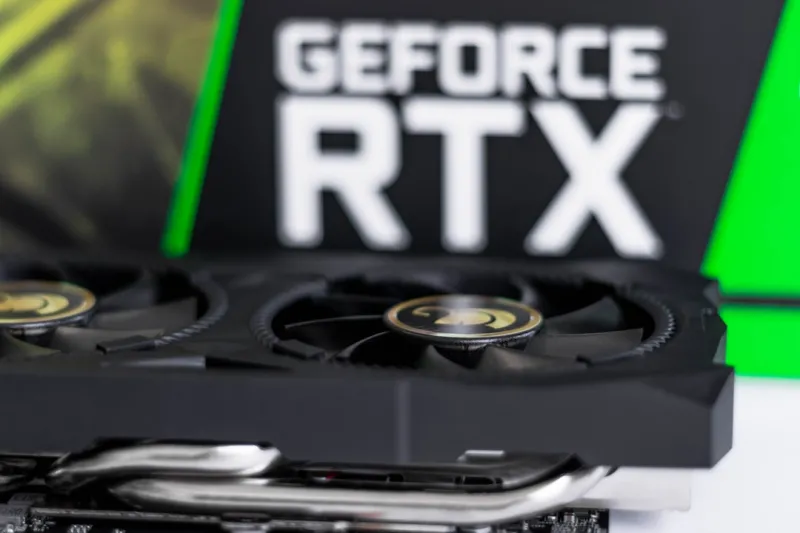
The graphics card ecosystem in 2026 has become a true hybrid of rasterization and compute. Nvidia’s RTX 7000 series and AMD’s Radeon 8000 line both ship with 4‑digit Tensor cores and ray‑tracing accelerators that double as high‑throughput compute engines. This convergence means you can render 8K video, run complex simulation models, and still enjoy buttery‑smooth gaming at 240 Hz—all on the same card. However, the real kicker is the advent of multi‑instance GPU (MIG) configurations that let you partition a single physical GPU into several logical devices, each with dedicated VRAM and compute slices. For power‑users who juggle multiple workflows—say, a live stream while training a model—MIG can be a game‑changer, delivering isolation without the expense of multiple cards. When selecting a GPU, prioritize a model with at least 24 GB of GDDR6X memory, a robust cooling solution, and support for the latest driver stack that includes AI‑enhanced features like DLSS 3.5. Remember, a powerful GPU can mask CPU shortcomings, but it can’t compensate for an under‑powered memory subsystem.
Memory Matters: Bandwidth, Capacity, and Timing
It’s tempting to think RAM is a solved problem, but in 2026 the bandwidth race is as fierce as ever. DDR5 has matured to 5600 MT/s as a baseline, with enthusiasts pushing to 7200 MT/s using overclocked kits. For AI‑heavy pipelines, higher frequency translates directly into lower latency for tensor operations and faster data shuffling between the CPU and GPU. Capacity is equally critical; 64 GB is now the sweet spot for most power‑users, but if you’re running large language models locally or editing raw 12‑bit video, 128 GB can prevent costly page‑file thrashing. Timing still matters—tight CL‑30 or lower modules can shave milliseconds off compute loops that add up over time. If you’re building a new system, consider a dual‑channel 64 GB kit with 5600 MT/s speed and a modest overclock to 6000 MT/s. This balance offers future‑proof performance without the heat and power penalties of exotic, high‑frequency kits that demand aggressive voltage regimes.
Storage Strategy: NVMe, Optane, and the Rise of Persistent Memory
Storage in 2026 has moved beyond “fast SSD” to an ecosystem where NVMe 2.0 drives, Intel Optane Persistent Memory, and even PCIe‑based storage class memory coexist. A typical power‑user build now includes a 4 TB PCIe 5.0 NVMe boot drive for the OS and applications, coupled with a secondary 8 TB NVMe for project files and data sets. The magic of Optane Persistent Memory lies in its ability to sit between DRAM and SSD, offering near‑DRAM speeds with non‑volatile durability. This tier is perfect for large databases or AI model checkpoints that need rapid access but don’t fit in RAM. When planning your storage layout, allocate the fastest tier for active workloads, and use slower, high‑capacity drives for archival. Also, enable Windows’ Storage Spaces Direct or a similar RAID‑0/1 configuration to maximize throughput while maintaining redundancy. The key is to avoid a single bottleneck—mix and match storage classes to keep every component fed with data at the speed it expects.
Power Delivery and Cooling: The Unsung Heroes
All the horsepower in the CPU and GPU means nothing if your power delivery and thermal solution can’t keep up. In 2026, 1200‑Watt Platinum‑rated PSUs have become more affordable, delivering clean, stable power to high‑draw systems that run multiple GPUs and a robust overclocked CPU. Look for modular designs with high‑current rails and an abundance of 12‑V outputs to avoid daisy‑chaining cables, which can introduce voltage sag. On the cooling side, hybrid liquid‑air coolers are gaining traction; a 360 mm AIO paired with a secondary fan‑based VRM cooler ensures both the processor and the motherboard’s power delivery stay within optimal temperature envelopes. For those building a silent workstation, consider a custom loop with a large radiator and low‑RPM pumps that still provide sufficient delta‑T to keep components cool under sustained AI workloads. Remember, a well‑cooled system not only runs quieter but also preserves component lifespan and maintains boost clocks for longer periods.
Connectivity: PCIe 5.0, Thunderbolt 5, and the Future of I/O
High‑speed I/O has never been more critical. PCIe 5.0 slots are now standard on most motherboards, delivering up to 32 GT/s per lane—essential for next‑gen SSDs and GPU interconnects. Meanwhile, Thunderbolt 5 brings 80 Gbps of bandwidth, enabling external GPUs, high‑resolution monitors, and fast storage enclosures to work seamlessly with a laptop or a compact build. When assembling your rig, ensure your motherboard offers multiple PCIe 5.0 x16 slots if you plan to dual‑GPU or add a dedicated AI accelerator card. Also, a front‑panel USB 4.0 hub provides the flexibility to connect future peripherals without sacrificing speed. For network connectivity, 10 GbE Ethernet is the baseline for power‑users, with many opting for 25 GbE for massive file transfers and low‑latency cloud sync. A solid I/O foundation future‑proofs your setup, allowing you to add emerging technologies without a complete overhaul.
Choosing the Right Build Path: Upgrade vs. New Build
Deciding whether to upgrade an existing platform or start from scratch is a classic dilemma. If you’re still on a 2022 Intel “12th‑gen” board, you’ll find that your PCIe lanes, memory support, and power phases are limiting factors for modern AI workloads. In that scenario, a full rebuild is usually the smarter move, especially when you factor in the cost of a new motherboard, DDR5 memory, and a higher‑wattage PSU. However, if you’ve already invested in a 2024 AMD “Zen 4” platform with a compatible PCIe 5.0 motherboard, you can often get away with swapping the CPU to a newer “Zen 5” SKU, adding a fresh GPU, and boosting RAM capacity. To help you make that decision, I recommend mapping your current bottlenecks: if you’re CPU‑bound on AI inference, upgrade the processor; if you’re GPU‑starved, a new graphics card will suffice; and if you’re limited by storage speed, a PCIe 5.0 NVMe upgrade can deliver instant gains. This targeted approach lets you stretch your budget while still capitalizing on the latest hardware innovations.
Putting It All Together: The AI‑Ready Power‑User PC Blueprint
Now that we’ve dissected each component, let’s assemble the ultimate 2026 AI‑ready power‑user PC. Start with a high‑end motherboard that supports PCIe 5.0 x16, DDR5‑5600, and has robust VRM cooling—think something like the ASUS ProArt Z790‑Creator. Pair it with a 16‑core “Zen 5” or 12‑core “Raptor Lake Extreme” CPU, both of which include AI‑native instructions. Install 64 GB (2 × 32 GB) DDR5‑5600 memory, and consider a secondary 32 GB kit if you anticipate heavy multitasking. For graphics, choose an RTX 7080 24 GB GDDR6X card, enabling MIG for isolated workloads. Add a 4 TB PCIe 5.0 NVMe boot SSD and an 8 TB PCIe 5.0 secondary SSD, plus a 256 GB Optane module for persistent memory. Power the whole thing with a 1200 W Platinum PSU, and cool it with a 360 mm AIO liquid cooler backed by a VRM fan array. Finally, integrate 10 GbE networking, Thunderbolt 5 ports, and a USB 4.0 hub for future peripherals. This configuration not only maximizes current performance but also positions you to adopt emerging technologies without a major redesign. For a step‑by‑step guide on how to assemble this rig, check out our detailed walkthrough in the building an AI‑ready power‑user PC in 2026 guide, and don’t miss the upgrade your PC article for budget‑friendly options.