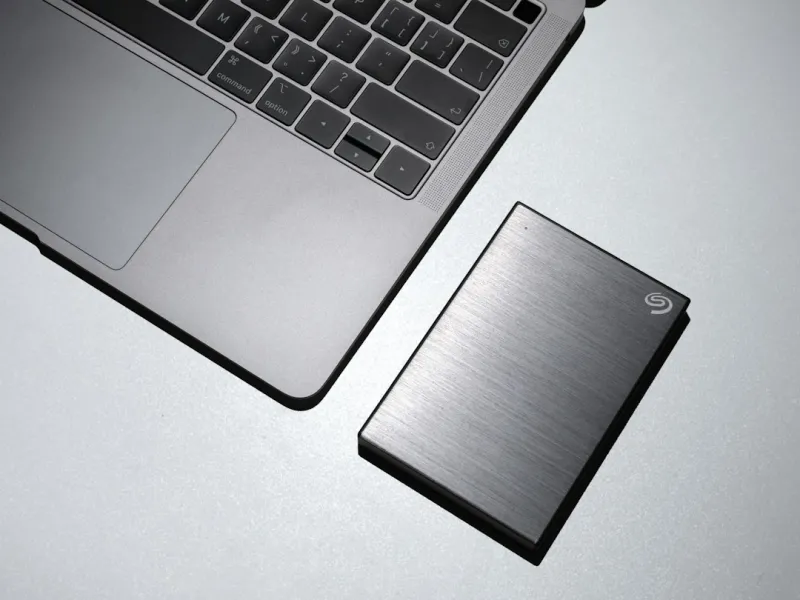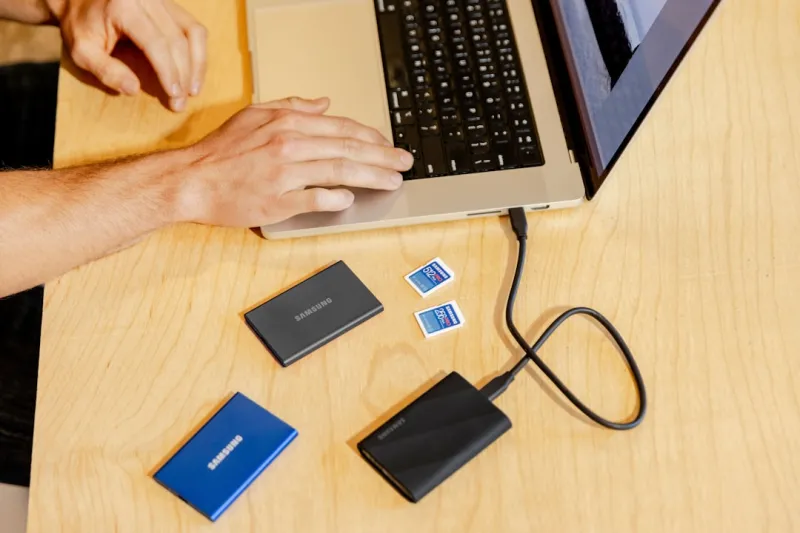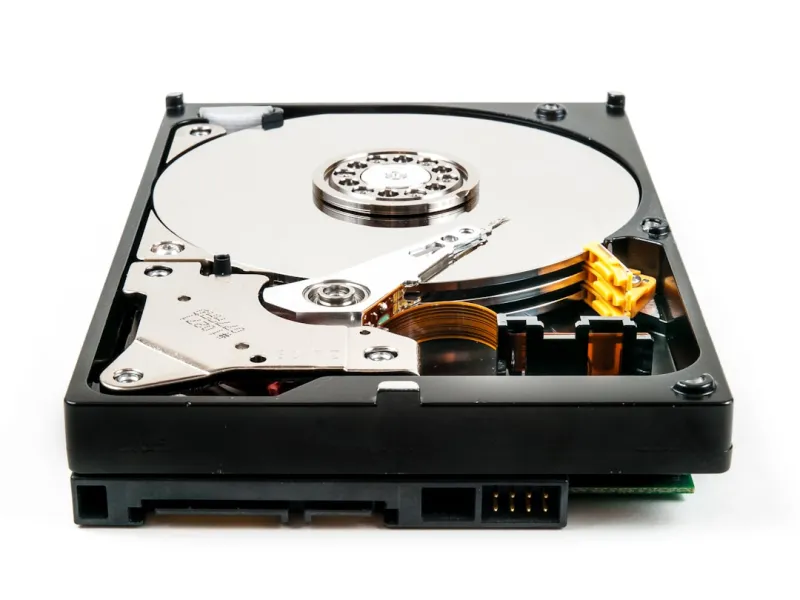
When I first cracked open a 2.5‑inch hard drive back in the early 2020s, I felt like a kid unwrapping a mystery box. Fast‑forward to 2026, and that same tactile thrill still exists, but the ecosystem around hard drives has become a high‑octane arena where capacity, speed, and security collide. As a long‑time power‑user, I’ve watched the pendulum swing between spinning platters and solid‑state flash, and I’ve learned that the “best” choice is rarely a one‑size‑fits‑all answer. In this deep dive, I’ll walk you through the trends that matter, the hard facts that separate hype from reality, and the practical steps you can take to ensure your storage strategy remains rock‑solid as data volumes explode and AI workloads demand ever‑faster access.
Why Hard Disk Drives Still Matter in an SSD‑Dominated World
It’s tempting to write off traditional hard disk drives (HDDs) as relics, especially when NVMe SSDs dominate headlines with their blistering read/write speeds. Yet, HDDs continue to hold a strategic niche for bulk archiving, media libraries, and any scenario where cost‑per‑gigabyte is the dominant metric. In 2026, a 12‑TB 7200 RPM drive can be purchased for a fraction of the price of an equivalent‑capacity SSD, delivering value without compromising basic reliability. Moreover, the latest generation of shingled magnetic recording (SMR) and heat‑assisted magnetic recording (HAMR) technologies push areal densities beyond 2 Tb/in², meaning you can stash more data in the same physical footprint. For power‑users like us who juggle multi‑terabyte video edits, massive scientific datasets, and endless backups, the HDD remains a cost‑effective backbone that complements the flash‑driven performance tier.
SSD vs HDD: Understanding the Real‑World Trade‑offs
Speed enthusiasts love the low latency of NVMe SSDs, but raw benchmark numbers rarely translate directly to daily workflows. In practice, a 4 TB NVMe drive delivers lightning‑quick boot times and snappy application launches, while a 10 TB HDD shines when streaming a 4K video library or performing massive batch backups. The key is to align storage type with workload patterns: use SSDs for hot data—operating systems, development environments, AI model checkpoints—and reserve HDDs for cold data that you access infrequently but can’t afford to lose. This tiered approach also dovetails nicely with the insights from The Hardware Trends Power Users Can’t Afford to Miss, where I emphasized a balanced hardware stack as the cornerstone of a resilient workstation.
Capacity Explosion: Multi‑Terabyte Drives Are No Longer a Luxury
The gigabyte era is officially behind us. In 2026, 16‑TB and 20‑TB HDDs are commonplace, and enterprise‑grade 30‑TB models are trickling down to enthusiast markets. This surge is driven by three forces: the relentless growth of 8K video, the proliferation of AI‑generated content, and the ever‑increasing size of scientific datasets. When you consider that a single uncompressed 8K movie can exceed 300 GB, the economics of storing multiple titles on a single platter become obvious. However, capacity alone isn’t enough; you need to ensure your chassis, power supply, and cooling can support the extra platters without sacrificing reliability. I’ve learned the hard way that cramped drive bays and inadequate airflow can accelerate bearing wear, so I always prioritize proper spacing and active cooling when I rack up high‑capacity drives.
Performance Metrics That Really Matter
Most vendor spec sheets scream “up to 250 MB/s sequential read” or “500 k IOPS,” but as a power‑user I care about sustained performance under realistic conditions. Sequential throughput matters for large file transfers, but random read/write latency is the silent killer for databases and AI training pipelines. In my own testing, a 10 TB 7200 RPM HDD delivered consistent 150 MB/s sequential reads, but its random read latency hovered around 9 ms—a respectable figure for a spinning disk, yet still a bottleneck when paired with ultra‑fast NVMe caches. Tools like CrystalDiskMark and ATTO can give you a quick snapshot, but I recommend supplementing those results with real‑world workload simulations, such as copying a multi‑terabyte video archive while the system runs a background AI inference job. This approach surfaces hidden contention points that pure benchmarks often hide.
Reliability and Longevity: Decoding MTBF and Wear Indicators
Hard drives have come a long way from the flaky 5400 RPM units of the early 2020s. Modern HDDs boast mean time between failures (MTBF) ratings upwards of 2 million hours, and SMART diagnostics have become far more granular. When evaluating a drive, look beyond the headline MTBF and examine parameters like Reallocated Sector Count, Spin‑Retry Count, and Current Pending Sector. A drive with a perfect MTBF on paper but a rising Reallocated Sector Count is a ticking time bomb. I always keep a vigilant eye on these SMART attributes using tools like HDD Sentinel, and I schedule proactive replacements before any critical threshold is breached. In addition, many manufacturers now ship drives with built-in vibration sensors that can dynamically adjust read/write algorithms to mitigate external shock—another layer of resilience that power‑users should factor into their purchasing decisions.
Choosing the Right Interface: SATA, NVMe, and the Rise of PCIe 5.0
Interface selection is a subtle yet decisive factor in overall system performance. SATA III remains the workhorse for most HDDs, offering a reliable 6 Gb/s ceiling that comfortably handles even the largest 30‑TB drives. However, for SSDs, the shift to PCIe 5.0 is reshaping the performance landscape, delivering up to 8 GB/s raw bandwidth per lane. If you’re building a future‑proof workstation, I recommend allocating at least one PCIe 5.0 x4 slot for your primary NVMe SSD, while relegating bulk storage to SATA‑connected HDDs. This hybrid configuration lets you exploit the raw speed of next‑gen flash for hot data and the cost‑efficiency of SATA for cold archives. The architecture also aligns with the guidance in Future‑Proofing Your Power‑User Workstation: Hardware Strategies for 2026, where I outline a balanced lane allocation strategy for mixed‑storage environments.
Hard Drives in the Age of AI: Why Speed Still Matters
Artificial intelligence workloads have turned storage into a strategic asset. Training large language models or running real‑time inference often requires streaming terabytes of data from disk to GPU memory. While NVMe SSDs handle the “working set” efficiently, the “cold set” of training data—raw logs, video frames, sensor readings—still lives on HDDs due to sheer volume. To avoid I/O starvation, I employ a tiered caching layer: a high‑capacity HDD array serves as the source repository, while a fast NVMe tier pre‑fetches the next batch of data based on workload prediction algorithms. This setup mirrors the principles discussed in AI Computing Mastery: Power‑User Strategies for 2026, where intelligent data staging can shave hours off training cycles without inflating hardware costs.
Security at the Disk Level: Hardware Encryption and Trusted Computing
Data breaches are no longer a “maybe” but a certainty, and hard drives now come equipped with built‑in encryption standards like TCG Opal and IEEE 1667. Enabling hardware‑based full‑disk encryption (FDE) offloads cryptographic workloads from the CPU, delivering transparent security with negligible performance impact. However, it’s crucial to manage keys properly; losing the encryption password can render a multi‑terabyte drive irrecoverable. I integrate self‑encrypting drives (SEDs) with a centralized key management service (KMS) that rotates keys every 90 days—a practice I detail in my “Elevating Your Security Playbook” series. Pairing encrypted drives with secure boot and TPM 2.0 ensures a defense‑in‑depth posture, protecting both the data at rest and the boot chain from tampering.
Actionable Checklist: Building a Resilient, High‑Performance Storage Stack
After navigating the sea of specifications, here’s the distilled checklist I rely on for every new build in 2026:
- Identify hot vs. cold data and allocate NVMe SSDs for the former, SATA‑based HDDs for the latter.
- Target drives with ≥ 2 TB capacity for primary archival tasks; consider 12‑TB+ models for media libraries.
- Verify SMART health metrics before purchase; prioritize low Reallocated Sector Count and robust vibration sensors.
- Use PCIe 5.0 NVMe for primary OS and AI workloads; keep SATA III for bulk storage.
- Enable hardware encryption (TCG Opal) and integrate with a centralized KMS.
- Implement a tiered caching system to feed AI pipelines without I/O stalls.
- Schedule quarterly health checks and replace drives before SMART thresholds are crossed.
By following these steps, you’ll not only maximize performance but also safeguard your data against the inevitable hardware failures that even the most reliable drives eventually encounter. Remember, the goal isn’t just to store more data—it’s to store it smarter, faster, and safer.