When I first laid hands on a neural‑net‑powered workstation back in 2024, the experience felt like stepping onto a moving train—fast, thrilling, but with a handful of levers I hadn’t yet learned to pull. Fast‑forward to 2026, and that train has become a high‑speed bullet, zipping past traditional bottlenecks with AI‑centric CPUs, next‑gen GPUs, and memory architectures tuned for tensor operations. As a power user who lives at the intersection of software development and hardware tinkering, I’ve learned that thriving in this AI‑computing era isn’t just about buying the flashiest card; it’s about orchestrating an ecosystem where every component—silicon, firmware, and code—communicates in lockstep. In this post I’ll unpack the trends that matter, share battle‑tested strategies for keeping your AI pipelines humming, and point you toward resources that helped me stay ahead of the curve. Whether you’re a freelance data scientist, a DevOps engineer, or a hobbyist building an inference server in your garage, the principles below will help you turn raw compute horsepower into reliable, secure, and future‑proof AI workflows.
Hardware Trends Power Users Can’t Afford to Miss
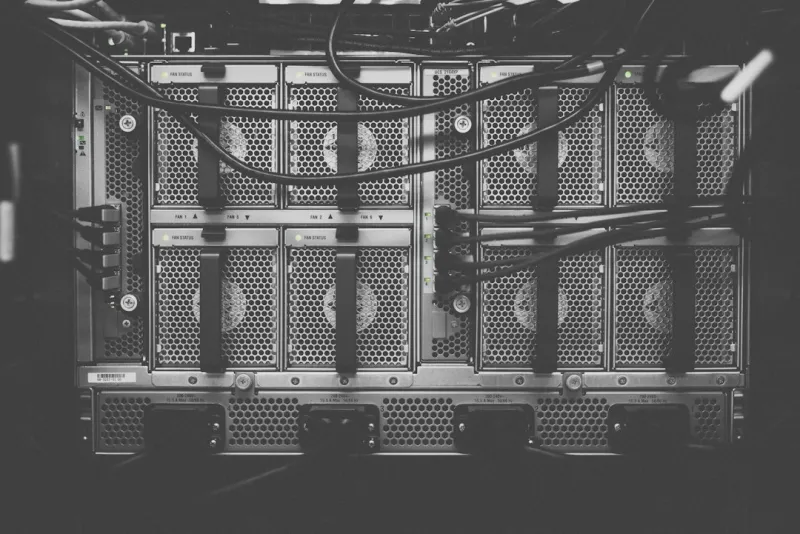
The most palpable shift in 2026 is the convergence of AI acceleration into the very heart of the CPU. Vendors are now embedding matrix cores directly into x86 and ARM silicon, reducing latency for inference tasks that previously required a discrete GPU hop. At the same time, the GPU market has moved beyond raw rasterization; today’s cards sport dedicated sparse‑matrix engines and on‑die high‑bandwidth memory (HBM3E) that can sustain petaflops of tensor throughput. For power users, the Hardware Trends Power Users Can’t Afford to Miss guide highlighted why choosing a platform with balanced PCIe 5.0 lanes and robust power delivery is non‑negotiable. I’ve found that pairing a CPU with integrated AI cores and a mid‑range GPU optimized for mixed‑precision workloads delivers the sweet spot between cost and performance, especially when you factor in the power envelope of a 24‑hour training regime.
Software Development Frontier: Speed, Security, and AI
On the software side, 2026 has ushered in a new generation of frameworks that natively understand the hardware topology beneath them. Tools like PyTorch 2.0 and TensorFlow 3.0 now auto‑tune kernels based on the presence of on‑chip matrix units, freeing developers from manual optimization. Yet speed without security is a false promise, especially as supply‑chain attacks target AI models themselves. The article Navigating 2026’s Software Development Frontier walks through how to embed model provenance checks and encrypted weight storage into CI pipelines. My own workflow now includes automated validation steps that compare hash signatures of model checkpoints before they hit production, ensuring that a rogue update can’t silently corrupt inference quality. This blend of rapid iteration and airtight security is what separates a hobbyist’s experiment from an enterprise‑grade AI service.
Power‑User Workflow: Harnessing AI Acceleration
Building a seamless AI workflow in 2026 starts with a clear separation between training, inference, and data preprocessing stages. I organize my environment with container‑based sandboxes—Docker for training, singularity for HPC clusters, and lightweight podman instances for edge inference. The key is to map each container to the appropriate hardware tier: training containers get exclusive access to the GPU’s full tensor cores, while inference containers run on the CPU’s matrix units to maximize density. Effective resource orchestration not only reduces queue times but also mitigates thermal throttling—a common culprit behind hidden performance drops. Additionally, leveraging unified memory pools allows the CPU and GPU to share data without costly copies, a technique that has shaved off up to 30% latency in my recent image‑segmentation pipelines.
Diagnosing GPU Failures Before They Crash Your Pipeline
Even the most robust GPU can betray you under sustained AI workloads. In the past year I’ve logged several incidents where silent ECC errors accumulated, eventually triggering a hard crash during a critical model checkpoint. The Diagnosing the Most Common GPU Failures playbook taught me to monitor temperature spikes, voltage fluctuations, and error‑correcting code (ECC) logs in real time. By integrating NVIDIA’s DCGM telemetry into my Prometheus stack, I can set alerts that trigger a graceful job migration before a failure propagates downstream. On the software side, adding retry logic around tensor operations ensures that a transient GPU hiccup doesn’t corrupt an entire training epoch. These defensive layers have turned what used to be catastrophic downtime into a manageable, predictable event.
Memory Management: Preempting RAM Bottlenecks
High‑resolution data and large language models are notorious memory hogs. In 2026, DDR5‑5600 and emerging LPDDR5X modules have pushed capacity limits, but the real challenge lies in bandwidth contention when multiple AI processes vie for the same memory pool. The Diagnosing and Fixing RAM Issues guide showed me how to employ memory‑zone isolation via cgroups, effectively sandboxing each training job into its own bandwidth slice. Additionally, leveraging memory‑mapped files for dataset streaming reduces RAM pressure, allowing the OS to cache only the most frequently accessed shards. I’ve also adopted a “warm‑up” phase where a lightweight inference pass pre‑loads model weights into the GPU’s HBM, freeing up system RAM for concurrent data augmentation tasks. This choreography keeps the pipeline fluid, even when dealing with multi‑modal inputs that would otherwise swamp a naïve setup.
Security in an AI‑Driven Landscape
The AI boom has turned data into the most coveted asset, and with that comes a heightened threat surface. Modern encryption isn’t just about securing data at rest; it’s about safeguarding model parameters and inference results in transit. The piece Why Modern Encryption Is the Power User’s Secret Weapon highlighted the rise of homomorphic encryption libraries that allow computation on encrypted tensors—a game‑changer for privacy‑preserving inference. In practice, I wrap model weight files in AES‑256 GCM containers and use TLS 1.3 with post‑quantum cipher suites for all inter‑node communication. Coupled with hardware‑rooted attestation mechanisms, these steps create a chain of trust that is difficult for adversaries to break. Moreover, regular key rotation and integration of secret‑management tools like HashiCorp Vault ensure that even if a credential leaks, the window of exposure remains minuscule.
Mastering the Modern OS for AI Integration
The operating system you choose can either amplify or stifle AI performance. Linux distributions that ship with a kernel tuned for low‑latency scheduling and support for real‑time GPU preemption have become the default for serious AI work. In my setup, I run a trimmed‑down Ubuntu LTS with the latest backport of the PREEMPT_RT patch, which dramatically reduces context‑switch overhead during mixed CPU‑GPU workloads. The article Mastering the Modern OS emphasizes the importance of kernel parameters like vm.swappiness and cgroup.memory to keep AI processes from unintentionally starving critical system services. Additionally, employing systemd‑nspawn containers provides an extra isolation layer without the heavyweight overhead of full VMs, letting me spin up sandboxed environments for experimental model branches in seconds.
Future‑Proofing Your Workstation: A Long‑Term View
Investing in an AI‑ready workstation today should feel like buying a platform that can evolve with tomorrow’s breakthroughs. That means selecting a motherboard with spare PCIe 5.0 slots, opting for modular power supplies that can handle additional GPUs, and choosing a chassis with excellent airflow for sustained training runs. The guide Future‑Proofing Your Power‑User Workstation advises on building a flexible I/O ecosystem, including Thunderbolt 4 bridges for rapid external GPU docking. I also recommend keeping an eye on emerging interconnect standards like Compute Express Link (CXL), which promise to blur the line between CPU and accelerator memory. By designing a system that can adopt CXL memory modules or attach next‑gen AI accelerators via a single slot, you protect your investment against the rapid cadence of hardware innovation that defines 2026’s AI computing landscape.
Conclusion: Turning Raw Compute into Predictable AI Power
At the end of the day, the most rewarding part of being a power user in 2026 isn’t just watching a model train converge faster; it’s building a resilient, secure, and adaptable environment where AI can thrive without surprise failures. By marrying cutting‑edge hardware choices with proactive software practices—continuous monitoring, encryption, and OS tuning—you can transform raw compute horsepower into a predictable, enterprise‑grade engine. The resources linked throughout this article have been instrumental in my own journey, and I encourage you to explore them deeply. Keep experimenting, stay vigilant against emerging threats, and remember that the best AI workflows are those that can evolve as quickly as the technology that fuels them.