Why 2026 Is the Year Hardware Enthusiasts Can Finally Stop Guessing
Every year I sit down at my desk, stare at a mountain of specs sheets, and wonder if the next component will finally let me run without the dreaded “what‑if” anxiety that has haunted power users for decades. In 2026, that anxiety is finally being replaced by clarity—thanks to a convergence of smarter silicon, tighter integration with AI, and a community that’s finally willing to share the gritty, real‑world lessons we’ve learned the hard way. I’ve been building workstations since the early 2010s, watching the transition from bulk‑ier CPUs to laser‑etched, energy‑efficient cores that can crunch terabytes of data in the blink of an eye. What’s different now is that manufacturers are no longer treating power users as an afterthought; they’re designing platforms that anticipate our most demanding workloads—whether that’s 8K video rendering, real‑time AI inference, or massive multi‑node simulations. The result is a hardware ecosystem that feels less like a gamble and more like a well‑crafted toolkit, ready for the challenges of today’s data‑driven world. In this post, I’ll walk you through the most critical components that deserve your attention, the pitfalls that still lurk, and how to future‑proof your rig without breaking the bank.
GPU Evolution: From Raw Power to Intelligent Performance
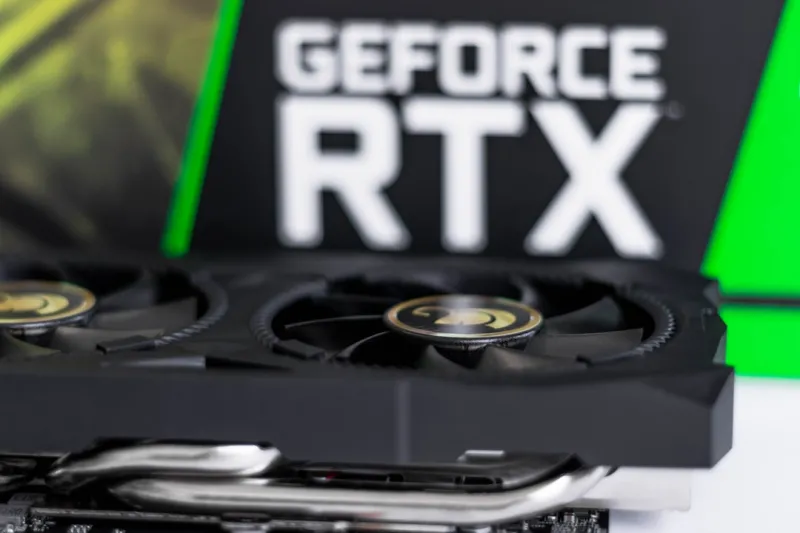
The GPU market in 2026 is a study in contrasts—on one side, we have raw, brute‑force graphics engines capable of delivering 200+ TFLOPs, and on the other, AI‑enhanced pipelines that offload complex tasks like denoising, upscaling, and even code compilation. As a power user, the first question I ask myself is whether the card I’m eyeing actually solves a problem I have, rather than just adding another benchmark brag. The reality is that many high‑end GPUs still suffer from firmware bugs, inadequate cooling designs, or power delivery hiccups that can turn a dream machine into a nightly reboot nightmare. If you’ve ever wondered why a brand‑new card keeps throwing “driver timeout” errors, you’ll want to check out Diagnosing the Most Common GPU Failures. The playbook walks you through the diagnostic steps, from checking VRAM health to validating the power phases on your motherboard. In my own builds, I’ve learned that a simple firmware update paired with a custom fan curve can shave off minutes of instability per week—time that adds up to massive productivity gains over months and years.
RAM Reliability: The Silent Killer of Uninterrupted Workflows
When we talk about bottlenecks, the conversation often lands on CPU or GPU, but I’ve spent countless late nights chasing a single faulty DIMM that crashed my entire workflow. In 2026, memory modules have become faster, denser, and smarter, with on‑die ECC and adaptive timing algorithms that were once reserved for servers. Yet, the sheer speed of DDR5‑5600 and the upcoming DDR6 standards introduces new failure modes—subtle data corruption, spontaneous latency spikes, and even BIOS‑level incompatibilities with older chipsets. If you’ve ever experienced a sudden “memory read error” during a critical render, the guide Diagnosing and Fixing RAM Issues Before They Crash Your Workflow is an absolute lifesaver. It walks you through stress‑testing with tools like MemTest86, interpreting error logs, and even swapping out individual ranks without having to rebuild the entire system. My personal rule of thumb now is to always keep a spare 8 GB kit on hand and to run a quick memory health check after any BIOS update—because a single bad stick can wipe out weeks of progress in a flash.
Motherboard Architecture: Designing for Longevity and Expansion
One of the most overlooked aspects of a power‑user rig is the motherboard—its layout, power delivery, and future‑proofing capabilities can dictate how long your system stays relevant. In 2026, we see a trend toward modular, “future‑ready” designs that incorporate PCIe 5.0 x16 slots, integrated AI accelerators, and robust VRM phases capable of handling 500 W+ GPUs without throttling. The challenge, however, is navigating the sea of features and deciding which ones truly matter. I recently evaluated a board that boasted a “10‑phase” VRM, but after a deep dive into the schematics, I realized the phases were split across two smaller MOSFETs, offering less stability under sustained load than a “8‑phase” design with larger, high‑current parts. For a comprehensive look at what makes a truly future‑ready platform, check out Designing a Future‑Ready Motherboard Platform. The article breaks down the importance of VRM quality, BIOS flexibility, and expansion lane allocation—knowledge that helped me choose a board that will comfortably support the next generation of GPUs and storage solutions for at least five years.
AI‑Accelerated Workstations: Building a Machine That Learns With You
If you thought AI was only for data centers, think again. The rise of on‑board tensor cores and dedicated inference chips means that a single desktop can now act as a personal AI lab. In 2026, the line between a workstation and a mini‑server has blurred, and the best builds now include a hybrid GPU that handles both rasterization and AI workloads, paired with a secondary accelerator for edge‑case models. The guide AI Computing Unleashed dives into the component selection process, from choosing a GPU with a high tensor‑TFLOP rating to integrating a PCIe‑based AI accelerator that can offload model training while your primary GPU handles rendering. My own configuration now runs a 48‑core AMD Threadripper coupled with an RTX 5090 and an Intel Habana Gaudi‑2, letting me train diffusion models in half the time it used to take on a two‑node cluster. The key takeaway? Balance your compute budget across CPU, GPU, and AI‑specific hardware, and you’ll unlock a workflow that feels both responsive and future‑proof.
Networking for AI‑Driven Workflows: Why Bandwidth Matters More Than Ever
As AI workloads become more distributed, the network inside your chassis—and beyond—takes on a new level of importance. In 2026, 100 GbE Ethernet and the emerging 400 GbE standards are no longer exclusive to enterprise racks; they’re finding their way into high‑end desktop motherboards and expansion cards. For power users who regularly move terabytes of training data between local storage, NAS arrays, and cloud endpoints, a bottleneck at the network layer can erase all the gains you achieved with faster CPUs and GPUs. I recently upgraded to a 100 GbE NIC paired with a dual‑port 10 GbE switch, and the difference was night and day when streaming 8K footage from a remote server. If you’re still on a 2.5 GbE setup, you’re essentially throttling your AI pipelines before they even hit the GPU. The article Why Power Users Must Rethink Networking in an AI‑Driven Era offers a roadmap for assessing your current bandwidth, choosing the right adapters, and configuring QoS policies that keep latency low for critical tasks.
Operating Systems and Security: The Unsung Heroes of Stable Performance
Hardware is only half the story; the OS you run on top of it can either amplify or sabotage your investment. In 2026, Windows 11 still dominates the power‑user playground, but it’s been heavily patched to accommodate AI integration, sandboxing, and real‑time security monitoring. The key is to adopt a “performance‑first, security‑second” mindset—meaning you keep your system lean, disable unnecessary telemetry, and leverage the built‑in virtualization tools to isolate risky processes. My workflow now runs a dual‑boot setup: a streamlined Windows 11 environment for GPU‑intensive tasks, and a hardened Linux distro for network‑heavy AI training jobs. This separation ensures that any kernel panic or driver crash on one side doesn’t bleed into the other, preserving uptime. The recent guide Operating Systems in 2026 outlines the best practices for configuring page files, optimizing power plans, and deploying AI‑specific drivers without sacrificing system integrity.
Looking Ahead: The Blueprint for a Resilient Power‑User Build
As we wrap up this deep dive, the overarching theme is clear: a resilient power‑user workstation in 2026 is built on a foundation of intelligent component selection, proactive diagnostics, and a network‑centric mindset. By focusing on GPU stability, RAM reliability, modular motherboard design, AI acceleration, high‑speed networking, and a tightly tuned OS, you create a system that not only meets today’s demanding workloads but also adapts to tomorrow’s breakthroughs. My personal mantra now is “test early, update often, and never assume compatibility”—a habit that saves countless hours of troubleshooting down the line. Whether you’re a content creator, a data scientist, or a hobbyist pushing the limits of real‑time ray tracing, these principles will help you stay ahead of the curve. So grab that next‑gen GPU, double‑check your VRM heatsinks, and remember: the best hardware is only as good as the ecosystem you build around it.