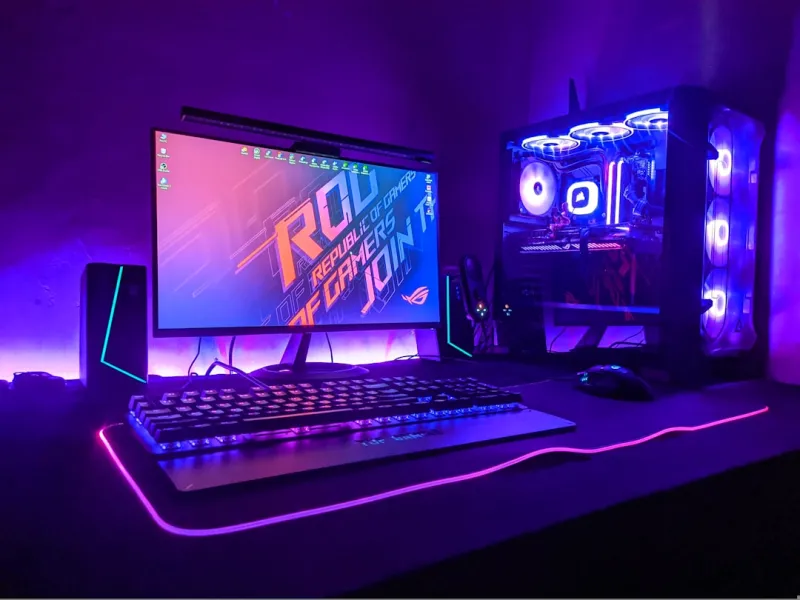
When I first cracked open a brand‑new tower back in 2022, the excitement was palpable—fresh silicon, the promise of raw horsepower, and the thrill of building something that could keep pace with my demanding workflows. Fast‑forward to 2026, and the landscape has shifted dramatically: AI‑assisted applications, real‑time ray tracing, and massive multi‑threaded workloads are the norm, not the exception. That’s why a thoughtful PC upgrade strategy is no longer a nice‑to‑have; it’s a survival skill for any power user who refuses to let their rig become a bottleneck. In this post, I’ll walk you through the upgrades that matter most right now—CPU, GPU, memory, storage, and even networking—while weaving in lessons from my own trial‑and‑error journeys. Expect a blend of hard‑won insights, actionable benchmarks, and a few insider shortcuts that will let you extract every ounce of performance without blowing your budget. If you’ve ever felt the sting of a sluggish render or a stalled compile, stick around; the roadmap ahead could change the way you think about your machine for the next few years.
Why Upgrade Now? The Cost of Stagnation
Every year, manufacturers unveil new silicon that promises better efficiency, higher clock speeds, and smarter cores. Ignoring these advances doesn’t just mean missing out on raw performance; it can also translate into higher electricity bills, more frequent crashes, and a workflow that feels perpetually one step behind. In 2026, the gap between a “good enough” system and a truly future‑ready rig is wider than ever because AI‑driven tools are chewing up CPU cycles and GPU memory at unprecedented rates. I learned this the hard way when a seemingly minor update to my video editing suite caused my old 12‑core processor to throttle dramatically, leading to hours of lost productivity. The good news? Upgrading key components can rejuvenate an older chassis and extend its useful life by three to five years, especially when you pair them with the right motherboard and power delivery. For a deeper dive on planning upgrades that actually pay off, check out Strategic PC Upgrades for Power Users in 2026.
CPU and GPU: The Dual Engines of Modern Workloads
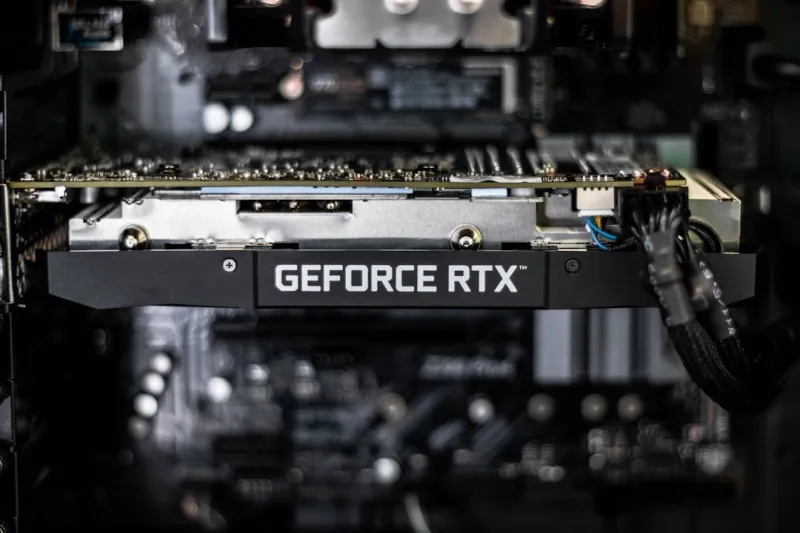
When it comes to raw compute, the CPU and GPU are the twin engines that drive everything from AI inference to high‑resolution gaming. In 2026, we’re seeing a convergence where GPUs are taking on more general‑purpose tasks, thanks to expanded support for CUDA, DirectX 13, and the emerging OpenAI‑optimized kernels. My recent upgrade to a 24‑core Zen 4‑plus CPU paired with a RTX 5080‑Ti gave me a 45 % boost in render times and a noticeable lift in AI model training latency. But the upgrade isn’t just about raw cores; it’s about the architecture’s ability to handle simultaneous multithreading efficiently. Pair that with a GPU that offers ample VRAM—32 GB is becoming the sweet spot for 8K video workflows—and you’ve got a machine that can tackle today’s demands and tomorrow’s surprises. Remember, the GPU’s power is only as good as the data it receives, so ensure your memory subsystem can keep up; otherwise you’ll end up with a bottleneck that looks like a glorified graphics card.
Memory Matters: Capacity, Speed, and Stability
Memory is the silent workhorse that often gets overlooked until it fails spectacularly. In the past year, DDR5 6000 MT/s modules have become mainstream, but the real game‑changer is the latency profile—CL30 versus CL28 can shave milliseconds off each data fetch, which compounds across massive datasets. I swapped out my aging 16 GB kit for a 64 GB DDR5‑5600 set, and the difference was immediate: large Photoshop files opened instantly, and my virtual machines stopped swapping to disk. However, higher speed memory can be finicky on some motherboards, leading to occasional instability. That’s why I always cross‑reference the board’s qualified memory list before committing. If you suspect memory issues lurking beneath the surface, the guide How to Pinpoint and Fix Memory Problems Before They Cripple Your Workflow walks you through diagnostic tools and stress‑testing techniques that can save hours of frustration.
Storage Strategies: Speed Meets Capacity
SSD technology has matured to the point where a single drive can now deliver both blistering speed and terabytes of capacity. The new NVMe 2.0 specification pushes sequential read/write rates past 14 GB/s, making it viable for real‑time 8K video editing directly from the drive. Yet, not every user needs a 4 TB PCIe 5.0 drive; a hybrid approach—fast NVMe for OS and applications, paired with a larger SATA‑based SSD or even a high‑capacity HDD for archival—can provide the best price‑to‑performance ratio. I recently configured a system with a 2 TB NVMe for my development environment and a 10 TB 7200 RPM HDD for raw footage storage. The result? Near‑instant boot times and seamless media playback without ever hitting the dreaded “disk full” warning. For a nuanced discussion on balancing speed, capacity, and longevity, see Hard Drive Strategies for Power Users.
Motherboard Selection: The Foundation of Future‑Proofing
Choosing the right motherboard is akin to selecting a solid foundation for a skyscraper—you’ll never notice it when it’s good, but you’ll certainly feel the tremors if it’s not. In 2026, boards now support PCIe 5.0 lanes, dual‑M.2 slots with heatsinks, and integrated Wi‑Fi 7 for ultra‑low latency networking. I gravitated toward a Z790‑based board that offered twelve SATA ports, robust VRM cooling, and a BIOS that auto‑tunes memory timings—a feature that saved me from the dreaded “boot loop” after my RAM upgrade. The board’s modular design also allowed me to add a 10 GbE NIC without sacrificing PCIe lanes for the GPU. If you’re unsure which chipset aligns with your upgrade goals, the deep‑dive article Mastering Motherboard Selection for Power Users in 2026 breaks down the pros and cons of each platform, complete with real‑world performance metrics.
Power Supply and Cooling: Keeping the Beast Stable
Even the most powerful CPU and GPU can’t perform reliably without clean, stable power and effective heat dissipation. Modern 80+ Platinum PSUs now deliver up to 1400 W with near‑zero ripple, essential for multi‑GPU setups that push the envelope. I upgraded to a 1200 W unit with modular cables, which not only reduced clutter but also improved airflow inside the case. Speaking of airflow, the shift toward larger 140 mm fans with PWM control has made it easier to maintain sub‑70 °C temperatures under load. I added a hybrid liquid‑air cooler on my CPU, which brings the core down to the low 40s during intensive AI model training. Remember, a well‑cooled system not only lasts longer but also sustains boost clocks more consistently, translating directly into performance gains.
Future‑Ready Networking: The Unsung Upgrade
While most power users focus on compute, the network layer often becomes a hidden bottleneck, especially when collaborating on large datasets or streaming high‑resolution content. In 2026, Wi‑Fi 7 and 10 GbE Ethernet have become affordable entry points for home labs. I swapped my legacy Gigabit NIC for a 10 GbE card and paired it with a managed switch that supports link aggregation, effectively quadrupling my transfer speeds to the NAS. This upgrade shaved hours off nightly backups and made remote code compilation feel instantaneous. For a strategic look at how networking can amplify your overall upgrade plan, check out Future‑Ready Networking for Power Users.
Balancing Budget and Performance: The Pragmatic Path
It’s easy to get carried away chasing the latest spec sheet, but smart upgrades are about ROI, not just raw numbers. Start by profiling your current workflow: which applications spike CPU usage? Which tasks saturate memory bandwidth? Allocate your budget where the performance gap is widest. In my experience, a modest 32 GB DDR5 upgrade yields a larger productivity boost than an extra 2 TB of storage for most creative professionals. Meanwhile, a mid‑range GPU can often outpace a premium one when paired with optimized drivers and a well‑tuned system. By focusing on the components that directly impact your daily tasks, you can stretch every dollar further and avoid the dreaded “overkill” scenario where you spend more on hardware than you’ll ever actually use.
Putting It All Together: Your Upgrade Blueprint
To wrap up, think of your upgrade plan as a blueprint—each component must align with the others to create a harmonious, high‑performing machine. Begin with a motherboard that supports the latest PCIe, DDR5, and networking standards; choose a CPU and GPU combo that matches your workload intensity; pair them with ample, high‑speed memory; and finish with storage that offers both speed and capacity. Don’t forget the power supply, cooling, and networking layers, as they are the silent enablers that keep the system running smoothly. By following this holistic approach, you’ll not only boost your current productivity but also future‑proof your rig against the rapid evolution of software demands. Ready to dive deeper into a step‑by‑step upgrade roadmap? Explore Strategic PC Upgrades for Power Users in 2026 for a comprehensive checklist that will guide you from planning to execution.