When I first pulled the plug on my old router back in 2022, I never imagined the networking landscape would evolve this dramatically by 2026. As a power‑user who lives at the intersection of high‑performance computing and smart‑home automation, I’ve learned that a robust network isn’t just a convenience—it’s the backbone of everything from AI‑driven content creation to ultra‑low‑latency gaming. In today’s hyper‑connected world, the stakes are higher: a single bottleneck can cripple a multi‑GPU render farm or delay critical security patches across dozens of IoT devices. Over the past few years, I’ve experimented with everything from legacy 802.11n gear to the newest Wi‑7 access points, and each iteration has taught me valuable lessons about balancing speed, reliability, and security. In this post, I’ll walk you through the trends that are shaping computer networking right now, share practical configurations that have saved me countless headaches, and point you toward resources that can help you future‑proof your own setup.
The Rise of Mesh Wi‑7 and Why It Matters
Mesh networking has finally shed its “budget‑only” reputation, especially with the rollout of Wi‑7‑compatible nodes that promise terabit‑scale throughput and sub‑millisecond latency. In my home office, I replaced a traditional single‑router setup with a tri‑band mesh system that intelligently distributes traffic based on device priority and real‑time interference mapping. The result? Seamless 8K video streaming on my workstation while a separate node handles a 4K livestream without any hiccups. What’s truly groundbreaking is the built‑in AI that predicts congestion before it occurs, dynamically reallocating spectrum to keep latency in check. For power users, this means you can run a local AI inference server and stream high‑resolution VR content simultaneously, something that was a pipe dream just a few years ago. If you’re still on a legacy router, consider upgrading to a Wi‑7 mesh solution; it’s the most straightforward way to get a future‑ready backbone without rewiring your entire home.
Fiber, ISP Choices, and the Real Cost of Speed
Speed on the street is only half the story; the quality of your ISP’s service level agreement (SLA) often determines whether you truly benefit from gigabit fiber. In 2026, many providers now offer symmetric 10 Gbps fiber plans for residential customers, but the fine print can hide throttling clauses for “high‑volume” traffic. I’ve learned to scrutinize these SLAs and negotiate for “unlimited burst” options, which allow short spikes of data—perfect for large data set transfers during AI model training. Additionally, I’ve invested in a dedicated fiber termination module that bypasses the ISP’s router, letting me use my own enterprise‑grade firewall and switch. This setup not only gives me granular control over VLAN segmentation but also enables me to implement advanced security policies without relying on the ISP’s default NAT. For those who are still on coax or DSL, upgrading to fiber can be a game‑changer, but pair it with equipment that supports 10 GbE and you’ll truly unlock the potential of modern broadband.
Beyond the Firewall: Layered Defense for Power Users
Traditional firewalls are no longer sufficient in an era where AI‑driven malware can mutate in seconds. In my network, I employ a multi‑layered security architecture that starts with a next‑gen firewall, followed by micro‑segmentation at the switch level, and finally host‑based intrusion detection agents powered by machine learning. This approach mirrors the strategies outlined in Beyond the Firewall: Advanced Security Strategies for Power Users in 2026, but I’ve taken it a step further by integrating a zero‑trust policy for every device, even trusted laptops. Every new device must authenticate via a hardware token before it’s allowed onto the VLAN that houses my AI workloads. Moreover, I’ve configured my DNS resolver to use DNS‑over‑HTTPS with a reputable privacy provider, reducing the attack surface for DNS spoofing. These layers work together to keep malicious traffic at bay while preserving the high performance required for intensive computational tasks.
AI‑Driven Network Management: The New Control Plane
One of the most exciting developments this year is the emergence of AI‑assisted network orchestration platforms that can automatically adjust QoS policies, balance loads across multiple uplinks, and even predict hardware failures before they happen. I’ve integrated an open‑source AI engine that monitors packet loss, jitter, and throughput in real time, then feeds this data into a reinforcement learning model that fine‑tunes my network’s behavior. The payoff? My home lab now auto‑optimizes bandwidth allocation between my gaming rig, my AI research server, and my smart‑home hub, ensuring none of them starve for resources. The system also generates daily reports highlighting anomalies, such as an unexpected surge in outbound traffic that could indicate a compromised device. If you’re looking to get ahead of the curve, start by enabling SNMP monitoring on all critical nodes and feeding that telemetry into an AI analytics platform—your future self will thank you when the network starts “thinking” for you.
Quality of Service (QoS) for a Device‑Heavy Household
Modern households can easily host dozens of devices, from 4K TVs and gaming consoles to smart thermostats and voice assistants. Without proper QoS, a single high‑bandwidth device can monopolize the pipe, causing lag for everything else. In my setup, I’ve defined QoS rules based on both application type and device class, assigning higher priority to latency‑sensitive traffic like online gaming and video conferencing, while throttling bulk file transfers to background windows. The trick is to map each device to a specific VLAN and then apply class‑based queuing on the core switch. This granular approach ensures that my AI training jobs, which often require massive data shuffling, don’t interfere with a family member’s Zoom call. If you’re using a consumer‑grade router, look for one that supports “Dynamic QoS” or “Application Prioritization” and manually fine‑tune the thresholds to match your usage patterns.
Building a Power‑User Home Lab on a Budget
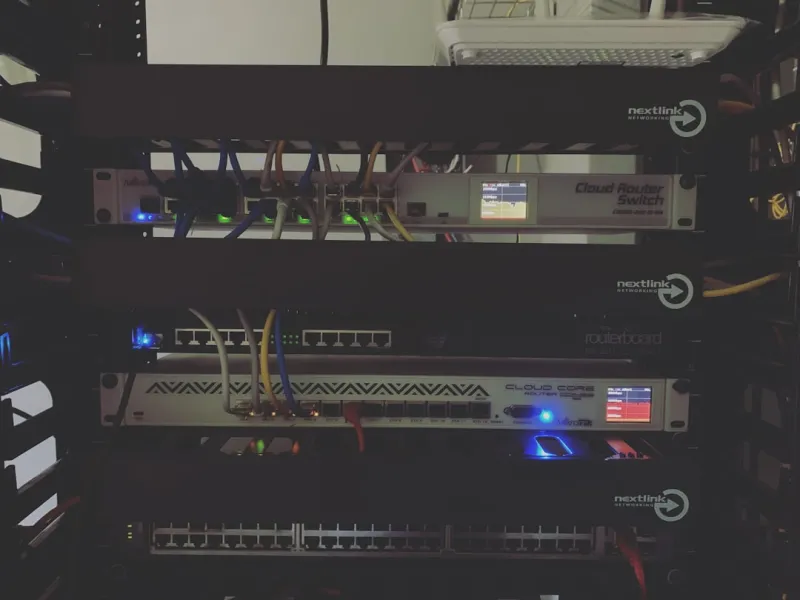
Many power users assume that a high‑performance network requires an exorbitant budget, but with careful planning, you can assemble a lab that rivals a small data center. I started with a modest 1U rackmount switch that supports 2.5 GbE on every port, then added a handful of 10 GbE uplink modules as my bandwidth needs grew. Pairing this with a low‑cost single‑board computer running pfSense gave me a flexible firewall without the licensing fees of enterprise appliances. For storage, I embraced NVMe over Fabrics, allowing my AI workstations to access fast storage across the network without bottlenecks. If you’re curious about storage strategies, check out Why Modern Power Users Must Rethink Their Hard Drive Strategy for a deep dive on NVMe and tiered storage. The key is modularity: choose components that can be upgraded individually, so you never have to replace the entire stack when technology advances.
Future‑Proofing with Modular Networking Hardware
When I first designed my network, I made a conscious decision to avoid proprietary lock‑in by selecting hardware that supports open standards and modular expansion. This philosophy is the cornerstone of the guide Future‑Proof Your Network: Power‑User Strategies for 2026. By opting for switches with interchangeable line cards, I can seamlessly add 40 GbE or even 100 GbE ports as my data demands skyrocket. Likewise, my wireless backbone is built on a modular AP platform that lets me swap out radios to adopt future Wi‑7 or even Wi‑8 standards without replacing the entire chassis. I also keep an eye on emerging technologies like Ethernet over Powerline (EoP) 2.0, which could serve as a fallback in case a physical cable run becomes impractical. The overarching principle is to think of each network component as a building block—invest in quality, standards‑compliant pieces now, and you’ll save both time and money when the next wave of innovation arrives.
Integrating Edge AI and Low‑Latency Applications
Edge AI workloads are becoming commonplace in power‑user environments, especially for real‑time video analytics, autonomous drone control, and on‑premise inference for large language models. To support these tasks, my network now incorporates dedicated low‑latency paths that bypass standard routing layers, using VLAN tagging and SR‑IOV (Single Root I/O Virtualization) to deliver sub‑millisecond response times. This configuration allows my AI inference server to receive raw sensor data directly from a 4K security camera, process it locally, and send actionable alerts back to a mobile device—all without noticeable delay. Additionally, I employ network function virtualization (NFV) to run lightweight AI services on the switch itself, offloading tasks like packet inspection and traffic classification. The result is a highly responsive ecosystem where compute and networking are tightly coupled, enabling use cases that were previously limited to enterprise data centers.
Wrapping Up: The Power‑User’s Networking Playbook for 2026
In a world where every device is a potential data source and AI is reshaping how we interact with our networks, the power‑user’s approach must be both proactive and adaptable. From embracing Wi‑7 mesh for ubiquitous coverage to leveraging AI‑driven orchestration for real‑time optimization, the strategies outlined above can help you build a network that not only meets today’s demands but also scales gracefully into the future. Remember to scrutinize your ISP’s SLA, invest in modular hardware, and layer your security defenses beyond the traditional firewall. By treating your network as a living system—one that you monitor, tune, and evolve—you’ll stay ahead of the curve and keep your digital life running at peak performance. Stay curious, stay secure, and keep pushing the limits of what a home network can achieve.