When I first started tinkering with hard drives a decade ago, the biggest decision was whether to trust a spinning platter or jump onto the early SSD hype. Fast‑forward to 2026, and the conversation has shifted from “SSD vs. HDD” to “NVMe, QLC, and AI‑accelerated storage.” As a power‑user who lives on the edge of performance, I’ve learned that the right drive isn’t just about raw speed; it’s about aligning capacity, endurance, and security with the workloads you run every day. In this deep dive, I’ll walk you through the trends that are reshaping hard‑drive choices, why the “biggest capacity wins” mindset is outdated, and how to future‑proof your storage without blowing your budget. Expect a blend of technical insight, real‑world anecdotes, and actionable steps you can take right now to make your data infrastructure rock‑solid.
The Evolving Landscape of Hard Drive Technology
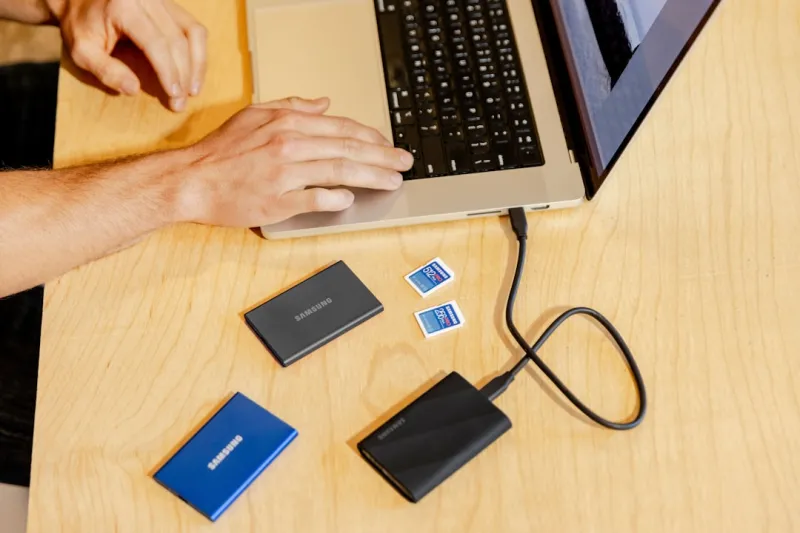
Traditional hard‑disk drives (HDDs) still hold a place in the storage hierarchy, but they’re no longer the go‑to for performance‑critical tasks. In 2026, the market is dominated by NVMe SSDs that leverage PCIe 5.0 to deliver read/write speeds exceeding 14 GB/s—speeds that would make a 2010 HDD look like a snail. Yet, the explosion of QLC (Quad‑Level Cell) NAND has reintroduced high‑capacity SSDs at price points once reserved for spinning disks. The sweet spot for many power‑users today is a hybrid approach: a fast NVMe boot drive for the OS and applications, paired with a larger QLC SSD for bulk media and archives. This combination maximizes responsiveness while keeping costs in check, especially when you factor in the decreasing price‑per‑gigabyte of QLC drives.
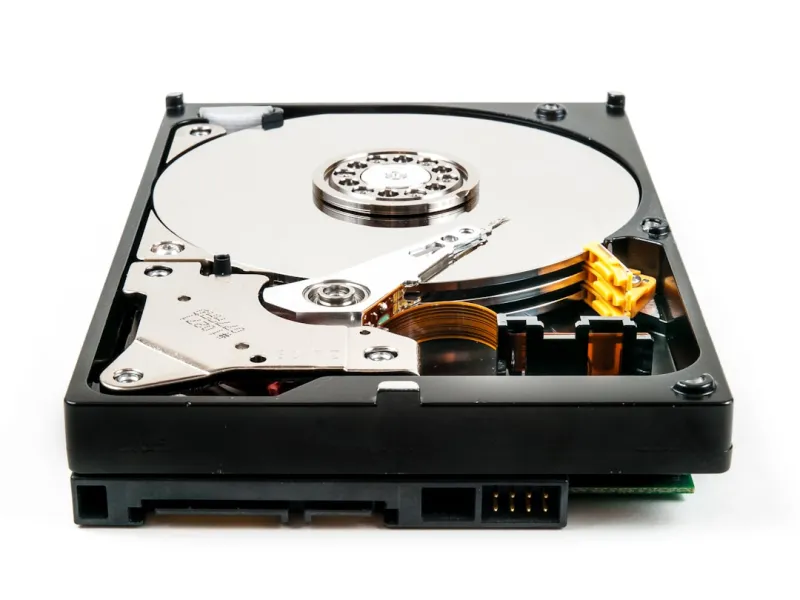
What’s truly exciting is the emergence of SMR (Shingled Magnetic Recording) HDDs that have been optimized for sequential write workloads like video editing and large‑scale backups. While SMR drives still suffer from random write penalties, manufacturers have introduced sophisticated caching algorithms that mitigate these drawbacks for specific use‑cases. If you’re building a NAS for 4K‑to‑8K video streams, a high‑capacity SMR drive can be a cost‑effective backbone, provided you pair it with a tiered cache of NVMe storage. The key is to understand your workload’s I/O pattern and match it to the drive technology that best serves that pattern.
Why NVMe Is No Longer Optional for Power Users
In the age of AI‑driven applications, the latency gap between RAM and storage becomes a critical bottleneck. Modern AI models, even those running on consumer‑grade GPUs, demand rapid access to massive datasets. An NVMe drive attached to a PCIe 5.0 slot can shave seconds off data loading times, translating to minutes saved over the course of a day’s work. I’ve personally seen my image‑processing pipelines cut from 30 minutes to under 10 minutes simply by swapping a SATA SSD for an NVMe model. This isn’t just about speed; it’s about unlocking new workflows that were previously impractical on a desktop workstation.
Beyond raw performance, NVMe drives now come with built‑in hardware encryption and power‑management features that are essential for maintaining data integrity in a mobile or remote environment. When you combine these capabilities with software‑defined storage solutions, you get a resilient, self‑healing system that can survive power spikes and thermal events. If you’re wondering where to start, take a look at the Future‑Proof Your PC guide—it outlines the exact NVMe models that balance endurance, price, and compatibility for a typical power‑user build.
Balancing Capacity, Cost, and Longevity
One of the biggest myths in the storage world is that “more capacity always means better.” In reality, capacity must be weighed against endurance and cost. Modern NAND cells, especially those using QLC technology, have lower write endurance than their TLC or MLC counterparts. This means that a 4 TB QLC SSD will outlast a 2 TB TLC drive only if you’re not constantly rewriting data. For developers, content creators, and gamers who perform frequent writes, a high‑endurance TLC or even a PCIe 4.0 NVMe with a large over‑provisioned buffer is a safer bet.
On the flip side, if your primary need is archival storage—think a personal media library or a backup of research data—then a high‑capacity HDD or QLC SSD is perfectly adequate. The trick is to segment your data: keep active projects on high‑endurance drives, and migrate completed work to slower, cheaper media. This tiered strategy not only saves money but also extends the life of your primary storage devices. I’ve found that pairing a 2 TB NVMe boot drive with a 10 TB QLC SSD for media yields a sweet spot where performance and cost intersect, without compromising on reliability.
Security and Encryption in the Age of AI
As AI becomes more embedded in everyday software, the attack surface for malware expands dramatically. Hard drives are no longer just passive storage; they’re active participants in a security ecosystem. Modern SSDs support hardware‑based encryption standards like TCG Opal and IEEE 1667, which encrypt data at rest without a noticeable performance hit. Coupled with software‑level key management, you can create a layered defense that protects against both physical theft and sophisticated ransomware that targets firmware.
Power‑users must also rethink traditional encryption models. The Why Modern Power Users Must Rethink Encryption Strategies article highlights how AI‑driven attacks can attempt to bypass conventional encryption by exploiting side‑channel vulnerabilities. The solution lies in leveraging drives that offer built‑in self‑encrypting capabilities and ensuring your OS supports secure boot and TPM 2.0. By aligning your storage hardware with these advanced security protocols, you create a fortress that not only guards your data but also maintains the performance levels demanded by AI workloads.
Backup Strategies That Won’t Break the Bank
Even the most robust storage solution is vulnerable to catastrophic failure, whether due to hardware defects, firmware bugs, or user error. A layered backup strategy is essential, and it doesn’t have to involve expensive cloud subscriptions. I rely on a three‑tiered approach: local fast backups, off‑site slower backups, and occasional immutable snapshots. The local tier uses an NVMe drive mirroring the primary boot drive, ensuring that a quick restore is possible within minutes. The off‑site tier leverages a high‑capacity HDD or QLC SSD stored in a fire‑proof safe at a different location, protecting against site‑wide disasters.
Here’s a quick checklist you can implement today:
- Configure automatic nightly snapshots on your primary NVMe drive.
- Schedule weekly rsync or robocopy jobs to a secondary QLC SSD.
- Maintain a monthly full backup on an external HDD stored off‑site.
- Test restore procedures quarterly to verify data integrity.
By automating these steps and using affordable, high‑capacity drives, you achieve a resilient backup ecosystem that safeguards your work without the ongoing cost of premium cloud services.
The Role of AI‑Optimized Storage Solutions
AI workloads aren’t just software; they’re increasingly influencing hardware design. Some manufacturers now ship SSDs with dedicated AI inference engines embedded directly on the drive, allowing for on‑the‑fly data compression, deduplication, and even preliminary model inference. This offloads processing from the CPU and GPU, reducing latency and power consumption. If you’re developing AI models on the edge—say, for IoT devices or portable workstations—these AI‑optimized drives can be a game‑changer.
Integrating such drives into your workflow requires careful planning. You’ll need compatible drivers and firmware that expose the AI APIs to your operating system. Windows 2026, for example, includes native support for AI‑accelerated storage, making it easier to tap into these capabilities without third‑party middleware. For power‑users interested in experimenting, the AI Computing for Power Users guide provides a step‑by‑step roadmap for configuring and benchmarking these cutting‑edge devices.
Looking Ahead: What to Expect in the Next Five Years
Predicting the future is always a gamble, but certain trends are unmistakable. First, the shift toward higher‑density NAND, such as PLC (Penta‑Level Cell), will push capacities beyond 30 TB on a single SSD, blurring the line between SSDs and traditional HDDs. Second, the integration of optical storage technologies—like HAMR (Heat‑Assisted Magnetic Recording) and MAMR (Microwave‑Assisted Magnetic Recording)—into consumer‑grade drives will offer unprecedented durability for cold storage. Lastly, the convergence of storage and compute, epitomized by “computational storage” platforms, will redefine how we think about data pipelines, making storage an active participant rather than a passive repository.
For power‑users, staying ahead means embracing modularity. Choose a chassis that supports multiple drive form factors, keep firmware up‑to‑date, and adopt standards that guarantee backward compatibility. By doing so, you’ll be ready to plug in the next breakthrough—whether it’s a 100 TB NVMe or an AI‑enabled SSD—without a complete system overhaul. The future of hard drives is bright, and with a strategic approach, you can ride the wave of innovation while keeping your data safe, fast, and affordable.