When I first cracked open my new build in early 2026, the scent of fresh silicon and the soft hum of a 12‑stage power delivery system reminded me why I’m obsessed with hardware. The industry has reached a tipping point where raw horsepower meets intelligent adaptation, and as a self‑confessed power‑user, I can’t help but dissect every nuance. From AI‑enhanced GPUs that offload inference workloads to motherboards that reconfigure PCIe lanes on the fly, the hardware ecosystem is no longer a static stack—it’s a living, breathing platform that learns from the tasks you throw at it. In this post I’ll walk through the components that are redefining what a “future‑ready” PC looks like, share the pitfalls I’ve learned to avoid, and sprinkle in a few insider links that will help you navigate the maze with confidence.
AI‑Driven Graphics: More Than Just Pixels
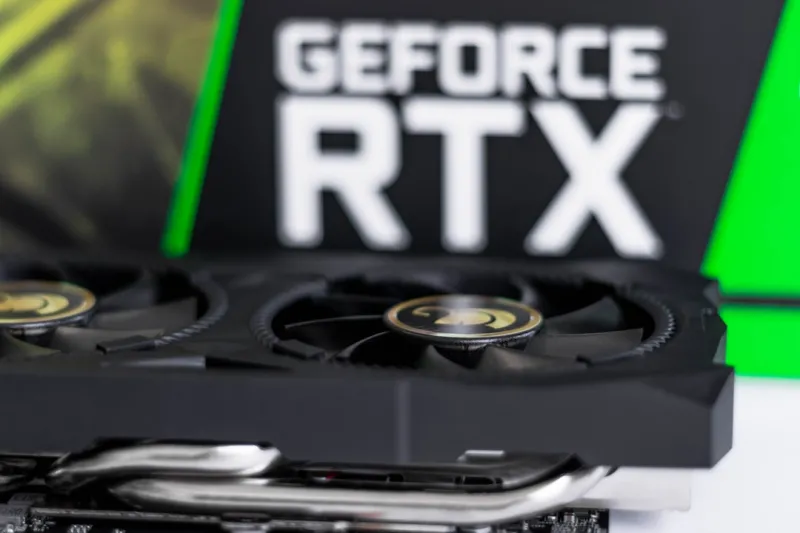
The graphics card market in 2026 is dominated by AI‑centric architectures. Nvidia’s RTX 7 series and AMD’s Radeon X‑Fusion chips embed dedicated tensor cores that accelerate everything from real‑time ray tracing to large language model inference. What’s groundbreaking is the on‑board firmware that dynamically reallocates compute blocks based on workload patterns, meaning a single GPU can seamlessly switch between gaming, video rendering, and AI research without a driver reboot. As a power user, I’ve begun to benchmark these cards not just on FPS but on “AI throughput per watt,” a metric that matters when you’re running multiple containers on a single workstation. The key takeaway? When you’re selecting a GPU, look beyond the core count—evaluate the AI accelerator’s software stack, its compatibility with open‑source frameworks, and the availability of firmware updates that keep the chip future‑proof.
Memory Evolution: From Capacity to Contextual Awareness
DDR6 and LPDDR6 have finally hit mainstream adoption, delivering up to 64 GB per DIMM module with latencies that feel almost nostalgic compared to the DDR5 era. But the real game‑changer is the integration of on‑module AI that predicts memory access patterns and pre‑emptively loads cache lines, shaving milliseconds off load times for data‑intensive applications. I’ve seen this in action when training transformer models locally; the system anticipates the next batch of parameters and pre‑fetches them, resulting in smoother training curves. However, with great capacity comes greater complexity—timing mismatches can trigger dreaded blue screens or random reboots. If you ever find yourself chasing phantom memory errors, my deep‑dive on Mastering RAM Troubleshooting: A Power‑User’s Blueprint for 2026 walks you through diagnostic tools, BIOS tweaks, and stress‑test routines that keep your system stable under load.
Storage: PCIe 6.0 and the Rise of Hyper‑Fast NVMe
Speed demons rejoice: PCIe 6.0 SSDs now breach the 16 GB/s threshold, shaving minutes off large file transfers and enabling near‑instantaneous application launches. These drives leverage PAM‑4 signaling and advanced error‑correction algorithms, but they also demand a motherboard with robust lane allocation and sufficient thermal headroom. I’ve paired a 4 TB PCIe 6.0 drive with a custom heat‑sink and a firmware that dynamically throttles write amplification based on workload intensity. The result is a storage solution that maintains sustained performance even during prolonged 4K video editing sessions. When building, ensure your M.2 slots are positioned near the CPU’s heat spreader for optimal cooling, and consider a secondary SATA SSD for archival data to keep the primary NVMe lane free for mission‑critical tasks.
Choosing the Right Motherboard: The Backbone of Flexibility
In 2026, motherboards have become the command center of AI‑augmented PCs. The newest Z‑790‑E Extreme boards feature an adaptive PCIe controller that can re‑map lanes in real time, allowing you to shift bandwidth from a GPU to an NVMe drive on the fly. This is a boon for creators who toggle between rendering and deep‑learning workloads throughout the day. Equally important is the inclusion of a dedicated AI co‑processor on the board itself, handling background tasks like power‑profile optimization and predictive fan curves. For anyone who’s ever felt overwhelmed by the sheer number of options, my guide on Mastering Motherboard Selection: A Power‑User’s Blueprint for 2026 breaks down the critical features—VRM phases, BIOS extensibility, and integrated networking—so you can match a board to your specific use case without second‑guessing.
Power Delivery and Efficiency: Sustainable Performance
Power supplies have finally caught up with the demand for both raw wattage and green computing. 1200 W 80+ Platinum units now incorporate GaN (gallium nitride) technology, delivering higher efficiency at lower temperatures and reducing overall system heat output. This matters because a cooler PSU translates to less strain on your case’s airflow and quieter operation. I’ve switched to a fully modular GaN PSU with a digital control panel that reports real‑time efficiency curves to my OS, allowing me to fine‑tune the power curve for different profiles—gaming, content creation, or AI training. Moreover, the new “Eco‑Mode” can cap output during low‑intensity tasks, cutting energy consumption by up to 15 % without sacrificing performance. When selecting a PSU, prioritize units with a high amperage rating on the +12 V rail and look for firmware that can be updated to keep pace with evolving component demands.
Advanced Cooling: AI‑Controlled Thermal Management
Cooling solutions have become as smart as the CPUs they protect. Modern AIO coolers now embed micro‑controllers that adjust pump speed and fan curves based on real‑time temperature, load, and even ambient humidity. The most impressive systems integrate with the OS to predict thermal spikes before they happen, pre‑emptively ramping up coolant flow to keep the silicon in its optimal thermal envelope. In my latest build, I paired a 360 mm AI‑enhanced radiator with a motherboard‑linked thermal sensor network. The result is a near‑silent operation during light tasks and a rapid response during intensive AI model training, keeping GPU temperatures below 70 °C even under sustained 300 W loads. For those still skeptical about liquid cooling, consider a hybrid solution that combines a high‑static pressure fan array with a low‑profile radiator for a balance of performance and reliability.
Case Design and Cable Management: The Unsung Heroes
While the internals get most of the glory, the chassis you choose can make or break the overall experience. In 2026, cases are designed with modular panels, built‑in cable routing channels, and magnetic dust filters that can be removed without tools. I gravitated toward a tempered‑glass case with a removable side panel that doubles as a workstation surface, allowing quick access for upgrades—a feature that aligns perfectly with the “future‑ready” ethos discussed in Building a Future‑Ready PC: The Power‑User’s Guide to 2026 Hardware. Proper cable management not only improves airflow but also reduces electromagnetic interference, which is critical when you have high‑frequency AI accelerators and multiple NVMe drives running in close proximity. Use braided sleeved cables, zip ties, and the case’s built‑in Velcro straps to keep everything tidy, and you’ll notice a measurable difference in thermal performance and acoustic levels.
Synergy with Software: The OS as a Dynamic Partner
Hardware advances are only as good as the software that drives them. Modern operating systems in 2026 come equipped with AI‑driven kernels that allocate resources intelligently across CPUs, GPUs, and dedicated accelerators. This means you can set a “creative” profile that tells the OS to prioritize GPU memory for video rendering while nudging CPU cores toward background compression tasks. The integration extends to power‑management APIs that allow your PSU’s digital panel to adjust voltage rails on the fly based on OS signals, achieving an unprecedented level of efficiency. As a power user, I’ve taken advantage of these capabilities by scripting custom power plans that switch between “Deep Learning” and “Gaming” modes with a single keystroke, ensuring the hardware operates at peak performance for each scenario.
Looking Ahead: Build with Flexibility in Mind
The lesson I’ve learned over the past decade is simple: the best hardware builds are those that anticipate change. Whether you’re a gamer, a developer, or a data scientist, the components you select today should support tomorrow’s workloads. That means choosing a motherboard with extra PCIe lanes, a PSU that can handle future wattage spikes, and a cooling solution that scales with higher thermal demands. Stay informed, keep your firmware up to date, and don’t shy away from experimenting with AI‑augmented peripherals. As we continue to push the envelope in 2026, the line between hardware and software blurs, offering power users like us a playground of possibilities. Ready to start your next build? Dive into the resources above, and let’s shape the future of computing together.