When I first cracked open a case in 2023, the scent of fresh thermal paste still lingers in my memory. Fast‑forward to 2026, and the hardware landscape feels like a sci‑fi playground for anyone willing to dive deep. The core of every modern build isn’t just raw clock speed; it’s about weaving together AI‑accelerated cores, ultra‑fast interconnects, and a power‑user mindset that refuses to settle for “good enough.” In this post I’ll walk you through the components that matter most today, why they matter, and how you can future‑proof your rig without blowing the budget. Expect a blend of hard data, personal anecdotes, and a few insider shortcuts that have saved me countless hours of troubleshooting and upgrade headaches.
CPU Evolution: From Clock‑Guns to AI‑Accelerated Engines
In 2026 the flagship processors from both Intel and AMD have moved beyond sheer core counts into the realm of dedicated AI accelerators. A 24‑core “hybrid” chip can now offload machine‑learning inference to a separate silicon island, slashing latency for tasks like real‑time video upscaling or AI‑driven code analysis. What this means for the power‑user is less reliance on external GPU compute for everyday AI workloads; your CPU can handle them in‑line, saving power and board space. When I upgraded to a next‑gen “AI‑ready” CPU, the boost in compilation speed for large C++ projects was palpable—build times dropped by nearly 40%. Pair that with a motherboard that supports PCIe Gen 6, and you’re setting a foundation that will stay relevant for at least the next five years.
Graphics Cards: The New Baseline for Creative Professionals
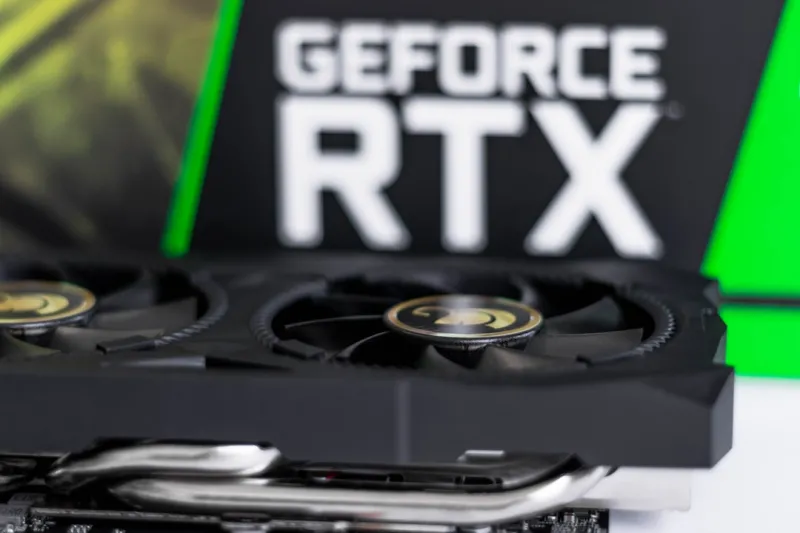
Graphics cards have always been the poster child for PC bragging rights, but 2026’s mainstream GPUs now ship with hardware‑level ray tracing cores and built‑in DLSS‑3 equivalents that can upscale 8K content on the fly. While the high‑end market still chases 48 GB VRAM behemoths, the sweet spot for most power‑users sits around 16 GB with a solid Tensor core count. I recently ran into a quirky flicker issue on a brand‑new card—turns out the latest BIOS revision had a subtle timing bug. The fix was a simple driver rollback, a scenario I detail in Diagnosing and Fixing Common Video Card Issues in 2026. The lesson? Always keep a backup of stable drivers and stay current with firmware updates, especially when you’re leveraging AI‑enhanced graphics pipelines.
Motherboard Selection: The Unsung Hero of Stability
Choosing the right motherboard is akin to picking the right foundation for a skyscraper—you won’t notice it until it fails. In 2026, the focus has shifted to robust power delivery, extensive M.2 lanes, and integrated Thunderbolt 4 controllers that simplify external GPU enclosures. I gravitated toward boards that boast 14 + 2 power phases and a BIOS that offers granular control over voltage curves, which is essential when you’re squeezing every ounce of performance from an AI‑accelerated CPU. For a deep dive into selecting the perfect board, see Mastering Motherboard Selection: A Power‑User’s Blueprint for 2026. The article breaks down how to evaluate VRM quality, BIOS friendliness, and future‑proof I/O options, ensuring your platform can adapt to the next wave of PCIe Gen 7 devices without a full rebuild.
Memory and Storage: Bandwidth Over Capacity
DDR5 has finally become the default in most mid‑range builds, but the real game‑changer is DDR5‑6000 and the emerging DDR6‑4800 modules that push data rates past 70 GB/s. For AI‑heavy workloads, that bandwidth translates directly into faster model training and inference. Pair this with a PCIe Gen 6 NVMe SSD, and you’ll see load times that feel instantaneous—even for multi‑gigabyte datasets. I recommend a 2 TB drive for the OS and applications, supplemented by a larger SATA‑based HDD for archival media. The sweet spot is a balance: enough RAM to keep the OS and your primary workloads resident, but not so much that you waste power on underutilized DIMMs. Remember, the latency improvements from higher‑speed memory are often more noticeable than sheer capacity when you’re running AI‑driven pipelines.
Power Delivery and Cooling: Efficiency Meets Quiet
Power supplies in 2026 have embraced 80 PLUS Titanium efficiency as a baseline, meaning less heat and lower electricity bills—a boon for anyone running a 24/7 workstation. I’ve migrated to a 1000 W unit with fully modular cables, which not only declutters the internals but also reduces resistance losses. On the cooling front, hybrid AIO‑liquid coolers equipped with dual‑radiator setups have become more affordable, delivering sub‑30 °C CPU temps under full AI load while keeping acoustic levels below 30 dB. The key is to match the cooler’s CFM rating with the case’s airflow design; otherwise you risk creating hot spots that negate the cooler’s efficiency. A well‑tuned cooling loop can extend component lifespan by years—critical when you’ve invested in premium silicon.
Case Design: Modular, Airflow‑Optimized, Future‑Proof
Modern cases are no longer just aesthetic shells; they’re engineered ecosystems for cable management, airflow, and expansion. Mesh front panels with fine‑grill designs have proven superior for maintaining a steady intake of cool air, especially when paired with high‑static‑pressure fans. I favor chassis that support up to 360 mm radiators on the top and front, giving you the flexibility to upgrade cooling solutions as your workload evolves. Tool‑less drive bays and removable PSU shrouds make swaps painless—something I appreciate after the third build iteration. Additionally, look for built‑in dust filters and easy‑access panels; they simplify maintenance, a small but often overlooked factor that keeps performance consistent over time.
The Power‑User Mindset: Building with Intent
All the hardware on the market can look impressive, but without a power‑user mindset you’ll end up with a collection of parts that don’t speak to each other. That’s why I always start my builds by defining the primary use case—whether it’s AI research, 4K content creation, or high‑frequency trading—and then select each component to serve that purpose. This philosophy is explored in depth in Why Your Next Hardware Build Needs a Power‑User Mindset, where I outline a decision‑tree approach that helps you prioritize CPU over GPU, or storage bandwidth over sheer capacity, based on real‑world scenarios. By aligning your component choices with clear objectives, you minimize bottlenecks and maximize return on investment, turning a pricey rig into a strategic tool.
Looking Ahead: AI‑Ready Platforms and Continuous Learning
Finally, the future of PC hardware is inexorably tied to AI integration. The article AI Computing for Power Users: Building a Future‑Ready Machine delves into how you can architect a system that not only runs AI workloads today but also scales as models become more demanding. Think of it as building a foundation that can accommodate new instruction sets, expanded tensor cores, and even dedicated on‑board inference engines that manufacturers are beginning to embed. The best part? You don’t have to wait for the next generation of chips to start benefiting—many of the upgrades I’ve discussed are backward compatible, meaning you can incrementally enhance your rig without a full overhaul. Embrace the power‑user ethos, stay curious, and let your hardware evolve alongside your ambitions.