When I first started building PCs as a hobby back in the early 2010s, the idea of a “future‑proof” machine felt like a myth—something you could chase forever but never quite catch. Fast‑forward to 2026, and the landscape has shifted dramatically. Today, a power‑user’s definition of future‑proof isn’t just about raw clock speeds; it’s a holistic approach that blends AI‑ready processing, ultra‑fast storage, and network resilience into a single chassis. In this article, I’ll walk you through the hardware trends that are reshaping our rigs, share practical tips for selecting components that won’t feel obsolete in a year, and sprinkle in some of my favorite deep‑dive resources. Whether you’re a developer who needs seamless GPU acceleration for machine‑learning models or a creator who craves buttery‑smooth 8K video editing, the principles I lay out will help you build a system that feels as current today as it will in the next wave of software releases.
CPU: The Brain That Learns With You
The central processing unit has become more than a number‑crunching workhorse; it’s now an on‑chip AI accelerator. In 2026, the market is dominated by hybrid architectures that combine high‑performance cores for bursty tasks with efficiency cores that handle background services and AI inference with minimal power draw. When choosing a CPU, look beyond the traditional GHz metric and consider the size of the AI instruction set, the presence of integrated tensor cores, and the chipset’s support for PCIe 5.0 and DDR6 memory. Brands are also offering unlocked models that let you tweak power limits and core ratios, giving you the flexibility to tailor performance for gaming, content creation, or large‑scale data processing. If you’re unsure where to start, my guide on Unlocking AI Computing for the Modern Power User breaks down the most important specifications and shows you how to benchmark real‑world AI workloads on a variety of platforms.
GPU: From Pixels to Parallel Processing
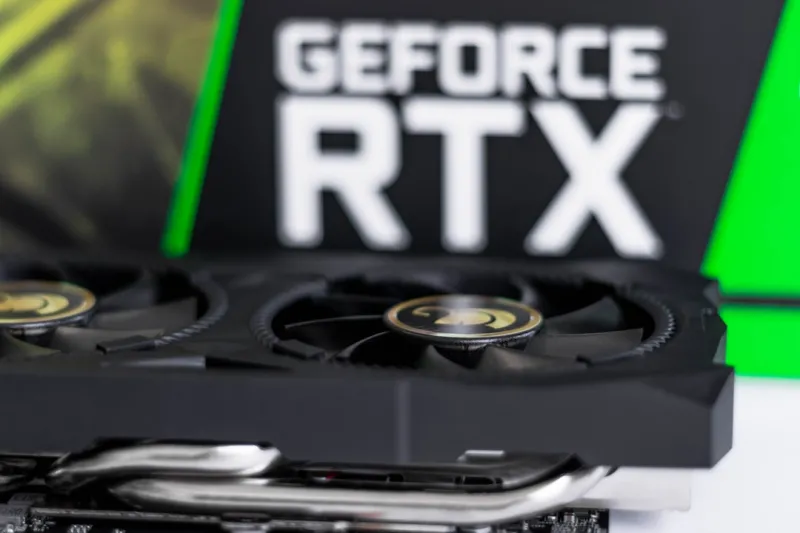
Graphics cards have transcended their original purpose of rendering frames, evolving into the go‑to platform for parallel compute tasks. The latest RTX 50 series and AMD’s Radeon X 8000 lineup both feature dedicated ray‑tracing cores and massive tensor units that accelerate everything from AI image upscaling to scientific simulations. When assessing a GPU for a future‑proof build, pay attention to VRAM capacity—12 GB is becoming the baseline for 4K gaming, while 24 GB or more is recommended for deep‑learning workloads that manipulate large tensors. Also, consider the card’s power envelope and cooling solution; a well‑designed blower or hybrid cooler can keep temperatures low even under sustained AI inference, extending the card’s lifespan. Don’t overlook the importance of driver support—regular updates ensure compatibility with the latest APIs like DirectX 13 and Vulkan 2, which are critical for both gaming fidelity and compute efficiency.
Memory: Speed, Capacity, and the New DDR6 Standard
Memory has always been the bottleneck that sneaks up on the unsuspecting builder, and in 2026 the introduction of DDR6 brings a fresh set of variables to the table. DDR6 offers data rates north of 9,600 MT/s, which translates to noticeably faster load times for large datasets and smoother multitasking when you have dozens of browser tabs and heavy IDEs open simultaneously. However, speed is only part of the equation; capacity matters just as much, especially for creators handling 8K video or developers training neural nets locally. I recommend a minimum of 32 GB for a power‑user rig, with 64 GB or more if you’re regularly running virtual machines or container clusters. For troubleshooting, my step‑by‑step guide on Mastering RAM Troubleshooting: A Power‑User’s Step‑by‑Step Playbook walks you through stress‑testing, BIOS tweaks, and when to replace modules before they cause elusive crashes.
Storage: Balancing Speed, Capacity, and Longevity
The storage hierarchy in 2026 is dominated by PCIe 5.0 NVMe drives that can push sequential read speeds past 14 GB/s, dwarfing the SATA SSDs that were once the gold standard. While those blistering numbers are impressive, the real world benefit comes from reduced load times for massive project files and near‑instant OS boot. That said, speed isn’t the only factor; endurance matters, especially for workloads that involve constant writes, like video rendering caches or large‑scale database logging. Manufacturers now rate drives in TBW (terabytes written) and DWPD (drive writes per day), making it easier to match a drive’s durability to your use case. For a balanced approach, I often pair a high‑end 4‑TB PCIe 5.0 SSD for the OS and active projects with a larger, slower 8‑TB SATA‑based SSD or even a hybrid SSHD for archival storage. My deep dive on Hard Drive Mastery in 2026: Balancing Speed, Capacity, and Longevity outlines how to choose the right mix and configure RAID arrays for redundancy without sacrificing performance.
Power Delivery and Cooling: Keeping the Beast Tamed
A high‑performance system draws a lot of juice, and the power supply unit (PSU) is the unsung hero that ensures every component receives clean, stable electricity. In 2026, 80 Plus Platinum and Titanium certifications are the norm for power‑hungry rigs, delivering efficiencies above 94 % even at partial loads. Look for modular designs to reduce cable clutter, and make sure the PSU provides enough headroom for future upgrades—aim for at least 20 % more wattage than your current configuration requires. Cooling has also seen a leap forward with hybrid liquid‑cooling loops that combine CPU and GPU blocks, allowing you to achieve sub‑60 °C temperatures under sustained AI workloads. When selecting a cooler, consider the radiator size relative to your case’s airflow, the quality of the pump, and the noise profile—after all, a quiet workspace is essential for deep focus. Proper cable management and dust filters prolong component life, so don’t skimp on the little details that keep the system running smoothly for years.
Motherboard and Networking: The Backbone of Future‑Proofing
The motherboard is the connective tissue that ties all your high‑end components together, and in 2026 it’s become a platform for both performance and connectivity. Look for boards that support PCIe 5.0 across multiple slots, enabling you to add additional GPUs, NVMe drives, or accelerator cards without bandwidth bottlenecks. USB4 and Thunderbolt 4 ports provide versatile, high‑speed external connectivity for fast external SSDs, docking stations, or VR headsets. Crucially, network integration has moved beyond 2.5 GbE; many flagship boards now ship with 10 GbE Ethernet and built‑in Wi‑Fi 7, delivering ultra‑low latency for cloud‑based development and large file transfers. If you’re serious about a resilient network, I recommend reading Future‑Proof Networking for Power Users: Speed, Security, and Scalability, which details how to configure VLANs, enable QoS, and secure your connection against emerging threats while maintaining top‑tier throughput.
Putting It All Together: A Checklist for the Modern Power User
Building a future‑proof PC in 2026 is less about chasing the highest specs and more about creating a balanced ecosystem that can adapt to new software paradigms. Start by defining your primary workloads—AI development, 8K video editing, or competitive gaming—and allocate budget accordingly: invest in a strong CPU with AI extensions, a GPU with ample VRAM, and fast DDR6 memory. Pair those with a tiered storage solution that prioritizes speed for active projects and capacity for archives. Don’t forget a high‑efficiency PSU and a robust cooling loop to keep thermals in check, and select a motherboard that offers ample PCIe lanes and cutting‑edge networking options. Finally, future‑proofing is an ongoing process; schedule regular firmware updates, monitor component health with tools like HWInfo, and stay informed about emerging standards. By following this roadmap, you’ll craft a machine that not only meets today’s demands but also stays relevant as technology continues its rapid evolution.