When a video card starts acting up, the first instinct for many gamers and creators is to blame the software, but the truth is often a blend of firmware quirks, power delivery issues, and even subtle hardware fatigue. In 2026, with GPUs pushing beyond 30 teraflops and AI‑accelerated pipelines, the margin for error shrinks dramatically. I’ve spent the last decade tearing apart everything from the original GTX 580 to the newest RTX 7000 series, and one pattern keeps emerging: the most stubborn problems are those that sit at the intersection of driver layers, system BIOS, and physical wear. In this guide, I’ll walk you through a systematic, step‑by‑step process that eliminates guesswork, lets you pinpoint the exact failure point, and restores performance without a costly RMA. Whether you’re a solo streamer, a VR developer, or a PC‑building hobbyist, mastering these diagnostics will keep your rig humming long after the next driver drop.
Recognizing the Tell‑Tale Signs of GPU Distress
Before you dive into any diagnostic tool, take a moment to catalog the symptoms you’re seeing. Common red flags include sudden frame‑rate drops that don’t correlate with CPU usage, random screen artifacts such as flickering textures or “snow” on the monitor, and frequent driver crashes that force Windows to reboot into safe mode. In 2026, many users also report “black screen” moments during high‑resolution gaming sessions—often a sign that the card is hitting its thermal or power limits. Keep an eye on the Windows Event Viewer for recurring Display driver stopped responding (DSTR) events, and note whether the issue appears after a specific game update or after installing a new AI‑enhanced rendering plugin. Documenting these patterns will save you hours later, especially when cross‑referencing with known GPU firmware bugs released by manufacturers.
Driver Deep‑Dive: Updating, Rolling Back, and Clean Installs
The first line of defense is always the driver stack. Nvidia, AMD, and Intel all push quarterly releases that claim performance boosts, but they can also introduce regression bugs that manifest as instability on certain board revisions. In 2026, the industry has moved to a unified driver architecture that blends traditional raster pipelines with AI inference cores, making clean installs more critical than ever. Start by downloading the latest driver from the vendor’s website, then use a tool like DDU (Display Driver Uninstaller) in Safe Mode to strip away every trace of the previous version. After the clean install, perform a baseline benchmark—such as 3DMark Time Spy Ultra—to confirm that the card runs at expected scores. If instability persists, try rolling back to the previous stable release; many users find that the “LTS” (Long‑Term Support) branch, while a step behind on ray‑tracing features, offers rock‑solid reliability for demanding workloads.
Physical Inspection: Dust, Capacitors, and PCB Integrity
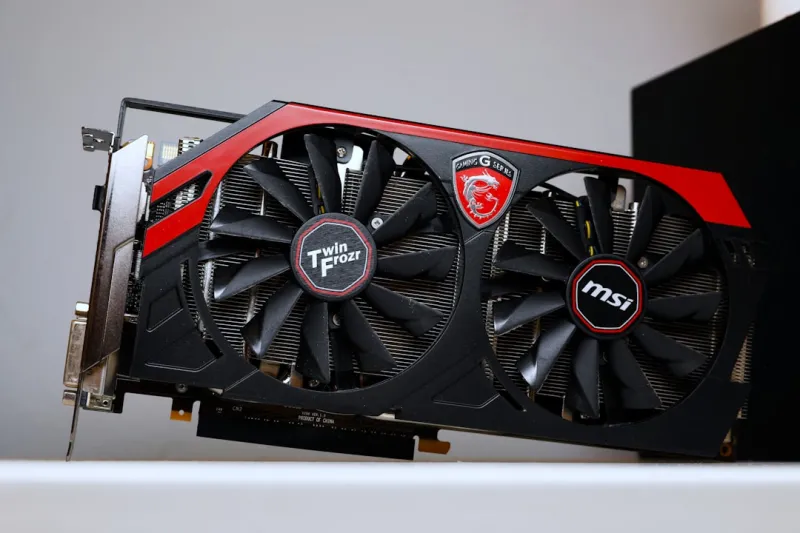
Even the most sophisticated driver tweaks won’t cure a card suffering from physical degradation. Open your case and look for signs of dust buildup on the heatsink fins and fan blades; a clogged cooler can raise GPU temperatures by 15‑20 °C, triggering thermal throttling and artifacting. While you’re there, inspect the power delivery components—especially the VRM (voltage regulator module) and the capacitors surrounding it. Bulging or leaking capacitors are a silent killer that often leads to random power drops under load. If you spot any discoloration or corrosion, it’s time for a replacement or a professional RMA. A quick sanity check: run a stress test like FurMark for 10 minutes while monitoring temperatures with HWInfo; if the card spikes above 85 °C or the fan fails to ramp up, you’ve likely identified the culprit before any software troubleshooting even begins.
BIOS/UEFI Settings and Firmware Updates
Modern GPUs ship with flashable BIOS that can be updated to address stability issues, improve power efficiency, or unlock higher clock speeds. However, flashing the wrong firmware can brick your card, so proceed with caution. First, verify that your motherboard’s BIOS is up to date; an outdated UEFI can miscommunicate with newer GPU firmware, leading to misreported power limits. Next, visit the manufacturer’s support portal and compare your card’s current BIOS version (viewable via GPU-Z) against the latest release notes. If a fix is listed for the exact problem you’re seeing—such as “artifacting on RTX 7000 series after driver 560.0”—download the official BIOS and follow the vendor’s flashing guide precisely. Remember to back up the existing BIOS using tools like NVFlash, just in case you need to revert.
Power Delivery: PSU Capacity and Cabling Checks
In 2026, high‑end GPUs regularly draw 350 W or more under peak AI workloads, and the power supply unit (PSU) must deliver clean, stable rails to avoid voltage sags. Start by confirming that your PSU meets the recommended wattage for your GPU—most manufacturers list a minimum of 750 W for the latest RTX 7000 models. Then, inspect the PCIe power connectors; loose or partially seated 8‑pin cables can cause intermittent power loss that manifests as sudden driver resets. Use a multimeter or a PSU tester to verify that each rail maintains at least 12 V under load. If you suspect the PSU is the bottleneck, consider a modular upgrade with an 80 PLUS Gold rating, which not only improves efficiency but also reduces electrical noise that can interfere with the GPU’s sensitive memory modules.
Software Conflicts: Overlay Tools, Recording Software, and OS Tweaks
Overlay applications—think Discord, Nvidia ShadowPlay, or the new AI‑driven streaming assistants—inject additional frames into the GPU pipeline and can clash with driver optimizations. In my experience, disabling all overlays and background recording utilities eliminates a surprising number of crashes. Likewise, Windows 2026 introduced a suite of AI‑enhanced visual effects that, while impressive, sometimes overload older GPUs. Navigate to Windows 2026: AI, Security, and Performance Tips and follow the recommended settings: turn off “Hardware‑accelerated GPU scheduling” if you’re on a mid‑range card, and set the Power Plan to “High performance” to prevent dynamic throttling. After making these changes, reboot and re‑run your stress tests to see if stability improves.
Benchmarking and Validation: Proving the Fix Works
Once you’ve methodically addressed drivers, hardware, firmware, and software, it’s essential to validate that the issue is truly resolved. Run a suite of benchmarks that stress different aspects of the GPU: 3DMark Fire Strike for raster performance, Blender’s Cycles render for AI‑accelerated workloads, and a VR game like Half‑Life: Alyx to test latency. Record the scores and temperatures, then compare them to the baseline you captured earlier. If the numbers are within 5 % of the manufacturer’s reference and the temperature curve stays below 80 °C, you can confidently declare the GPU healthy. For a deeper dive, use tools like GPU-Z’s sensor log to capture voltage fluctuations over a 30‑minute gaming session; a stable voltage line indicates that the PSU and VRM are performing correctly.
Future‑Proofing and Ongoing Maintenance
Even after you’ve tamed a temperamental video card, the fast pace of 2026’s AI‑centric workloads means you’ll need to stay proactive. Regularly schedule dust clean‑outs every three months, and keep an eye on firmware releases—many manufacturers now push “micro‑patches” that address AI core stability without requiring a full driver overhaul. For broader system resilience, check out How to Future‑Proof Your PC Hardware in the Age of AI, which outlines upgrade paths that keep your platform ready for next‑gen GPUs. And if you’re planning a major performance jump, the guide Upgrade Your PC Like a Pro walks you through strategic steps to balance CPU, memory, and storage upgrades alongside your GPU, ensuring you avoid bottlenecks that could reignite the same issues you just solved. By treating your video card as a living component—regularly inspected, updated, and balanced—you’ll enjoy smooth frames and reliable performance for years to come.