When you’ve spent enough nights tweaking BIOS settings, benchmarking GPUs, and chasing that elusive “perfect latency” number, you start to see the hardware landscape not as a static shelf of parts but as a living ecosystem that evolves with every new AI model, game engine, and cloud‑native workflow. In 2026, power users like us are no longer just chasing raw clock speeds; we’re engineering systems that can fluidly juggle massive tensor calculations, real‑time ray tracing, and the ever‑growing data demands of 8K content creation. This shift means rethinking every component—from the silicon that powers the core to the cables that feed it—so that the rig can stay ahead of the curve for years, not just months. In this post I’ll walk you through the hardware decisions that have become non‑negotiable this year, sprinkle in a few insider shortcuts, and show you how to future‑proof a build that feels as fresh in 2028 as it does today.
CPU & GPU: The Dual Engines Driving Modern AI
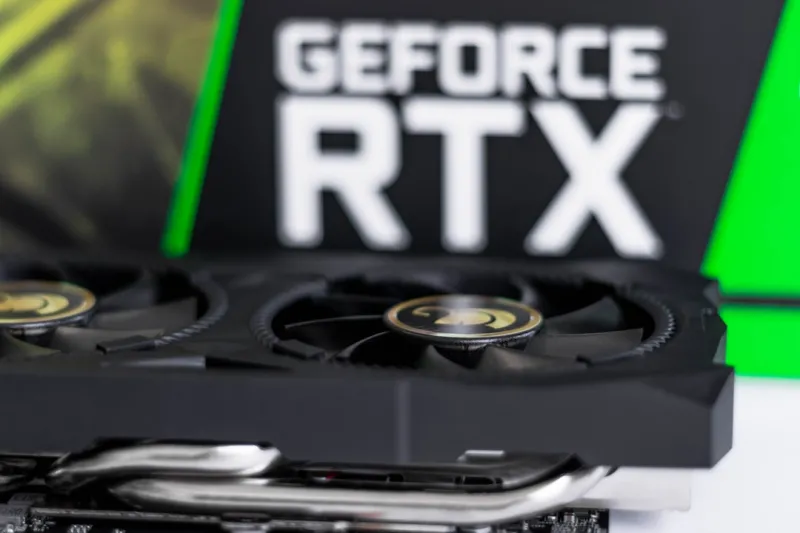
The CPU and GPU partnership has reached a new level of symbiosis in 2026. While a high‑end core‑i9 or Ryzen 9 still leads the charge for single‑threaded workloads, it’s the dedicated AI accelerators embedded in the latest RTX 5000‑series and AMD’s Radeon X‑AI chips that steal the spotlight for deep‑learning inference. These GPUs now ship with on‑die tensor cores that can process FP8 precision, slashing energy consumption while delivering up to 3× the performance of the previous generation. Pair this with a processor that offers hybrid architecture—big performance cores plus efficient efficiency cores—and you’ve got a system that can dynamically allocate resources based on the task at hand. For anyone serious about building an AI‑centric workstation, I recommend checking out building a future‑ready AI rig for a step‑by‑step guide that aligns these pieces into a cohesive whole.
Motherboard Mastery: The Unsung Hero
Choosing the right motherboard is the cornerstone of any power‑user build, yet it’s often overlooked in favor of flashier components. In 2026, the board you select must support PCIe 5.0 across multiple slots, offer robust VRM cooling for sustained overclocking, and provide native USB4 ports for the fastest peripheral connectivity. Look for chipsets that include built‑in AI acceleration support, such as Intel’s Z790‑Extreme or AMD’s X670E Extreme, because they can offload certain tasks directly to the motherboard’s embedded processors. Beyond raw specs, consider the future‑proofing features: dual‑M.2 slots with heatsinks, integrated Wi‑Fi 7, and a BIOS that supports autonomous firmware updates without user intervention. For a deep dive into the criteria that matter most, explore the ultimate motherboard guide for power users, which breaks down each element with real‑world testing results.
Storage Strategy: Speed, Capacity, and Redundancy
Storage in 2026 is no longer a simple “SSD versus HDD” debate; it’s a layered strategy that balances blistering NVMe speeds with massive, cost‑effective capacity. A typical AI workstation now sports a primary 4 TB PCIe 5.0 NVMe drive for OS, applications, and active datasets, while a secondary 8‑12 TB QLC NVMe or SATA‑based SSD acts as a high‑throughput cache for large model checkpoints. For archival and backup, a 20‑TB NAS‑grade HDD array with built‑in parity offers peace of mind without breaking the bank. The key is to map workloads to the appropriate tier: real‑time inference stays on the fastest tier, batch training can leverage the larger, slightly slower pool, and long‑term storage sits on the redundant array. My favorite blueprint for this approach lives in strategic hard‑drive choices for power users in 2026, where you’ll find a detailed matrix matching use‑cases to storage media.
Power Delivery & Cooling: Keeping the Beast Calm
Even the most efficient silicon can become a liability without solid power delivery and cooling. In 2026, 1200‑Watt Platinum‑rated PSUs have become the norm for high‑end rigs, offering enough headroom for multi‑GPU setups, extensive RGB lighting, and future expansions. Look for units that feature digitally controlled rails and built‑in power‑factor correction to maintain stable voltage under load spikes typical of AI training bursts. On the cooling front, hybrid liquid‑to‑air solutions dominate: a 360 mm AIO liquid cooler for the CPU, coupled with GPU‑specific bracketed coolers that direct airflow through the VRM and memory modules. Don’t underestimate the chassis—full‑tower cases with modular drive bays and optimized cable routing reduce turbulence and improve thermal performance. Pair these with high‑quality thermal paste and you’ll see temperature deltas of 10‑15 °C compared to legacy air‑only setups.
Networking: The Backbone of Distributed Workloads
With AI workloads increasingly distributed across local clusters and cloud endpoints, networking is the silent workhorse that can make or break productivity. Wi‑Fi 7 is finally mainstream in 2026, delivering multi‑gigabit speeds and ultra‑low latency, but for a truly future‑ready rig you’ll want a 10 GbE Ethernet backbone with support for link aggregation. A dual‑port NIC that can handle both 10 GbE and 2.5 GbE gives you flexibility to connect to high‑speed NAS devices while maintaining a backup on a slower network. Consider integrating a managed switch that supports PoE ++ for powering accessories like external AI inference boxes or high‑resolution monitors without additional power bricks. My go‑to resource for building a resilient network is future‑ready home networking strategies for power users, which walks through cabling, QoS tuning, and security best practices.
Software Optimization: Tuning Windows 12 for Peak Performance
Hardware alone won’t deliver the performance gains you crave; the operating system must be equally tuned. Windows 12, released earlier this year, brings a slew of power‑user features: a revamped scheduler that better isolates AI workloads, DirectStorage support for NVMe drives, and a lightweight “Core Mode” that strips out unnecessary services for a leaner runtime. Enable the new “Performance Power Plan” and tweak the CPU affinity settings for your training scripts to lock them onto the high‑performance cores, leaving efficiency cores free for background tasks. Additionally, leveraging the built‑in GPU driver stack’s “Compute Mode” can shave milliseconds off inference latency. For a step‑by‑step walkthrough of these tweaks, see unlocking the full potential of Windows 12 for power users, which breaks down each setting with screenshots and benchmark results.
Security & Encryption: Protecting Your Data in an AI‑Heavy World
As your rigs become vaults of proprietary models and sensitive datasets, security can no longer be an afterthought. In 2026, hardware‑based encryption has matured to the point where full‑disk AES‑256 encryption can run with negligible performance impact, thanks to dedicated security processors on modern CPUs and SSD controllers. Enable BitLocker with TPM 2.0 integration and consider a self‑encrypting drive (SED) for the secondary storage tier to add an extra layer of protection. Network security is equally vital—activate WPA3‑Enterprise for Wi‑Fi 7 connections and segment your AI traffic on a VLAN to isolate it from personal devices. For a deeper dive into the latest encryption strategies, explore unlocking the full potential of encryption for power users in 2026, which outlines the best tools and configuration steps for a hardened workstation.
Putting It All Together: A Blueprint for the Future‑Ready Power User
By now you should see how each component—CPU, GPU, motherboard, storage, power, networking, OS, and security—interlocks to form a cohesive, future‑proof system. The secret isn’t just buying the newest parts; it’s designing a modular architecture that lets you swap out a GPU or add a new storage tier without a full rebuild. Start with a robust motherboard that supports PCIe 5.0 and plenty of M.2 slots, pair it with a high‑capacity, high‑speed NVMe primary drive, and keep a secondary pool of fast, affordable SSDs for overflow. Couple that with a 1200‑Watt Platinum PSU, a hybrid cooling solution, and a 10 GbE network backbone, and you’ve built a platform ready for the AI workloads of tomorrow. Remember to revisit BIOS and OS settings after each upgrade to ensure you’re extracting every ounce of performance. With this strategy, your rig will stay relevant, powerful, and secure well beyond 2026—so you can focus on creating, innovating, and pushing the limits of what hardware can do.