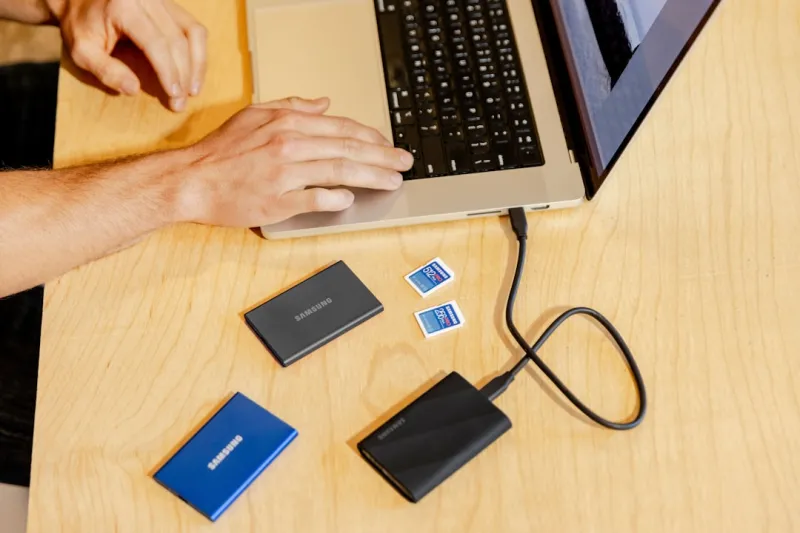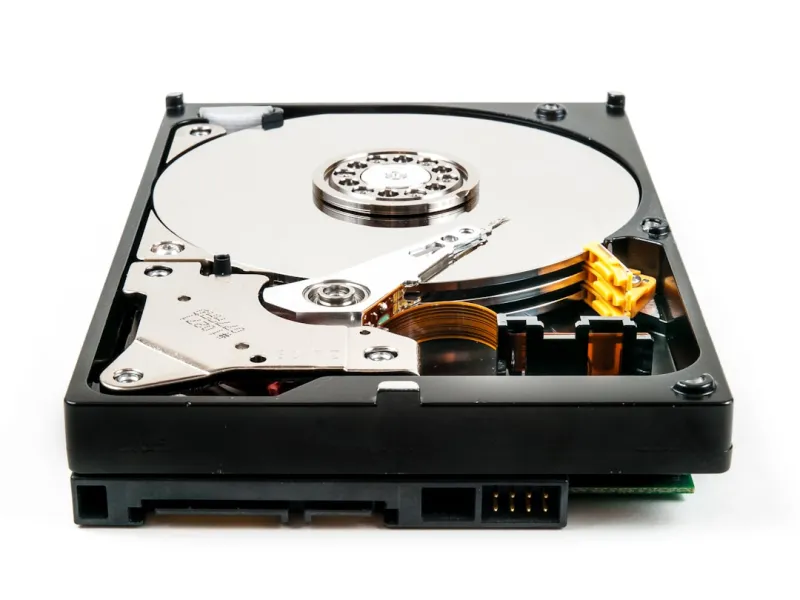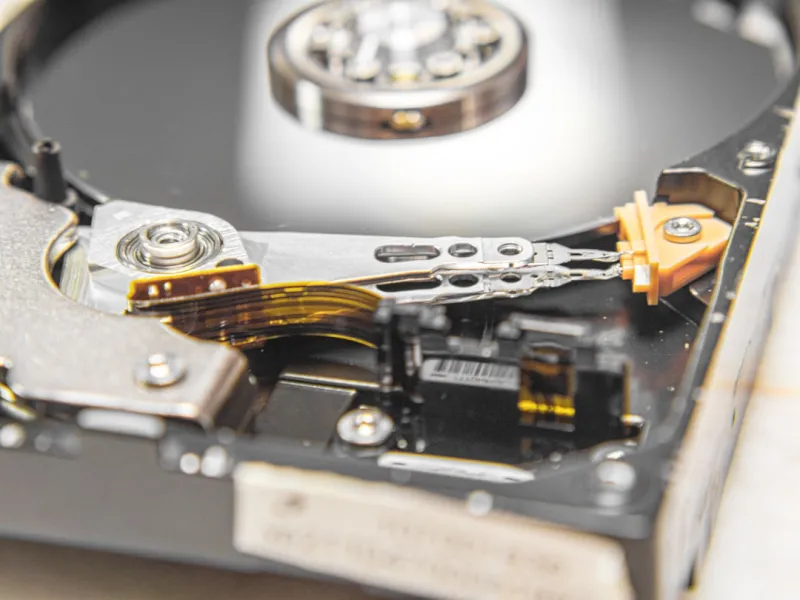
When I first unboxed a 3.5‑inch platter drive back in the early 2020s, I never imagined I’d be writing about solid‑state behemoths that can outpace an entire workstation’s RAM. Fast‑forward to 2026, and the hard‑drive landscape has morphed into a sophisticated ecosystem where capacity, speed, endurance, and security intersect in ways that demand a strategic approach. As a power‑user who lives at the intersection of content creation, AI‑driven workloads, and high‑resolution media editing, I’ve learned that a one‑size‑fits‑all storage plan simply won’t cut it. This article walks through the current trends—NVMe dominance, PCIe 5.0 adoption, hybrid solutions, and the resurgence of encrypted SATA drives—while offering a roadmap that aligns with the broader hardware playbook every serious enthusiast should follow.
The Rise of PCIe 5.0 NVMe Drives
PCIe 5.0 has finally become mainstream in 2026, delivering raw sequential read speeds that flirt with the theoretical 16 GB/s ceiling. This leap isn’t just about bragging rights; it translates to tangible productivity gains when moving terabytes of 8K footage or training large language models locally. The new generation of NVMe SSDs leverages the double‑lane configuration to reduce latency to sub‑30 µs, meaning the time between a data request and its arrival is almost imperceptible. For power users, this shift redefines the baseline for “fast storage.” My own workflow now relies on a primary 4 TB PCIe 5.0 NVMe drive for OS and applications, paired with a secondary 8 TB model for active project files. The key takeaway? If your motherboard supports PCIe 5.0, you’re future‑proofing your storage pipeline for at least the next five to seven years.
Hybrid Strategies: Marrying SSD Speed with HDD Capacity
While NVMe drives dominate the performance segment, the sheer cost per gigabyte of raw NAND still makes massive HDDs attractive for archival purposes. The hybrid model—fast NVMe for active work and large‑capacity HDDs for cold storage—has become the de‑facto standard for power users. Modern 14‑TB and 18‑TB helium‑filled drives now boast improved vibration tolerance and a 1.5 million‑hour MTBF, making them reliable vaults for raw footage, backups, and less‑frequently accessed datasets. I’ve adopted a tiered approach: a 2 TB NVMe for OS and applications, a 4 TB NVMe “scratch” disk for in‑progress renders, and a 16 TB enterprise‑grade HDD for long‑term archive. This configuration maximizes both speed and cost efficiency, ensuring that my primary workspace never stalls while still providing ample room for future projects.
Encryption at the Drive Level: Why It Matters More Than Ever
Security is no longer an afterthought; it’s baked into the hardware. In 2026, self‑encrypting drives (SEDs) have become commonplace, offering AES‑256 encryption that activates on the fly without noticeable performance penalties. This is especially critical for professionals handling sensitive client data or proprietary AI models. By enabling hardware‑based encryption, you eliminate the need for software wrappers that can introduce latency and compatibility issues. I’ve integrated SEDs across both my NVMe and HDD arrays, leveraging BitLocker’s seamless integration with Windows 12 for full‑disk protection. For those concerned about key management, the industry is moving toward TPM 2.0‑linked keys that unlock automatically at boot, striking a balance between security and convenience.
Thermal Management: Keeping High‑Performance Drives Cool
As storage speeds climb, so does heat output. PCIe 5.0 SSDs can generate upwards of 8 W under sustained load, making thermal throttling a real threat to performance consistency. Proper airflow and dedicated heatsinks are no longer optional accessories but essential components of any high‑performance build. I’ve experimented with a combination of vapor‑chamber heatsinks and active fan ducts that channel cool air directly over the SSDs. Monitoring tools now expose real‑time temperature graphs, allowing you to set dynamic fan curves that keep the drives below the 70 °C threshold where throttling typically begins. Remember, a cool SSD maintains its advertised speeds and lifespan, while an overheating drive can suffer from premature wear.
Choosing the Right Form Factor for Your Build
Form factor selection often gets overlooked, yet it has a direct impact on upgrade flexibility and system layout. The M.2 2280 form factor remains the king for most desktop builds, but the newer 22110 and 2242 variants are gaining traction for specialized use cases like compact workstations or edge‑computing devices. In my latest rack‑mount setup, I opted for a 22110 NVMe drive to fit a larger heatsink while preserving space for additional PCIe cards. Meanwhile, the traditional 2.5‑inch SATA SSD still serves a purpose for legacy systems and as a reliable fallback when you need a quick swap. Understanding the physical constraints of your chassis and motherboard—topics explored in Mastering Motherboard Selection: A Power‑User’s Blueprint for Future‑Ready Builds—ensures you don’t hit a brick wall when expanding storage later.
Data Redundancy and Backup Strategies
Even the most reliable drives can fail, and the cost of lost data can be catastrophic. In 2026, the consensus among power users is to implement a layered backup strategy: primary data on high‑speed NVMe, secondary copies on large HDDs, and a third off‑site or cloud tier for disaster recovery. I employ a combination of RAID 1 for my OS drive and RAID 5 across a set of four 12‑TB HDDs to achieve a balance between redundancy and storage efficiency. For critical project files, I use a scheduled sync to an encrypted NAS that supports snapshotting, allowing me to roll back to previous versions instantly. The philosophy aligns with the guidance in Designing a Future‑Ready Hard‑Drive Strategy for Power Users, emphasizing that redundancy should be intentional, not an afterthought.
Future‑Proofing: Anticipating the Next Wave of Storage Tech
Looking ahead, emerging technologies like PCIe 6.0 and QLC‑based NVMe drives promise even higher densities and lower costs per gigabyte. However, they also bring challenges—QC‑based endurance rates demand careful workload profiling, and PCIe 6.0’s power requirements may exceed the capabilities of older power supplies. By now, most forward‑thinking builds incorporate a modular power delivery system that can accommodate future upgrades without a complete overhaul. Additionally, keeping an eye on firmware updates is crucial; manufacturers are rolling out performance and security patches that can extend the usable life of existing drives by years. In short, a future‑proof storage strategy is not just about buying the newest gear today; it’s about building a flexible foundation that can adapt as the tech evolves.
Putting It All Together: My Personal Hard‑Drive Playbook
To synthesize everything, here’s the storage checklist I live by: 1) Verify PCIe 5.0 support on your motherboard; 2) Deploy a high‑capacity NVMe as your primary workspace; 3) Pair it with a large, self‑encrypting HDD for archival; 4) Implement robust cooling via heatsinks and active airflow; 5) Enable hardware encryption and TPM‑linked keys; 6) Configure RAID for redundancy; 7) Schedule regular off‑site backups; 8) Keep firmware current; and 9) Plan for future upgrades with modular power and space‑efficient form factors. Following this playbook not only maximizes performance in 2026 but also aligns with the broader guidance from Future‑Proofing Your PC: The 2026 Power‑User Hardware Playbook. By treating storage as a strategic asset rather than a commodity, you empower your creative and computational ambitions to thrive for years to come.