When I first cracked open a brand‑new SSD back in the early 2020s, the sheer silence and instantaneous responsiveness felt like stepping into a sci‑fi movie. Fast forward to 2026, and the storage arena has exploded with options that cater to every nuance of a power‑user’s workflow—whether you’re rendering 8K video, training a mid‑size AI model, or simply hoarding a massive media library. The core decision still hinges on three pillars: speed, capacity, and resilience. But the lines between traditional spinning hard drives and flash‑based solutions have blurred, thanks to hybrid drives that blend NAND caches with high‑density platters, and PCIe 5.0 NVMe cards that push past 10 GB/s. In this guide, I’ll walk you through the current landscape, demystify benchmark jargon, and help you align your storage strategy with the demands of modern computing, all while keeping an eye on future‑proofing for the next wave of AI‑driven tasks.
Understanding the Storage Landscape in 2026
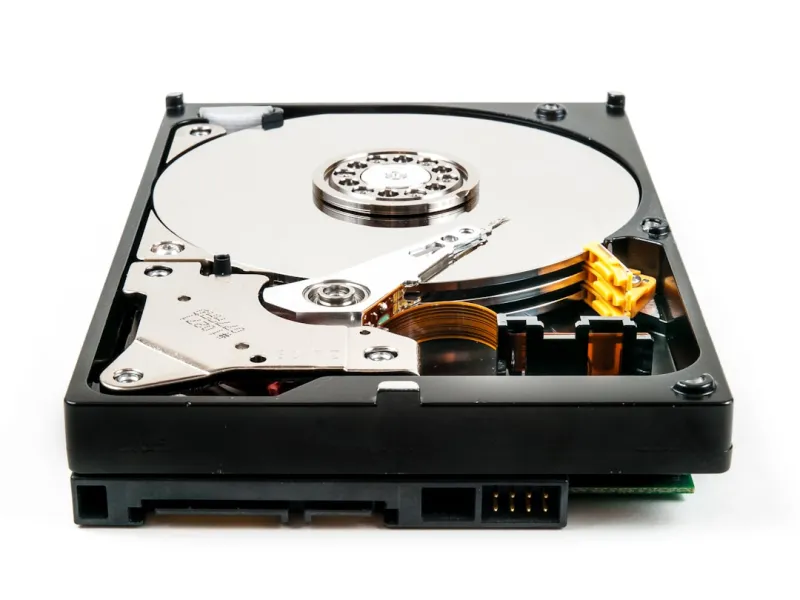
First, let’s clear up the taxonomy that often trips newcomers: HDDs (hard disk drives) still dominate the high‑capacity, low‑cost segment, offering 20 TB and beyond on a single 3.5‑inch platter. Their magnetic heads have become more precise, and manufacturers have introduced helium‑filled chambers that lower friction and heat, extending lifespan. Meanwhile, SSDs (solid‑state drives) have diversified into SATA, NVMe, and the emerging PCIe 5.0 tier, each delivering a distinct performance envelope. SATA SSDs sit comfortably at 500 MB/s, ideal for OS boots and everyday apps, while NVMe drives on the M.2 form factor can saturate a single PCIe lane, delivering 3‑4 GB/s. The latest PCIe 5.0 NVMe units push past 10 GB/s, making them indispensable for data‑intensive pipelines such as real‑time video editing or large‑scale neural network training. Understanding where each technology sits on the speed‑capacity curve is the first step to a balanced rig.
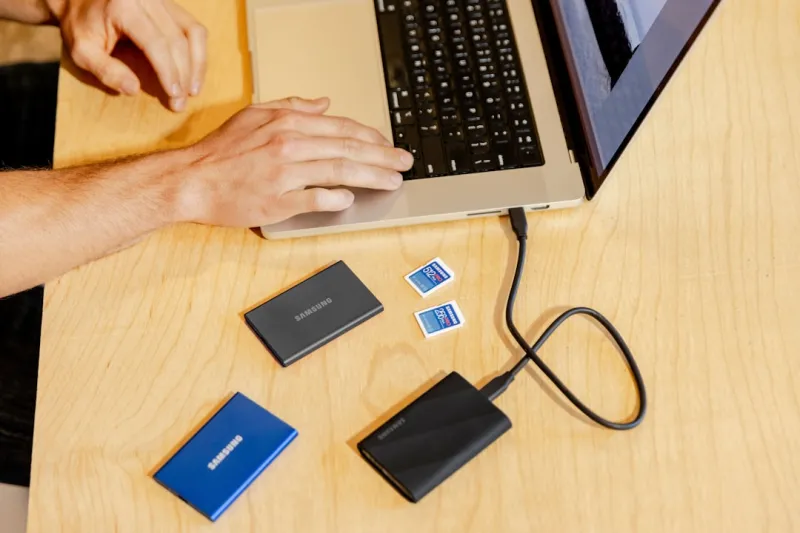
Beyond raw performance, the form factor matters. The ubiquitous 2.5‑inch SATA SSD still fits in most laptops, but the compact M.2 module has become the default for desktop builds, especially when paired with a motherboard that supports multiple lanes. Some enthusiasts opt for U.2 drives, which combine enterprise‑grade reliability with hot‑swap capabilities—perfect for a workstation that demands zero downtime. If you’re building a DIY NAS, look for drives that support TLER (Time‑Limited Error Recovery) to avoid array rebuild delays. And don’t overlook the resurgence of external SSD enclosures leveraging Thunderbolt 4, which now provide near‑internal speeds for portable workflows. The right combination of internal and external storage can dramatically improve your productivity, especially when you factor in the bandwidth of a well‑designed home network.
One trend that’s hard to ignore is the rise of hybrid storage solutions, often branded as “SSHDs” or “Hybrid SSDs.” These devices embed a modest NAND cache (typically 8–32 GB) within a traditional HDD, allowing frequently accessed files to be served at SSD speeds while keeping bulk data on the platter. In practice, this can deliver a noticeable boost for operating system responsiveness without the price tag of a full‑capacity SSD. For power users who juggle massive game libraries and massive project files, a hybrid drive can be a sweet spot—fast enough for daily tasks, yet affordable enough to store terabytes of data. Pair this with a dedicated NVMe drive for your active projects, and you’ll have a tiered storage architecture that mirrors what data centers employ, but scaled to a desktop workstation.
Performance vs. Capacity: Making the Trade‑off
Now that we’ve mapped the terrain, let’s tackle the classic performance‑versus‑capacity dilemma. If you’re primarily a creator—think video editors, 3D artists, or AI researchers—the rule of thumb is “fast first, big later.” A high‑end PCIe 5.0 NVMe drive for your OS, applications, and active datasets can shave minutes off compile times and reduce model training iteration loops. Meanwhile, a massive 20 TB HDD or a 12 TB SSHD can serve as a cold‑storage vault for raw footage, archived renders, or older projects you don’t need on the fast lane. In my own rig, I’ve allocated a 4 TB PCIe 4.0 NVMe for the OS and primary workloads, a 2 TB SATA SSD for active project files, and a 24 TB helium‑filled HDD for long‑term archives. This tiered approach maximizes both speed and cost‑efficiency, ensuring that you never pay premium rates for storage you rarely touch.
But performance isn’t just about sequential read/write numbers; latency matters just as much. NVMe drives benefit from a low‑latency queue depth, making them superb for random access workloads like database queries or virtualization. If your workflow includes heavy multitasking with dozens of small files—think software development, compiling codebases, or running containers—a drive with strong IOPS (input/output operations per second) will feel noticeably snappier than a high‑throughput drive that excels only in sequential benchmarks. On the flip side, capacity‑focused HDDs have improved their cache sizes, often sporting 256 MB or more, which helps mitigate latency in bursty read scenarios. When you pair a fast NVMe boot drive with a large, well‑cached HDD, you get the best of both worlds: instant responsiveness for active tasks and abundant room for bulk storage.
Don’t forget about the power consumption equation, especially if you’re building a workstation that runs 24/7. High‑performance NVMe drives can draw up to 7 W under load, whereas modern helium‑filled HDDs consume a fraction of that, typically under 5 W even during sustained writes. For a rig that doubles as a home server or AI inference node, the cumulative power draw can impact cooling requirements and electricity costs. This is where the Essential PC Upgrades for Power Users guide becomes invaluable—upgrading to an efficient 80 PLUS Gold PSU and optimizing airflow can keep temperatures in check while you push your storage to the limit. Balancing these considerations ensures you don’t trade raw speed for a heat‑induced throttling scenario later on.
Security, Longevity, and Future‑Proofing Your Drive Strategy
Speed and space are only half the story; security has become a non‑negotiable factor for power users in 2026. With ransomware attacks growing more sophisticated, encrypting data at rest is a best practice, especially for drives that store sensitive client files or proprietary code. Modern SSDs often ship with hardware‑based encryption (e.g., Opal, TCG‑EAL5+), which offloads the cryptographic workload from the CPU, delivering near‑zero performance penalty. If you’re using a traditional HDD, consider software solutions that integrate seamlessly with Windows BitLocker or macOS FileVault. For a deep dive on how to implement robust encryption, check out the Encryption Mastery for Power Users article—its step‑by‑step guide walks you through key management and recovery strategies that keep your data locked away from prying eyes.
Longevity is another critical axis. SSDs have finite write cycles, measured in TBW (terabytes written). While today’s NAND cells can endure several petabytes of writes, heavy workloads—like continuous AI training—can accelerate wear. Most SSDs now include SMART monitoring tools that alert you when the drive approaches its endurance limit, allowing you to migrate data proactively. On the HDD side, regular vibration monitoring and temperature checks can prevent premature head crashes. Investing in a drive with a high MTBF (mean time between failures) rating—often quoted in millions of hours—adds a safety buffer, especially for drives that sit in a NAS or serve as the backbone of a backup solution.
Finally, consider the ecosystem of connectivity. The Power‑User’s Blueprint for a Lightning‑Fast, Secure Home Network emphasizes the importance of a 10 GbE or even 25 GbE backbone if you plan to stream high‑resolution media across multiple devices or feed data to a local AI cluster. Pairing such a network with NVMe‑over‑Fabric solutions can virtually eliminate bottlenecks between your storage and compute nodes. As AI workloads continue to scale, you’ll want storage that can keep up not just today but for the next five years. Look for drives that support NVMe 2.0 features like Zoned Namespaces (ZNS) and Host Memory Buffer (HMB), which improve efficiency and reduce latency. By aligning your drive choices with emerging standards, you future‑proof your rig, ensuring that the storage layer won’t become the Achilles’ heel as software demands evolve.