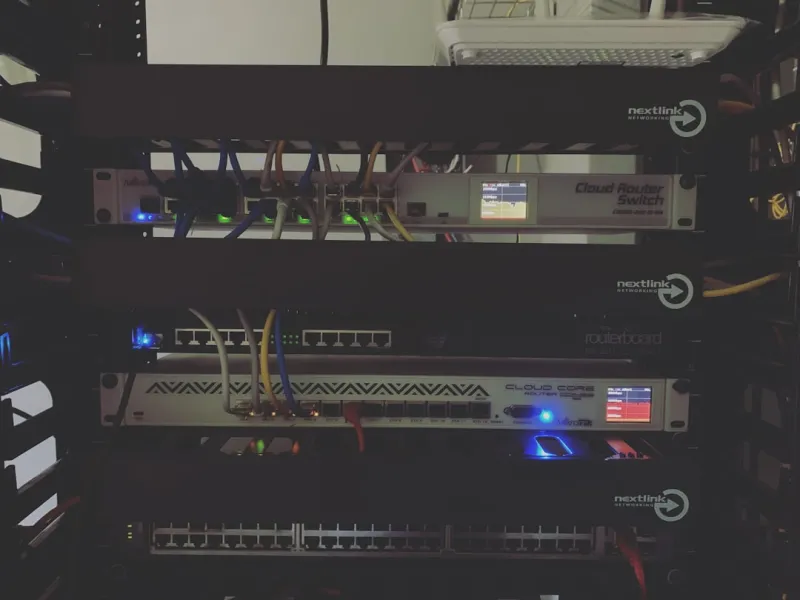
When you’ve spent the last decade fine‑tuning rigs that can crunch AI models faster than a coffee shop can brew a latte, the network that feeds those machines becomes the silent hero—or the hidden villain. 2026 has finally delivered the promises we whispered about in 2022: Wi‑Fi 7 blazing through 30 Gbps ceilings, AI‑assisted traffic orchestration, and hardware that can push 10 GbE without breaking a sweat. As a power‑user who lives in a hybrid work‑play environment, I’ve learned that the network’s latency jitter can make or break a live stream, a massive dataset upload, or an intensive multiplayer raid. In this post I’m pulling back the curtain on the most practical, battle‑tested tactics that let you harness today’s networking breakthroughs without drowning in jargon or endless firmware updates. Think of this as the “networking cheat sheet” for anyone whose workstation is as critical as a medical scanner—because in our world, downtime is simply not an option.
Wi‑Fi 7 Isn’t Just a Speed Boost; It’s a Paradigm Shift
Wi‑Fi 7 (802.11be) rolled out to consumer‑grade routers early this year, and the headline numbers—up to 30 Gbps—are eye‑popping, but the real power lies in its multi‑link operation (MLO) and ultra‑low latency modes. For a power‑user, MLO means you can bind two or more radio bands together, creating a single logical pipe that automatically sidesteps interference and maximizes throughput. In practice, this translates to seamless 8K video editing over a wireless link, or streaming a 4 K game from a separate room without a single frame drop. My go‑to setup pairs a Wi‑Fi 7 AXE7800 router with a 2.5 Gbps Ethernet fallback, ensuring the moment the wireless link hiccups, the system flips to wired without a noticeable lag. The trick is to enable “Wi‑Fi 6E/7 coexistence mode” in the router’s firmware, which isolates the older 6E devices, preventing them from hogging the shared spectrum. A quick firmware flash and a few SSID tweaks, and you’ll be riding the newest wave without sacrificing stability.
Mesh Networks and Gigabit Ethernet: The Best of Both Worlds
While Wi‑Fi 7 shines, the sheer size of modern home offices—often a converted garage, a loft, and a dedicated “lab” room—demands a more reliable backbone. This is where a well‑planned mesh network combined with strategic gigabit Ethernet runs shines. I installed a tri‑band mesh system with a dedicated backhaul channel, allowing each node to talk to the others at 5 Gbps while still serving Wi‑Fi 7 clients. The secret sauce? Run a single Cat 6a cable from the central router to the farthest node and configure it as an Ethernet‑backhaul; this eliminates the need for a wireless backhaul, which can be a bottleneck under heavy load. For power‑users who run massive VMs or container clusters, the mesh nodes become “smart switches” that can handle PoE for network‑attached storage (NAS) and even power‑over‑Ethernet cameras, all while keeping the Wi‑Fi spectrum pristine. The result is a network that feels wired, even when you’re on the couch, with latency that stays under 5 ms for most local traffic.
AI‑Driven Network Orchestration: Let the Machine Do the Heavy Lifting
Artificial intelligence is no longer confined to the GPU; it’s now embedded in the very routers and switches we use. Modern “smart” firmware leverages machine learning to predict congestion before it happens, automatically reshuffling traffic to keep critical packets moving. In my own setup, I enabled the router’s built‑in AI‑QoS engine, which learns my daily patterns—like the 2 PM data‑sync window with my cloud GPU farm—and pre‑allocates bandwidth accordingly. The AI also flags rogue devices trying to sniff packets, automatically quarantining them. For those who prefer granular control, most high‑end firmware offers an API to export real‑time telemetry, which you can feed into a custom dashboard built with Grafana. This gives you a live heatmap of packet loss, jitter, and throughput, letting you spot a misbehaving IoT device before it eats into your research bandwidth. The key takeaway: let the AI handle the mundane traffic shaping, and reserve your mental bandwidth for the creative work that matters.
Zero‑Trust Security Meets the Power‑User Network
Security isn’t just about firewalls anymore; it’s about assuming every device could be compromised and verifying each request. In 2026 the zero‑trust model has matured into a set of practical tools that power‑users can deploy without a corporate IT department. I integrated a lightweight identity‑aware proxy that authenticates every device before granting access to my internal LAN segments. This approach works hand‑in‑hand with the strategies outlined in Elevating Power‑User Security: Practical Steps for a Safer 2026 Rig, especially the section on micro‑segmentation. By carving out separate VLANs for development, gaming, and IoT, each with its own firewall rules, a compromised gaming console can’t reach the GPU‑compute cluster. Pair this with DNS‑level filtering that blocks known malicious domains, and you have a network that’s not just fast but resilient against the ever‑evolving threat landscape.
Edge Computing: Bringing the Cloud Closer to Home
The rise of edge computing has turned the home network into a miniature data center. Services like AWS Wavelength and Azure Edge Zones now offer ultra‑low‑latency compute nodes that sit within the ISP’s PoP, but you can also spin up your own edge with a rugged mini‑PC running Kubernetes at the edge of your LAN. This setup is perfect for AI inference tasks that need sub‑millisecond response times, such as real‑time video analytics for a security camera array. By placing the inference engine on an edge node and routing only the raw video over the LAN, you offload the heavy lifting from your main workstation, freeing up GPU cycles for model training. The magic happens when the edge node communicates with the central server via a dedicated 10 GbE link, ensuring data integrity while keeping latency under 2 ms. For power‑users, this means you can experiment with distributed AI workloads without paying for expensive cloud egress.
VLANs and Subnetting: The Art of Logical Isolation
Even if you’re not a network engineer by title, mastering VLANs is essential for a power‑user’s sanity. I’ve split my home LAN into three primary VLANs: 10 for workstations, 20 for media/entertainment, and 30 for IoT and smart home devices. Each VLAN gets its own /24 subnet, which simplifies firewall rules and makes DHCP management painless. The trick is to use a managed switch that supports 802.1Q tagging and to configure the router’s inter‑VLAN routing with strict ACLs—only allow traffic from VLAN 10 to VLAN 20 for media streaming, and block any inbound traffic from VLAN 30 to VLAN 10. This logical isolation not only boosts security but also reduces broadcast storms, which can otherwise choke a Wi‑Fi 7 network during heavy device churn. If you’re looking for a step‑by‑step guide, check out Designing a Power‑User Network for Speed, Security, and AI in 2026 for detailed VLAN schematics and firewall rule examples.
Quality of Service (QoS) and Traffic Shaping: Prioritize What Matters
QoS is the unsung hero that keeps your video conferences crisp while a large file sync runs in the background. Modern routers now support dynamic, AI‑enhanced QoS profiles that can automatically detect high‑priority streams—like a Zoom call or a remote desktop session—and bump them to the top of the queue. I’ve configured a custom QoS rule that guarantees 5 Gbps of bandwidth to any device with the “Workstation” tag, while capping the gaming console to 1 Gbps during peak work hours. The router’s built‑in traffic shaper also lets you set burst limits, preventing a sudden surge from a backup job from choking latency‑sensitive traffic. For those who love granular control, the firmware’s CLI lets you define class‑based queuing (CBQ) policies, where you can assign weights to different traffic classes, ensuring fairness across all devices. The result is a network that feels intelligently balanced, never sacrificing performance for convenience.
Future‑Proofing Your Network Hardware: 10 GbE and Beyond
Investing in the right network interface cards (NICs) now can save you a trip to the store in three years. My current build includes a dual‑port 10 GbE NIC with RDMA support, allowing me to bypass the kernel stack for ultra‑low‑latency data transfers to my NAS. When paired with a 10 GbE switch that supports link aggregation (LACP), you can combine two 10 GbE ports into a 20 Gbps pipe—perfect for simultaneous AI training runs and large video render farms. Even if you don’t need 10 GbE today, opting for a NIC with a PCIe 4.0 x4 slot ensures you can upgrade the firmware to 25 GbE as standards evolve. Don’t forget to keep your switch firmware current; manufacturers are adding support for features like PFC (Priority Flow Control) that are vital for loss‑sensitive AI workloads. A well‑chosen NIC and switch combo is the foundation that lets you take full advantage of Wi‑Fi 7, edge computing, and AI‑driven orchestration without hitting a bandwidth ceiling.
Wrapping It All Together: A Power‑User’s Network Playbook
By now you’ve seen how Wi‑Fi 7, mesh backhauls, AI‑driven QoS, zero‑trust security, and edge computing can coalesce into a network that feels almost magical. The secret is not in buying the most expensive gear, but in orchestrating each component so they complement each other. Start with a solid Wi‑Fi 7 core, add wired Ethernet backhauls for critical nodes, slice your LAN with VLANs, and let AI handle the mundane traffic shaping. Layer zero‑trust security on top, and you’ll have a fortress that’s both fast and resilient. Remember, the network is the bloodstream of your digital life—keep it clean, keep it fast, and it will keep you ahead of the curve. If you’re ready to dive deeper, revisit the articles linked throughout this guide; they each unpack a piece of the puzzle in granular detail. Happy networking, and may your latency be ever low!