Reimagining Network Architecture for the Power‑User
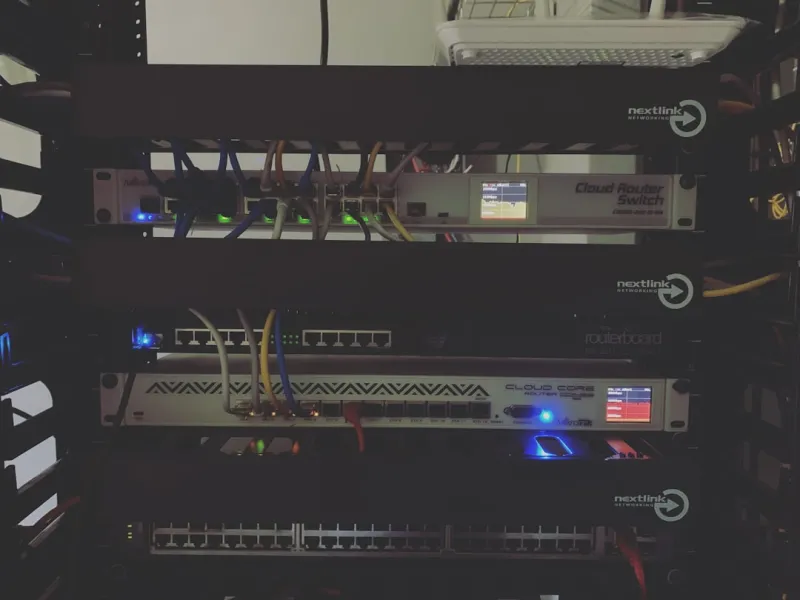
When I first dove into computer networking back in the early 2000s, the landscape was a simple blend of Ethernet cables, a handful of switches, and a router that barely knew its own IP. Fast‑forward to 2026, and the reality is a sprawling, software‑defined fabric where latency, security, and AI‑driven traffic shaping collide. As a power‑user, I treat my network like an extension of my rig—every packet is a potential bottleneck or a hidden opportunity. That mindset forces me to question legacy assumptions: Is my home Wi‑Fi truly isolated, or is it a gateway for rogue IoT chatter? Do I need a 10 Gbps backbone to feed a GPU‑accelerated AI workstation, or can I lean on intelligent load‑balancing to squeeze every millisecond out of a 2.5 Gbps link? By embracing a power‑user’s obsessive attention to detail, I’ve learned to map traffic flows with the same precision I apply to overclocking a GPU, turning the network into a high‑performance conduit rather than a passive backdrop.
AI‑Infused Routing: The New Normal
Artificial intelligence is no longer a buzzword reserved for data‑centers; it lives in my router’s firmware, predicting congestion before it happens. In 2026, AI‑enabled routers can analyze historical traffic patterns, adjust QoS policies on the fly, and even quarantine suspicious packets without human intervention. I recently upgraded to a model that integrates an edge‑AI chip, allowing it to run lightweight inference models directly on the device. This shift means I can prioritize latency‑sensitive applications—like real‑time video rendering on a remote workstation—while keeping background sync tasks in check. The result? A smoother, more predictable experience that feels like having a dedicated network engineer on call 24/7. If you’re curious about how AI can amplify your network performance, check out AI Computing Unleashed: Power‑User Tactics for 2026 for a deep dive into the tools and scripts that make this possible.
Zero‑Trust at Home: From Enterprise to Living Room
Zero‑trust security models have migrated from corporate vaults to the average living room, and as a power‑user, I’ve adopted this philosophy for every device that touches my network. The premise is simple: never trust, always verify. Each new smart speaker, thermostat, or streaming stick gets its own VLAN, its own firewall rules, and limited internet access unless explicitly allowed. This segmentation prevents a compromised IoT device from becoming a launchpad for lateral attacks on my main workstation. I also leverage device‑level certificates instead of static passwords, ensuring that even if a rogue actor sniffs the network, they can’t spoof a trusted device. The result is a robust, resilient environment that protects high‑value assets—like my AI‑training rigs—while still offering the convenience of modern smart home tech. Implementing zero‑trust may sound daunting, but with the right tools, it becomes a series of incremental steps that compound into a fortress.
Dynamic Mesh Networks: Scaling Without the Headaches
Traditional star topologies struggle under the weight of modern bandwidth demands, especially when multiple high‑resolution streams converge in a single household. To address this, I turned to dynamic mesh networking, which intelligently routes traffic through the most efficient paths, automatically reconfiguring when a node fails or a new device joins. Modern mesh systems now support Wi‑Fi 7, offering multi‑gigabit speeds and lower latency thanks to OFDMA and MU-MIMO enhancements. The beauty of a mesh is its self‑healing nature; a single point of failure is a relic of the past. I’ve also integrated a few wired backhaul nodes, marrying the reliability of Ethernet with the flexibility of wireless. The result is a seamless experience where my gaming console, AI workstation, and even the family’s smart TV coexist without stepping on each other’s bandwidth. For those looking to future‑proof their home network, consider a hybrid approach that balances wired stability with wireless agility.
Software‑Defined WAN (SD‑WAN) for the Home Office
Working from home has become the norm, and with it comes the need for a reliable, high‑performance connection to corporate resources. SD‑WAN technology, once exclusive to enterprises, now offers affordable appliances that can aggregate multiple internet links—cable, fiber, LTE—into a single, optimized pipeline. By defining policies that prioritize critical traffic, such as VPN‑encrypted data streams, over less‑time‑sensitive traffic like email sync, SD‑WAN ensures that my remote sessions remain buttery smooth even during peak household usage. Moreover, the centralized controller provides real‑time analytics, allowing me to spot bottlenecks before they impact productivity. I’ve paired this with a local caching server that stores frequently accessed corporate files, reducing redundant traffic and further shaving latency. The net effect is a home office that feels as robust as a corporate branch, all without the need for a dedicated IT staff.
Edge Computing and the Rise of Local AI Inference
Edge computing has transformed how I handle AI workloads, moving inference from the cloud to devices right at the network’s edge. By deploying compact AI accelerators on my router and select switches, I can run models that classify network traffic, detect anomalies, and even predict hardware failures before they occur. This on‑premises intelligence reduces reliance on external APIs, cuts latency, and keeps sensitive data within my own firewall. For example, a tiny Tensor Processing Unit (TPU) embedded in my router can analyze packet metadata in real time, flagging potential ransomware traffic patterns. The ability to act locally—blocking malicious flows instantly—offers a level of protection that cloud‑only solutions can’t match. As more AI‑centric hardware becomes affordable, the distinction between “network device” and “compute node” blurs, inviting power‑users to experiment with distributed AI pipelines that run entirely in‑house.
Secure Remote Access: Beyond Traditional VPNs
Virtual Private Networks have served us well, but they’re increasingly vulnerable to sophisticated attacks. In 2026, I’ve migrated to a Zero‑Trust Network Access (ZTNA) solution that authenticates each session based on identity, device posture, and contextual risk factors. Instead of tunneling all traffic through a single gateway, ZTNA grants micro‑segmented access only to the resources a user truly needs. This approach minimizes the attack surface and eliminates the “all‑or‑nothing” exposure that classic VPNs present. I’ve also integrated hardware‑based MFA tokens, ensuring that even if credentials are compromised, a second factor blocks unauthorized entry. The combination of granular access policies and robust authentication creates a fortress around my network, giving me confidence that remote connections—whether from a coffee shop or a corporate office—remain secure and performant.
Future‑Proofing with Modular Network Gear
One of the biggest mistakes I’ve seen power‑users make is buying a “set‑and‑forget” router and hoping it’ll last a decade. In 2026, the rapid evolution of standards—Wi‑Fi 7, 10 GbE, and beyond—means that flexibility is king. I’ve invested in modular networking equipment that lets me swap out line cards, upgrade firmware, and even add new radio modules without replacing the entire chassis. This approach mirrors the philosophy outlined in Future‑Proofing Your Rig: The 2026 Power‑User Hardware Playbook, where scalability is built into the hardware design. By planning for growth, I can integrate emerging technologies—like Li-Fi or quantum‑ready interfaces—without a massive overhaul. The result is a network that scales with my needs, keeping performance high and costs predictable over the long term.
Monitoring and Telemetry: Turning Data into Action
Data is useless unless you act on it, and my network monitoring stack reflects that principle. I run a combination of open‑source tools—Prometheus for metrics collection, Grafana for visualization, and Loki for log aggregation—each feeding into a central dashboard that gives me a real‑time pulse of every device. Alerts are fine‑tuned to trigger only on genuine anomalies, reducing fatigue and ensuring I respond to true incidents. Beyond raw numbers, I overlay AI‑generated insights that correlate spikes in latency with specific device behavior, such as a new firmware update on a smart fridge. This proactive stance allows me to resolve issues before they affect user experience. For security‑focused power‑users, integrating threat intelligence feeds into the telemetry pipeline adds another layer of defense, turning obscure alerts into actionable intelligence.
Closing Thoughts: The Power‑User’s Network Playbook
In 2026, a power‑user’s network is no longer a passive conduit; it’s a dynamic, intelligent ecosystem that demands constant attention, strategic upgrades, and a security‑first mindset. From AI‑driven routing and zero‑trust segmentation to edge computing and modular hardware, each component plays a vital role in delivering the performance and resilience modern workloads require. By treating the network with the same rigor I apply to my GPU overclocks or security hardening, I’ve built an environment that scales, adapts, and safeguards my digital life. If you’re ready to take your home or small‑office network to the next level, start by auditing your current setup, adopt a zero‑trust philosophy, and embrace AI‑enabled tools. The future of networking is here, and it’s powered by the same curiosity and relentless optimization that defines every true power‑user.